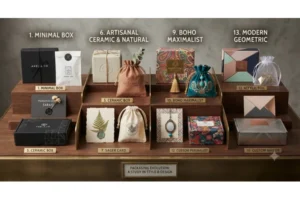
Small budget doesn’t have to mean boring packaging. I’ve worked with enough tiny, scrappy brands over the years to notice something — some of the most memorable unboxing moments I’ve come across came from businesses running on a fraction of what bigger companies throw at their packaging. Creativity just fills the gap money would otherwise cover, and honestly, sometimes it does the job better anyway. Here are ten ideas that actually work in practice, not just ones that look nice pinned to a mood board.
1. Hand-Stamped Kraft Boxes
Plain kraft paper is cheap. That’s kind of the whole point here.
Why It Works So Well
A basic kraft box costs next to nothing on its own, but a hand-stamped logo turns it into something that feels deliberate instead of cheap. One stamp, one ink pad, and suddenly every box has that slightly imperfect, handmade quality machine printing just can’t fake. Customers notice imperfection like that — and for a lot of small brands, it actually reads as more authentic than a flawless printed design would.
Where It Runs Into Trouble
It’s slow. Stamping every single box by hand doesn’t scale once your order volume climbs past a certain point, so this suits businesses still in that early, lower-volume stage best.
2. Recycled Fabric Wraps Instead of Tissue Paper
Skip the tissue paper. Wrap products in small scraps of recycled fabric instead.
The Appeal
It’s reusable, and customers genuinely appreciate that. It also photographs beautifully for unboxing content. Fabric scraps cost very little too, if you source them from a local textile recycler or offcut supplier, which makes this one of the cheaper “wow factor” additions you can add.
One Practical Thing
Cut the fabric to a consistent size, or it starts looking sloppy fast. Factor a little prep time into your packing process before this becomes routine.
3. Seed Paper Inserts
A small card or tag made from seed-embedded paper, planted, grows into wildflowers or herbs.
Why Customers Love This One
It stretches your packaging’s life well past the unboxing moment itself, giving customers a reason to interact with your brand again weeks later, once something actually sprouts. It’s genuinely shareable too — people post photos of what grew, tagging the brand without anyone asking them to.
The Cost Side
Seed paper costs more per unit than standard cardstock does, so this works best as a small accent piece, not the whole packaging structure.
4. Minimalist Single-Color Printing
Sometimes less really is more, especially when the budget’s tight.
Why It Makes Sense
A single bold ink color on plain board costs far less than full-color printing, and with a strong, well-designed logo behind it, it often ends up looking more premium than a busy, multi-color design would anyway. Restraint reads as confidence in packaging more often than people expect it to.
Worth Remembering
This only works if the logo and typography are genuinely strong on their own — there’s nowhere for weak design to hide behind a single color.
5. Handwritten Notes
Costs almost nothing. Shows up in customer reviews constantly.
Why It Punches Above Its Weight
A short, genuine handwritten note tucked inside the box makes a small business feel like an actual person, not some faceless company. It’s one of the cheapest ways to build real emotional connection with a customer, and it scales reasonably well even as volume grows, especially with a small team splitting the load.
A Small Caution
Generic, copy-paste notes lose their impact fast. Even a slightly varied message feels more genuine than the exact same three sentences on every single card, word for word.
6. Reusable Fabric Drawstring Bags
Some small brands are shipping products directly in reusable fabric bags instead of a box.
The Advantage
Customers keep and reuse these long after the original purchase, which quietly extends your brand’s visibility every time it gets used again for something else entirely. Works particularly well for gift-oriented products, since the bag becomes part of the gift itself.
Where It’s Limited
Fabric bags offer way less structural protection than cardboard does, so this really only fits sturdy, non-fragile products that don’t need much cushioning during transit.
7. Die-Cut Window Boxes on a Budget
Windows aren’t just for premium brands with big packaging budgets.
Why It Still Works for Small Businesses
A simple circular or geometric die-cut window lets the product sell itself visually, no expensive printing required to communicate what’s inside. For products with genuinely interesting visual appeal — colorful items, interesting textures — this one small structural change often does more marketing work than an elaborate printed design ever would.
Something to Consider
Die-cutting needs some upfront tooling cost, so it makes more sense once you’re ordering a few hundred units, not just a handful at a time.
8. Branded Washi Tape Instead of Plain Packing Tape
A small, cheap swap that adds noticeable polish.
Why It Matters
Custom-printed washi tape doesn’t cost much, especially at moderate order volumes, and it turns a purely functional element — sealing the box shut — into another small branding touchpoint. It’s a detail people photograph surprisingly often in unboxing videos.
One Thing to Check
Make sure it’s actually strong enough to hold during shipping, not just decorative. Some washi tape prioritizes looks over real adhesive strength, and that’s not a trade-off worth making here.
9. Compostable Packing Peanuts Made From Cornstarch
A sustainable swap for the traditional foam packing peanuts everyone’s used forever.
Why Small Brands Like This
Cornstarch-based packing peanuts dissolve in water and are genuinely compostable, which appeals strongly to environmentally conscious customers without adding a huge amount of extra cost compared to standard packing materials. A small swap like this quietly signals a brand’s values without needing to spell it out anywhere on the box.
The Trade-Off
Slightly more expensive than plain foam, and they can degrade if stored somewhere humid for too long, so it’s smarter to order them closer to when you’ll actually use them.
10. QR Codes Linking to a Personal Thank-You Video
A modern twist that costs nothing beyond the sticker itself.
Why It Stands Out
A small printed QR code on the box, linking to a short, genuine thank-you video from the founder, creates a real moment of personal connection most competitors simply don’t bother with. Costs nothing but time to set up, and it scales easily, since the same video link works across every single order.
Keep It Genuine
Only works if the video actually feels personal, not corporate. A stiff, scripted message kind of undermines the whole point of doing this at all.
Choosing What Actually Fits Your Brand
Not every idea here suits every business, and that’s fine. Small, tactile touches like handwritten notes and washi tape suit brands leaning into warmth and personal connection. Structural ideas like window boxes and fabric bags suit brands where the product itself is genuinely visually appealing on its own. Match the idea to what your brand’s actually trying to say, rather than grabbing whatever looks trendiest this month.
Bottom Line
Creative packaging on a small budget isn’t really about spending more. It’s about spending thoughtfully on the details that actually get noticed. A handwritten note costs pennies. A hand-stamped box costs almost nothing beyond your time. The businesses people actually remember usually aren’t the ones with the biggest packaging budget — they’re the ones that picked one or two ideas and executed them with genuine care, instead of trying to do everything at once and doing none of it particularly well.