
I’ve sat in on more small business planning sessions than I can actually count at this point, and there’s one pattern that shows up almost every single time. Owners chasing five different growth tactics at once. Budget spread so thin, attention split so many ways, that none of it really moves anything. Growth doesn’t come from doing everything. It comes from picking a handful of things and doing them well, consistently, long enough to actually see the results show up. These are the five I’ve watched genuinely work, over and over, across businesses that had almost nothing else in common.
1. Double Down on Your Existing Customers Before Chasing New Ones
Gets skipped constantly. Mostly because chasing new customers just feels more exciting than nurturing the ones already sitting right there.
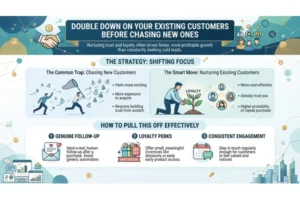
Why This Actually Moves the Needle
Acquiring a new customer costs more than keeping an existing one, in basically every industry I’ve ever worked in. Someone who already trusts you, already bought once, is a lot more likely to buy again than a total stranger is to buy for the first time. Put energy here — better follow-up, small loyalty perks, just staying in touch — and it tends to produce faster, cheaper growth than chasing cold leads ever manages to.
How to Actually Pull This Off
Start simple. A genuine follow-up email after a purchase, not some generic automated blast, but something that actually sounds like a person wrote it. Add a small loyalty incentive on top — a discount on the next order, an early look at something new. None of this needs to be complicated. It just needs to happen consistently enough that customers actually notice you’re paying attention.
2. Build a Referral System Instead of Just Hoping for Referrals
Word of mouth happens on its own, sure. But leaving it entirely to chance is a mistake I’ve watched cost businesses years of slower growth than they needed.
Why Referrals Beat Most Paid Ads
A referral shows up with built-in trust no advertisement can fake. When a friend recommends a business, the person’s already halfway convinced before they even land on your page — which means lower acquisition cost, and usually a better conversion rate than cold traffic from ads ever gives you.
Making It an Actual System
Businesses that grow fastest through referrals almost always have something structured, not just a vague hope that happy customers mention them unprompted somewhere down the line. A small discount for both the referrer and the new customer. A simple share link. A frictionless way to actually make the referral happen. That structure is what turns occasional word of mouth into something predictable, repeatable — instead of a happy accident you’re just crossing your fingers for.
3. Get Genuinely Specific About Who You’re Actually Serving
Trying to appeal to everyone is one of the most common growth-killers I see, especially in the early days of a business.
Why Narrowing Down Grows a Business Faster
A business speaking to everyone usually ends up resonating with basically no one. Get specific about your ideal customer — their real problems, their actual language, their real daily frustrations — and your marketing starts speaking directly to them, instead of broadcasting something generic that nobody feels particularly moved by.
What This Looks Like in Practice
Shows up in your website copy. Your social posts. Your product descriptions. Even your customer service tone. A skincare brand talking directly to people dealing with sensitive, reactive skin beats one vaguely promising “glowing skin for everyone,” because the specific version actually sounds like it understands the person reading it. Counterintuitive, maybe, but specificity grows a business faster than trying to appeal broadly ever does.
4. Get What’s Only in Your Head Out of Your Head
Small business owners often are the business — every process, every relationship, every bit of institutional knowledge, all living in one person’s head. Fine at a small scale. Becomes a real bottleneck the second it isn’t.
Why This Actually Caps Growth
If every decision, every customer interaction, every operational detail runs through one person, growth gets capped by that person’s available time and attention. Doesn’t matter how talented or hardworking they are. Businesses that scale successfully usually have things written down — actual documented processes that let someone else step in without everything collapsing the moment the owner takes a single day off.
Where to Actually Start
Pick whatever eats the most repeated time — order fulfillment, customer service replies, social posting, whatever it is. Write down exactly how it’s done, step by step, even if it feels pointless at first. That document becomes the foundation for delegating, automating, or eventually hiring someone to take it off your plate entirely, freeing up time for the parts of the business that actually need your specific judgment.
5. Reinvest Profit on Purpose, Not Randomly
A lot of small businesses reinvest reactively — throwing money at whatever feels urgent that particular week instead of following any real strategy.
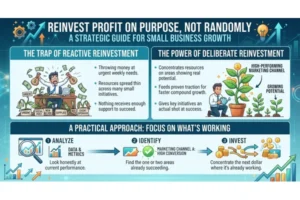
Why Deliberate Beats Reactive, Every Time
Random reinvestment spreads resources thin across a dozen small initiatives, none of which ever get enough support to actually work. Deliberate reinvestment concentrates resources into the one or two areas already showing real, demonstrated potential — giving those an actual shot instead of letting everything quietly starve together.
A Practical Way to Approach It
Look honestly at what’s already working before deciding where the next dollar goes. If one marketing channel is already converting well, putting more money there usually beats spreading the same budget across five untested new channels and hoping one sticks. Growth compounds faster when you’re feeding something with proven traction instead of constantly starting from scratch somewhere new.
Why These Five Actually Work Together
None of these do much in complete isolation, honestly. A referral system works better once you’ve already got loyal repeat customers from strategy one. Specific messaging lands better once documented systems free up the time needed to execute marketing consistently in the first place. Deliberate reinvestment depends on having clean, honest data about what’s actually working — which usually comes from having systems in place to track it properly to begin with. These strategies compound when they reinforce each other instead of competing for the same limited time and budget.
A Mistake Worth Avoiding
Businesses often chase whatever growth tactic is trending that month instead of just doing the fundamentals consistently. Chasing trends feels productive in the moment, sure, but it rarely beats steadily executing on retention, referrals, clear positioning, systemized operations, and deliberate reinvestment over a long enough stretch. Growth is rarely about finding some secret tactic nobody else has heard of. Usually it’s just doing the known fundamentals better, and more consistently, than the competition bothers to.
Bottom Line
Sustainable growth doesn’t come from doing everything at once. It comes from picking a handful of proven strategies, executing them consistently, and letting them reinforce each other over time. Focus on the customers you already have. Build referrals into an actual system. Get specific about who you’re serving. Get what’s stuck in your head written down somewhere. Reinvest on purpose instead of reacting to whatever feels urgent. None of this is flashy. All of it actually works.