
Packaging today is much more than just a way to package your product, it has become an approach for companies to also protect the environment.
Given the level of environmental concern being expressed globally by consumers; and by organizations; the inquiry regarding what traditional packaging will do to our planet is at an all-time high. This is where biodegradable packaging enters into the picture.
This blog post is designed to provide you with a comprehensive understanding of biodegradable packaging: its benefits, its materials, how to choose the right material, and examples of where biodegradable packaging can be placed in use. So, let’s get into it!
The Future of Business: Biodegradable Packaging.
There is an inflection point taking place in the packaging industry.
Every year, there are millions of tons of plastic that are used one time and thrown into oceans and landfills. Laws are tightening up around the world; consumers want business to make a change; and companies that do not change will be left behind.
Biodegradable packaging is not only a responsible choice for the environment, but it is also a smart business decision by creating product trust with environmentally conscious consumers for business longevity by meeting the upcoming regulations.
How Do You Determine if a Package is Biodegradable?
Not all packages that appear environmentally friendly actually are.
Biodegradable packaging is considered to be biodegradable if they decompose back into water, carbon dioxide, and organic matter from the earth (natural materials). Biodegradable materials decompose via the action of microorganisms, moisture, heat, and/or oxygen, without leaving behind toxic substances or residual compounds
Biodegradable, Compostable, and Recyclable
While these three terms might be thought to mean the same thing they are quite the opposite of one another
Biodegradable materials are those that can decompose naturally in the environment but their time frame and the environmental conditions will vary by material.
Compostable materials can decompose into nutrient-rich compost; however, they generally require specific environmental conditions to fully decompose such as controlled temperature, humidity, and microbial activities either at home or in commercial composting operations.
Recyclable Materials can be recycled, but do not decompose in nature.
Knowing the difference between biodegradable, compostable, and recyclable is essential to making educated judgments concerning your packaging options.
Benefits of Using Biodegradable Packaging (for Businesses)
It’s a Real Environmental Solution
Unlike traditional plastic packaging that can take between 400 to 1000 to decompose, biodegradable packaging is able to break down within several months or some as fast as weeks. Hence, this results in a reduction of long-term pollution and less landfill pressure.
Your Brand Stands Out From the Competition
Today’s consumer is very knowledgeable and deliberate when they are buying their products. When your product packaging reflects a “green” environmental commitment, people will be more inclined to purchase your products.
How to Verify Your Packaging Is Actually Biodegradable
There is a serious issue surrounding greenwashing within the packaging sector, as several products will promote themselves as eco-friendly with no actual proof offered.
You can establish whether or not your supplier’s packaging is truly biodegradable by doing the following:
Material Transparency:
Legitimate packaging manufacturers will make available the actual materials being used (kraft paper, PLA, starch-based polymers, or molded pulp) in their packaging & will not use ambiguous marketing terminology to describe those materials.
Third Party Certification:
Look for third-party certifications for the packaging you’re purchasing (e.g., European standard EN 13432 — compostability; American standard ASTM D6400 — compostable plastics; OK Compost certification, TÜV Austria).
Where Will It Decompose:
A respectable manufacturer should provide you with a clear indication of where and how their packaging will decompose (e.g., soil, water, at home, or through an industrial composting facility).
Use Precaution When Encountering Vague Claims:
Terms like “eco-safe,” “green,” or “environmentally friendly” are considered to be warning signs if they can’t be backed up with third party certification. Always request documentation for certification.
A List of the Best Eco-Friendly Packaging Materials..
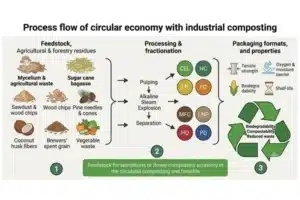
Kraft Paper and Cora
The most commonly used biodegradable materials on the market today.
Kraft paper and corrugated cardboard both consist of renewable material, have a short life cycle (weeks to months) for breaking down naturally, and can be recycled several times before being thrown away. Their wide range of applications makes them a great choice for shipping single boxes, retail wrap, and product packaging in almost every industry.
Polylactic Acid (PLA)
A plant-based product made from renewable resources (corn starch or sugarcane), PLA has the appearance, texture and feel of standard petroleum-based plastics but has less global warming potential and greater biodegradability.PLA is commonly used for packaging products (especially transparent glossy plastic items) as well as food packaging. When composted according to standards recognized by the U.S. Green Building Council, PLA typically decomposes in 3-6 months.
Molded Pulp
Molded pulp products are created by combining recycled paper (i.e. paperboard, newspaper or natural fibers like bamboo or sugarcane) with water to create a slurry of the base materials. Molded pulp can be formed into several different shapes during production; therefore making it a versatile biodegradable packaging material option. Typical uses include molded pulp for packaging inserts, egg cartons, electronic packaging and food packaging.
Fully biodegradable, compostable, recyclable, and replaces polystyrene foam products.
Hemp
Hemp packaging products are produced from the stalks of industrial hemp plants. They offer exceptional strength, moisture resistance
Selecting the Appropriate Biodegradable Packaging Material for Your Product
No biodegradable material will work for all products, so smart companies must evaluate their packaging requirements based on 4 main criteria:
1) The weight and fragility of your products – If your products are heavy or fragile, then you require much stronger, structural materials (e.g., corrugated cardboard or molded pulp) for your packaging.
2) The sensitivity of your products to moisture and shelf-life – Products that are exposed to moisture require packaging with the appropriate barrier properties (e.g., coated cellulose or PLA film).
3) The conditions in which your products will be stored and transported – Your packaging must also be able to hold up through the entire supply chain and not just up until the point of sale.
4) The end-of-life disposal options available to your consumers – Before making any choices about biodegradable packaging, consider the disposal systems available to your customers. Biodegradable materials that can be composted in a consumer’s backyard (i.e., home composting) are more advantageous for the majority of consumers than are biodegradable materials that require industrial composting facilities.
Selecting the correct material for a particular product will ensure that the product performs as intended and produces true environmental benefits without detracting from the product presentation or brand quality.
Industries Currently Leading The Charge
Food and Beverage Industry
The food industry is one of the largest users of packaging products and is under the most significant legal regulatory scrutiny. Examples of biodegradable packaging that are now widely accepted include Kraft paper or cardboard containers, PLA cups and molded pulp trays, which are continuously increasing in penetration within the market.
Beauty/Cosmetics Industry
Eco-friendly consumers represent a large portion of the beauty/cosmetics market and there are many brands that utilize biodegradable packaging and report higher levels of customer purchases.
Sustainable Packaging is Here to Stay
The move toward biodegradable packaging indicates a fundamental change in the way people conduct business, what consumers will purchase, and how policymakers will regulate industries. Those companies that recognize this trend today and respond are going to establish long-term competitive advantages that will be incredibly challenging for those who enter the marketplace later to duplicate.