
There’s this small, easy-to-miss detail that separates a pillow box that feels like an afterthought from one that actually feels thought through — a handle. Sounds too simple to matter, right? But the second you add one to that soft, curved shape, the whole box stops acting like packaging and starts acting more like a little gift bag someone’s proud to carry, instead of something they’re awkwardly cradling with both arms.
If you’ve been eyeing pillow boxes for your product but felt like the plain version was missing something, a handle might be exactly the upgrade you didn’t know you needed. Here’s what’s actually gaining traction right now, and why each style works the way it does.
Why Bother Adding a Handle at All?
Before jumping into specific styles, it’s worth understanding why this one small addition changes so much about how a box gets used and perceived.
It Makes the Box Portable in a Different Way
A standard pillow box, however nicely designed, still has to get carried in someone’s hands, tucked under an arm, stuffed into a bag. Add a handle, and suddenly it’s something people can just pick up and swing along like a real gift bag. That changes the whole feel of receiving it, especially for anything positioned as a gift rather than a routine purchase.
It Signals a Bit More Care Went Into It
Handles cost a little extra to add — ribbon, twine, die-cut construction, whatever route you take — and customers pick up on that without even thinking about it consciously. A box with a handle just reads as more considered than one without, even when the product inside is identical.
Ribbon Handle Pillow Boxes
Probably the most recognizable style out there, and for good reason. Simple, effective, works across almost anything.
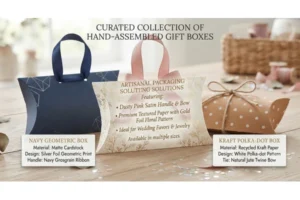
How It Actually Comes Together
Two small holes get punched near the top curve, and ribbon, cord, or twine gets threaded through and knotted on the inside. The ribbon becomes part of the design itself, not just a functional bolt-on, since its color and texture can match the box or deliberately clash with it for effect.
Where This One Shines
Gift shops, small bakeries, soap and candle brands — this style shows up constantly there, since ribbon adds a soft, tactile element plain cardboard just doesn’t have on its own. It’s also one of the cheaper handle options to produce, which makes it an easy first step for brands testing this out without committing to a full redesign.
One Thing Worth Watching
Match the ribbon to the actual weight inside. A delicate satin ribbon looks gorgeous but stretches or snaps under anything heavier than something light and soft. Pick ribbon strength based on product weight, not just how it looks on a shelf.
Die-Cut Handle Pillow Boxes
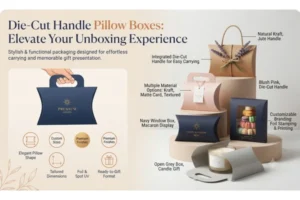
This one skips ribbon entirely and cuts the handle straight into the cardboard, as part of the box’s actual structure.
Why Brands Keep Choosing This Look
There’s something clean about a handle built into the material instead of tied on after the fact. It reads as more minimal, more design-forward, and it dodges the slightly rustic feel ribbon naturally carries with it. Sleek, contemporary brands tend to find this fits their visual language a lot better than anything involving fabric or cord.
The Engineering Side of It
Getting this right takes more precision than a ribbon handle does. The cut-out needs reinforcement, usually a slightly thicker board right around the handle, since an unreinforced die-cut handle tears under weight way more easily than people expect. That means the die itself needs custom engineering, which adds a bit to the production timeline compared to a basic ribbon-and-hole setup.
Where It Fits Best
Retail products more than delicate gift items, honestly — packaged food, small hardware, subscription box contents — anywhere the handle needs to survive repeated handling instead of one gentle carry from store to home.
Rope and Cord Handles
Sitting somewhere between ribbon and die-cut, rope handles bring a chunkier, more tactile feel that’s genuinely become trendy over the last couple of years.
Why People Like This One
Thicker cotton rope or twisted paper cord gives a box a noticeably more premium, boutique-ish feel compared to thin ribbon. It photographs well too, which matters more now than it used to, given how much unboxing content ends up on social media.
Where This Fits Naturally
Brands going for natural, earthy, slightly rustic — think artisanal soaps, small-batch skincare, specialty teas — tend to gravitate toward this, since rope pairs so naturally with kraft paper and other unbleached materials already leaning that same direction visually.
One Practical Thing to Keep in Mind
Rope needs bigger holes than ribbon does, which means reinforcement around them matters even more here. Skipping that is one of the more common mistakes brands make trying this style out for the first time, and it usually shows up as torn corners after just a handful of uses.
Fold-and-Lock Paper Handles
The newest style gaining ground, and worth watching closely since it solves a problem the other three don’t really touch.
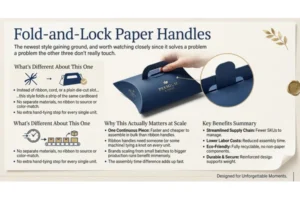
What’s Different About This One
Instead of ribbon, cord, or a plain die-cut slot, this style folds a strip of the same cardboard as the box into a reinforced handle that locks into a slot on the top curve. No separate materials, no ribbon to source or color-match, no extra hand-tying step for every single unit.
Why This Actually Matters at Scale
Because everything’s one continuous piece of material, this style is genuinely faster and cheaper to assemble in bulk than ribbon handles, which need someone (or some machine) tying a knot on every unit. For brands scaling from small batches into bigger production runs, that difference in assembly time adds up fast — faster than people usually expect.
The Trade-Off, Though
This style looks a bit more structured, less soft, than ribbon or rope does. Suits brands with a cleaner, more streamlined identity better than ones chasing a cozy, handmade feel.
So Which One’s Actually Right for You?
There’s no single correct answer here, honestly. Ribbon suits soft, gift-oriented brands. Die-cut suits sleek, modern ones. Rope suits earthy, artisanal ones. Fold-and-lock suits brands scaling up production and caring more about speed and cost than a soft, cozy feel. The right pick really just comes down to matching the handle to whatever visual language your packaging is already speaking.
Bottom Line
A handle seems like such a tiny addition, but it quietly changes how a pillow box gets carried, perceived, remembered. Match the right style to your brand and your product’s actual weight, and that one small detail ends up doing way more heavy lifting than you’d expect — the difference between packaging that feels premium and packaging that just gets tossed in a drawer.