Soap is one of the most competitive shelf categories in retail. Walk down any bath-and-body aisle and you’ll see dozens of near-identical bars fighting for the same three seconds of attention. The bar itself rarely wins that fight — the box does.
This guide breaks down what actually makes soap packaging perform: the materials that protect the product, the design choices that drive shelf pull, the real cost drivers behind custom boxes, and the mistakes that quietly kill conversion. No fluff, no recycled talking points — just what a brand needs to know before ordering.
Why Soap Packaging Matters More Than Most Categories
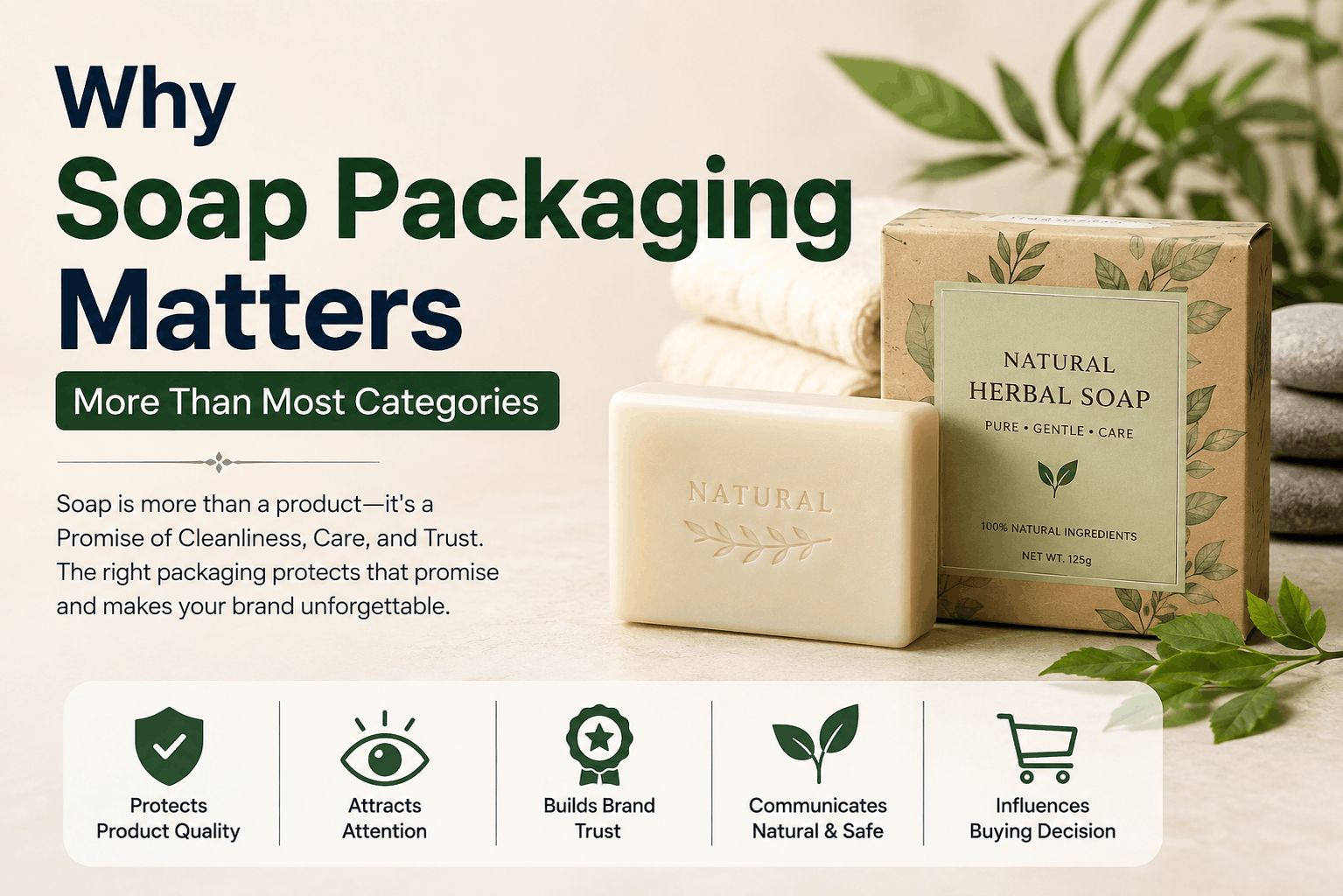
Soap has a problem other products don’t: it’s often scented, oily, and can sweat glycerin, especially with handmade or cold-process bars. That means packaging isn’t just branding — it’s functional protection against:
- Moisture and humidity, which can soften bars or cause mold in melt-and-pour soaps
- Glycerin dew (sweating), common in transparent and handmade soaps, which can stain packaging
- Fragrance loss, since essential oils and fragrance oils are volatile and evaporate in porous packaging
- Physical damage during shipping and shelf handling, especially for bars with embeds, layers, or delicate edges
Get the material wrong, and a customer opens a box to a melted, scentless, or crumbling bar — regardless of how good the soap itself is.
Choosing the Right Material
| Material | Best For | Moisture Resistance | Cost | Sustainability |
| Kraft paperboard | Handmade, artisan, natural-brand soaps | Moderate | Low–Medium | High (recyclable, biodegradable) |
| Corrugated cardboard | Shipping-heavy brands, subscription boxes | High (structural) | Medium | High |
| Rigid/setup boxes | Premium/gift soap lines | Moderate | High | Medium |
| Coated cardstock (SBS) | Retail bars needing print vibrancy | Moderate–High with coating | Medium | Medium |
| Poly/cellophane wrap | Budget or high-humidity climates | High | Low | Low |
A quick rule of thumb: if the soap is handmade or cold-process, go kraft or SBS with a moisture-resistant coating. If it’s shipped direct-to-consumer, corrugated inserts prevent crushing in transit — a detail most small brands skip until they get their first damage complaint.
Design Elements That Actually Drive Shelf Pull
Retail data on CPG packaging consistently shows shoppers make a buy/skip decision on a shelf in under 3 seconds. For soap specifically, three design elements do most of the work:
- Contrast, not complexity. A single bold color against kraft or white outperforms busy, multi-pattern designs in shelf tests — busy packaging reads as “cheap” from a distance, even when the print quality is high.
- A visible or implied texture cue. Window cutouts, embossing, or even a photograph that shows the bar’s actual texture (swirls, exfoliants, botanicals) sets expectations and reduces return/complaint rates for handmade soap specifically.
- Ingredient transparency up front. Soap buyers — more than most beauty categories — actively read the front panel for key ingredients (goat milk, activated charcoal, shea butter). Burying this on a side panel is a common, fixable mistake.
Sizing: Get This Right Before You Design Anything
Most bar soap falls into a few standard weight ranges, and box dimensions should be built around the bar plus a small tolerance — not the other way around:
- Travel/mini bars: ~1–1.5 oz — box footprint roughly 2″ x 1.25″ x 1″
- Standard bar soap: ~4–5 oz — box footprint roughly 3.5″ x 2.5″ x 1.25″
- Large/spa bars: 6–8 oz — box footprint roughly 4″ x 3″ x 1.5″
Leave roughly 1/8″ of internal clearance per side. Too tight, and boxes are hard to pack by hand or machine; too loose, and the bar rattles or shifts in shipping, which chips edges and cracks embeds.
Finishing Options Worth the Extra Cost (and Ones That Usually Aren’t)
Worth it for most brands:
- Matte lamination — reduces fingerprint smudging on display, feels premium
- Spot UV on the logo — cheap way to add shelf contrast without a full foil budget
- Die-cut windows — lets the product sell itself, especially for colorful or textured bars
Only worth it at scale or for premium lines:
- Full foil stamping — beautiful, but the cost-per-unit only makes sense above a few thousand units or a $10+ retail price point
- Soft-touch coating — adds tactile appeal but is more prone to scuffing in transit, so pair it with a protective outer if shipping direct
Sustainability: What Actually Matters vs. What’s Marketing
“Eco-friendly” gets used loosely in soap packaging. Here’s what’s genuinely verifiable versus what’s a claim to be skeptical of:
- Recyclable means the material can go into standard curbside recycling — kraft and uncoated cardboard generally qualify; foil-laminated or heavily coated boxes often don’t.
- Biodegradable is a material property (kraft, uncoated paperboard) — it’s not automatically true just because a box “looks natural.”
- Compostable is a stricter, certifiable standard (look for BPI or similar certification) — most soap boxes are not actually compostable even when marketed that way.
If sustainability is part of your brand story, be precise about which of these three claims your packaging actually meets — vague “eco-friendly” language increasingly gets called out by customers and, in some markets, regulators.
Common Mistakes Brands Make With Soap Packaging
- Designing the box before finalizing the bar’s final cured weight — shrinkage during curing (common in cold-process soap) can leave bars swimming in boxes sized off wet weight.
- Skipping a physical sample run — screen colors and printed colors rarely match exactly; a proof run catches this before a 1,000-unit order is wrong.
- Ignoring case-pack efficiency — a box that looks great individually but doesn’t nest well in shipping cartons quietly inflates freight costs.
- No batch/lot info space — increasingly expected for handmade cosmetics and required in some jurisdictions for allergen and ingredient disclosure.
FAQs
How much do custom soap boxes cost? Cost depends primarily on material, print complexity, and order volume. Kraft boxes with single-color printing are the most economical starting point; full-color printing with finishing (foil, UV, embossing) increases cost per unit but drops significantly at higher volumes due to setup costs being spread across more units.
What’s the minimum order quantity for custom soap boxes? This varies by manufacturer and box style, but small-batch and startup-friendly options are increasingly common, letting new soap brands test designs without committing to warehouse-sized inventory.
Can custom soap boxes be both sturdy and eco-friendly? Yes — corrugated and thick kraft stocks provide real structural protection while remaining recyclable and biodegradable, without needing plastic or heavy lamination.
Do I need different packaging for handmade vs. commercial soap? Generally yes. Handmade and cold-process soaps sweat glycerin and vary slightly bar-to-bar, so they benefit from slightly more tolerance and moisture-conscious materials than mass-produced, machine-cut commercial bars.
Getting Your Packaging Right the First Time
Soap packaging sits at an unusual intersection: it has to protect a product that’s often naturally unstable (scented, handmade, moisture-sensitive) while doing the heaviest lifting in the actual buying decision. Getting the material, sizing, and finishing choices right the first time avoids costly reprints and — more importantly — avoids a customer’s first impression of your brand being a damaged or melted bar.