
Choosing a packaging material used to come down to two questions: how much does it cost, and does it protect the product? Today there’s a third question that carries just as much weight — what happens to this box after the customer opens it?
Walk into any packaging conversation now and you’ll hear the same handful of terms thrown around: biodegradable, compostable, recyclable, sustainable. They get used almost interchangeably, but they don’t mean the same thing, and picking the wrong material for your product can cost you money, damage goods in transit, or leave customers confused about how to dispose of it properly.
This guide breaks down the eco-friendly packaging materials brands actually use in 2026, compares them head-to-head on the factors that matter — cost, durability, printability, and true end-of-life impact — and helps you match a material to your specific product instead of just picking whatever’s trending.
First, What Actually Makes a Material “Eco-Friendly”?
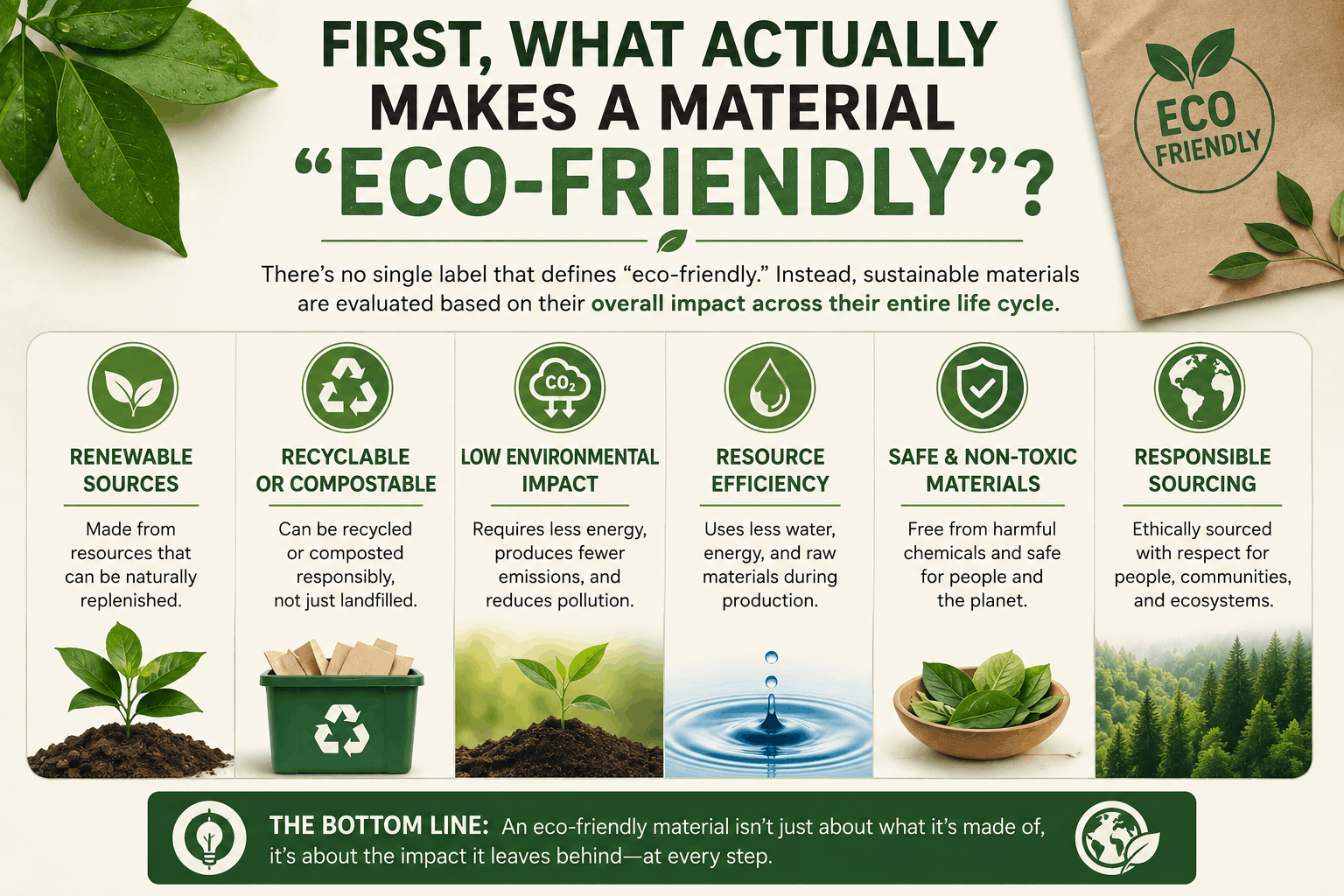
Before comparing options, it helps to separate three terms people often confuse:
- Biodegradable means a material breaks down naturally over time, but there’s no guarantee of how long that takes or under what conditions.
- Compostable is a stricter standard — the material breaks down into non-toxic components within a defined timeframe, often verified by a certification like BPI or TÜV Austria.
- Recyclable means the material can be reprocessed into new material, but only if local recycling infrastructure actually accepts it.
A material can be one of these without being the others. Recycled cardboard, for example, is highly recyclable but not always compostable if it’s laminated or heavily inked. Keeping these distinctions straight will make the rest of this comparison much easier to apply to your own product line.
Comparing the Top Eco-Friendly Packaging Materials
1. Corrugated Cardboard
The default choice for shipping boxes, and for good reason. Corrugated board is made from layered fluted paper, which gives it strength relative to its weight.
- Best for: e-commerce shipping, bulk cartons, subscription boxes
- Cost: Low to moderate
- Strength: High — handles stacking and transit well
- End of life: Recyclable and compostable in its unlaminated form
- Watch out for: Glossy coatings or plastic tape/labels that reduce recyclability
2. Kraft Paper and Kraft Boxes
Kraft paper is prized for its natural, unbleached look and its tensile strength relative to other paper stocks. It’s become the visual shorthand for “eco-friendly” in retail packaging.
- Best for: Retail boxes, mailers, bags, branding-forward packaging
- Cost: Low to moderate
- Strength: Moderate — good for lightweight to mid-weight products
- End of life: Recyclable and compostable when uncoated
- Watch out for: Kraft alone isn’t very water-resistant unless treated
3. Molded Pulp (Recycled Paperboard)
Molded pulp is made by pressing recycled paper fibers into a mold — think egg cartons or the trays inside electronics boxes. It’s excellent for cushioning irregularly shaped items.
- Best for: Fragile items, electronics inserts, food trays
- Cost: Low
- Strength: Good for cushioning, not structural support
- End of life: Compostable and recyclable
- Watch out for: Limited ability to carry detailed branding or print
4. Mushroom (Mycelium) Packaging
Grown from mycelium bound to agricultural waste, this material has gained attention as a genuine plastic-foam alternative for cushioning and protective inserts.
- Best for: Premium or tech products needing protective cushioning
- Cost: Higher than most alternatives
- Strength: Good cushioning, low structural strength
- End of life: Fully compostable, breaks down in weeks
- Watch out for: Longer lead times and higher minimum order quantities from most suppliers
5. Seaweed-Based Packaging
Seaweed-derived films and coatings are increasingly used as a plastic-wrap substitute, particularly for food packaging, since the base material grows quickly and requires no fresh water or fertilizer.
- Best for: Food wraps, small sachets, single-use flexible packaging
- Cost: Higher, limited supplier availability
- Strength: Thin-film applications only
- End of life: Biodegradable, some formulations are edible
- Watch out for: Still an emerging category — verify supplier certifications carefully
6. Compostable Bioplastics (PLA and similar)
Made from plant starches rather than petroleum, these look and feel like conventional plastic but are designed to compost under the right conditions.
- Best for: Clear packaging, food service items, poly-mailer alternatives
- Cost: Moderate to higher than conventional plastic
- Strength: Comparable to standard plastic film
- End of life: Compostable, but usually only in industrial composting facilities — not backyard compost
- Watch out for: Mislabeling these as “backyard compostable” is a common and costly mistake
7. Recycled and Reusable Rigid Boxes
Rigid boxes made from recycled paperboard offer a premium unboxing experience while avoiding virgin material use. Some brands also design rigid boxes explicitly for reuse (storage boxes, gift boxes).
- Best for: Premium retail, gifting, cosmetics
- Cost: Higher due to construction complexity
- Strength: High, holds shape well
- End of life: Recyclable; reusable by design in many cases
- Watch out for: Foil stamping and certain adhesives can complicate recycling
Quick Comparison Table
| Material | Cost | Strength | Best Use Case | Compostable? |
| Corrugated cardboard | Low–Moderate | High | Shipping boxes | Yes (unlaminated) |
| Kraft paper | Low–Moderate | Moderate | Retail bags/boxes | Yes (uncoated) |
| Molded pulp | Low | Cushioning only | Fragile item inserts | Yes |
| Mushroom packaging | High | Cushioning only | Premium protective packaging | Yes |
| Seaweed-based film | High | Low (thin film) | Food wraps, sachets | Yes |
| Compostable bioplastic | Moderate–High | Comparable to plastic | Clear/flexible packaging | Industrial only |
| Recycled rigid boxes | Higher | High | Premium/gift packaging | Yes |
How to Choose the Right Material for Your Product
- Start with what you’re protecting. Fragile electronics need cushioning strength; a T-shirt in a mailer doesn’t.
- Check your local recycling and composting infrastructure. A compostable material is only as useful as your customers’ ability to actually compost it. If your audience is mostly urban with curbside recycling but no industrial composting access, recyclable kraft or cardboard may outperform bioplastics in practice.
- Factor in shipping distance and handling. Materials that perform well in a local drop-off may not survive multi-leg freight shipping.
- Don’t sacrifice unboxing experience for sustainability claims alone. Customers increasingly expect both — a scuffed, flimsy “eco box” can undercut trust in your brand as much as an unsustainable one builds it.
- Ask suppliers for certifications, not just claims. Look for BPI, TÜV Austria, FSC, or similar third-party verification rather than taking “eco-friendly” at face value.
Common Mistakes Brands Make with Eco-Friendly Packaging
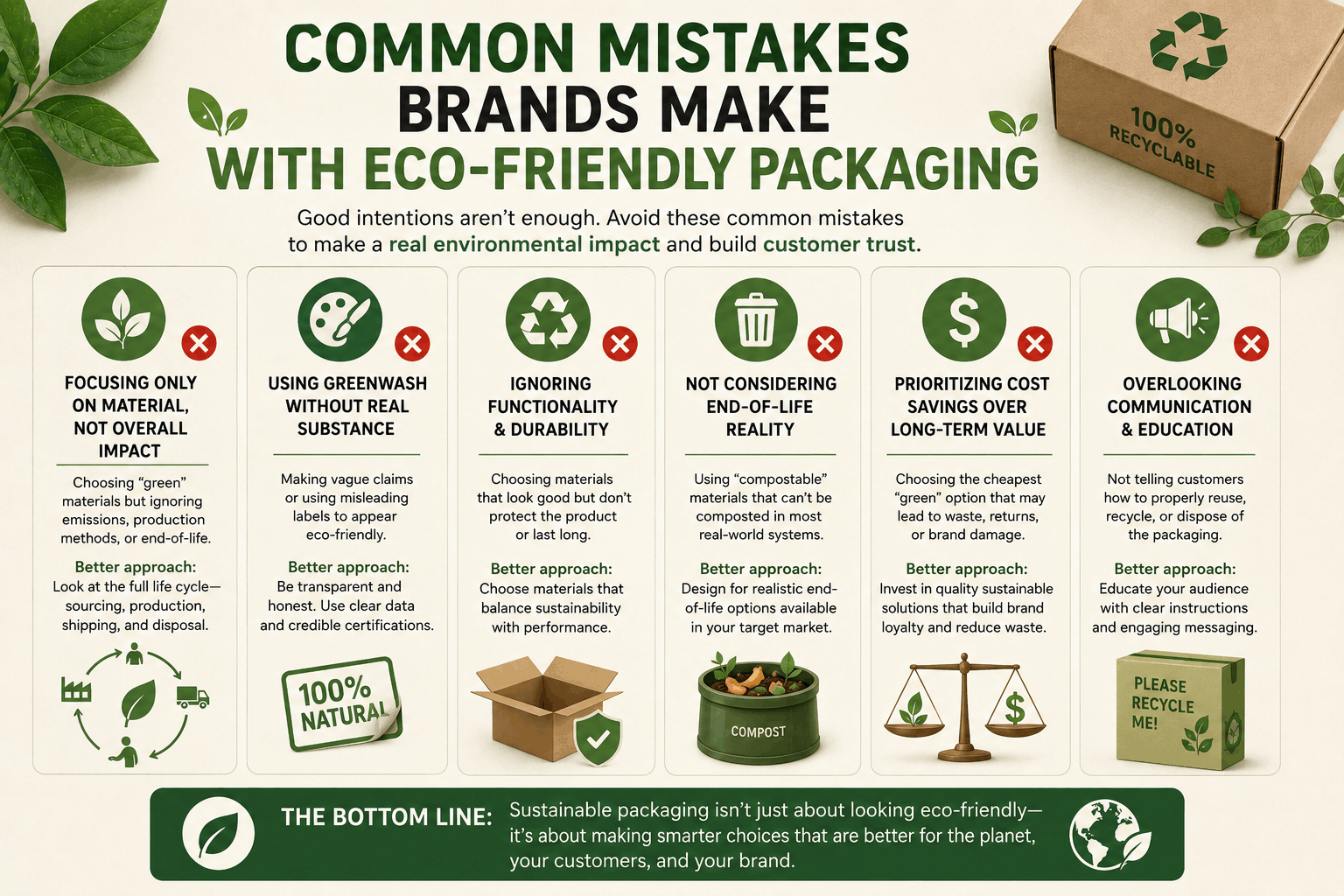
- Over-promising on “biodegradable” claims without specifying timeframe or conditions, which can create regulatory and trust issues.
- Mixing incompatible materials, like a compostable box sealed with conventional plastic tape, which contaminates the recycling or composting stream.
- Choosing based on trend rather than fit — mushroom packaging is excellent for cushioning, for example, but a poor and costly choice for a heavy shipping carton.
- Ignoring print and branding limitations of certain materials before committing to a full production run.
Final Thoughts
There’s no single “best” eco-friendly packaging material — there’s only the best material for your specific product, shipping method, and customer base. Corrugated and kraft remain the most practical starting point for most brands because of their balance of cost, strength, and genuine recyclability. Newer materials like mushroom packaging and seaweed-based films are worth exploring for specific use cases, particularly cushioning and food packaging, but come with higher costs and less mature supply chains.
If you’re weighing these options for an upcoming packaging redesign, it often helps to test a few materials on actual product samples before committing to a full production run — what looks good on a spec sheet doesn’t always hold up in real shipping conditions.