A customer decides how they feel about your bakery in about three seconds — and it usually happens before they’ve opened the box.
That’s not an exaggeration. It’s how packaging psychology works. The box is the first physical thing a customer touches. If it looks cheap, generic, or like it came off a shelf at a restaurant supply store, that impression attaches itself to the product inside — even if what’s inside is genuinely excellent. If it looks intentional, the opposite happens: people assume the product will be good before they’ve tasted a crumb.
This is why bakery owners who once treated packaging as an afterthought — “just get some boxes” — end up rethinking that decision the moment they see a competitor’s custom box outperforming their plain one on social media.
Here’s what actually matters when you’re deciding on bakery packaging, and where most guides (including a lot of packaging company blogs) tend to gloss over the real tradeoffs.
What a Bakery Box Actually Needs to Do
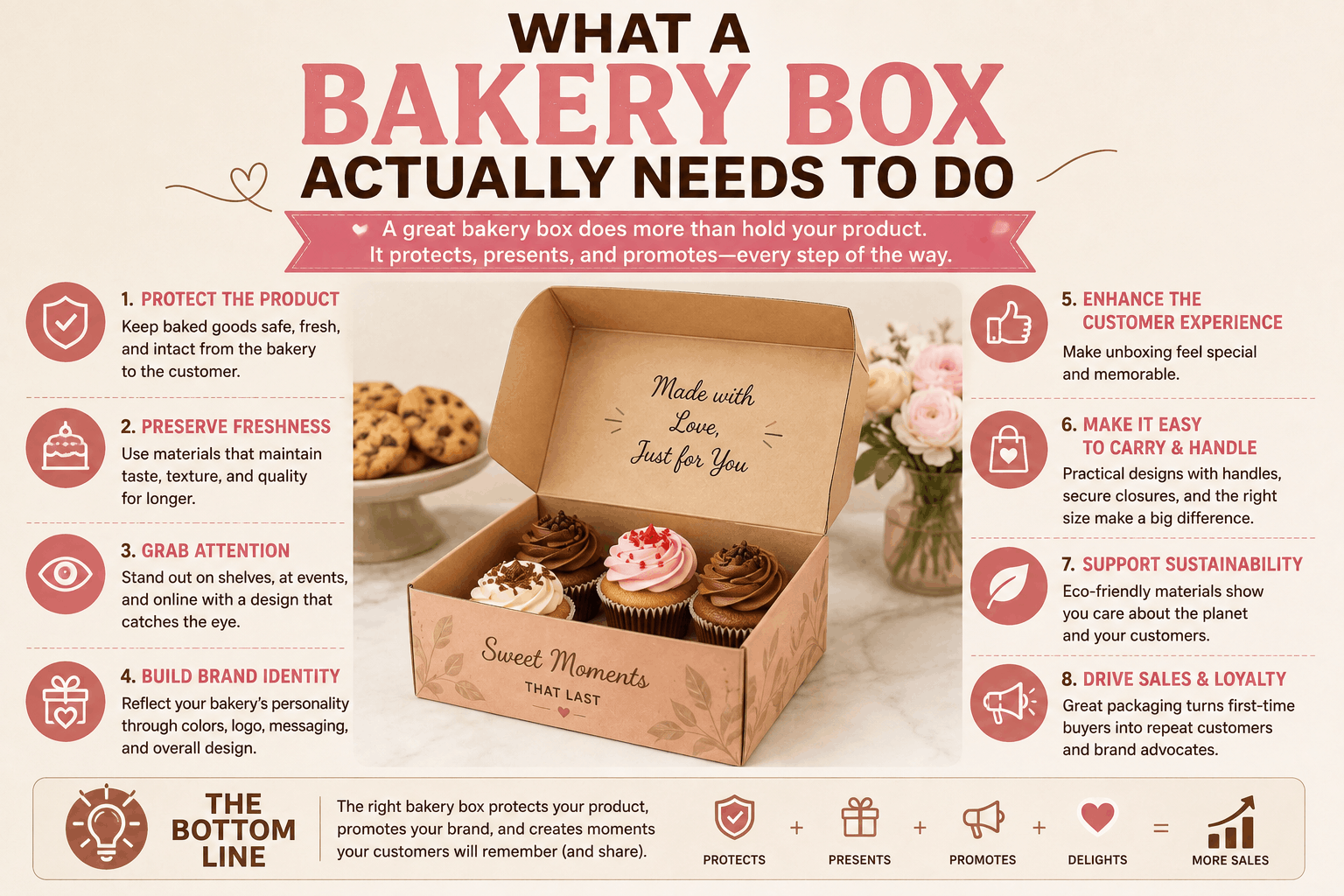
Before getting into styles and finishes, it helps to separate the job of the box from the decoration of the box. A bakery box has three jobs, in this order:
- Protect the product. Cakes shift, pastries crush, cookies crack. If the box doesn’t hold its shape or seal properly, none of the branding matters.
- Preserve freshness. Grease-resistant liners, breathable materials for bread, and moisture control for anything cream-based aren’t optional — they’re the difference between a customer’s first bite and their last order from you.
- Communicate the brand. Only after the first two are solved does the box get to do its marketing job — logo, colors, finish, unboxing experience.
A lot of packaging gets this backwards: gorgeous printing on a box that doesn’t hold a two-tier cake steady, or a beautiful window that lets a cream pastry dry out in transit. Get the function right first.
Choosing a Box Style for What You Actually Sell
There’s no single “best” bakery box — the right choice depends on the product:
- Window boxes work well for items where the visual sells the sale: decorated cakes, colorful macarons, layered pastries. The window builds trust because the customer can verify quality before they buy.
- Solid tuck-top or lid-and-base boxes suit items where presentation matters more at the moment of opening than on the shelf — think gift-style cake boxes or assortment boxes for holidays.
- Corrugated boxes are worth the extra cost for anything shipped, since flat cardboard alone won’t survive transit the way corrugated will.
- Kraft or recycled board signals a specific brand story — artisanal, sustainable, small-batch — and it genuinely resonates with a segment of buyers who care about that. It’s not a fit for every brand voice, though; a bright, playful cupcake shop and a rustic sourdough bakery need very different materials to say the same thing: “we made this carefully.”
Pick the style based on what you’re protecting and what story you’re telling — not just what looks good in a supplier’s catalog photo.
Branding the Box Without Overdoing It
The most common mistake in bakery packaging isn’t too little branding — it’s too much. A logo, one or two brand colors, and a finish (matte, gloss, or kraft texture) usually outperforms a box crowded with taglines, icons, and decorative elements competing for attention.
A few things that consistently work:
- Consistent color across your whole line. Customers should recognize your boxes from ten feet away, the same way they’d recognize a shopping bag from a store they know.
- One clear focal point. Usually the logo, sometimes a single illustration if it’s central to the brand story.
- Finish that matches the price point. A $4 cookie doesn’t need a soft-touch laminate finish; a $60 celebration cake benefits from one.
If you’re working with a packaging supplier, ask to see proofs at actual size before committing to a full print run — colors and proportions read very differently on a 3-inch cookie box mockup versus the real thing.
Freshness and Materials: The Part That’s Easy to Skip
This is where a lot of decorative-focused packaging advice falls short. Materials decisions that affect freshness are not glamorous, but they’re the ones that determine repeat business:
- Grease-resistant coating for anything with butter or oil content (croissants, cookies, donuts) prevents the box from staining and the product from drying against soggy cardboard.
- Breathable vents or perforations matter for bread and anything that sweats in a sealed box.
- Moisture barriers are essential for cream-filled or frosted items shipped any distance.
None of this shows up in an Instagram photo, but it shows up in reviews — “arrived fresh,” “packaging kept it perfect” — which do more for repeat orders than the prettiest box design ever will.
Sustainable Packaging: A Real Consideration, Not Just a Trend Label
Recyclable and biodegradable materials aren’t just a marketing checkbox anymore — a meaningful share of bakery customers actively factor packaging waste into where they buy. If sustainability fits your brand, it’s worth doing properly: FSC-certified board, soy-based inks, and minimal plastic use are things customers increasingly notice and ask about directly.
The mistake to avoid is claiming sustainability without backing it up. Vague language like “eco-friendly” without any certification or material detail reads as marketing spin, and customers who care about this topic tend to notice.
Ordering Custom Bakery Boxes: What to Actually Compare
If you’re evaluating packaging suppliers, the things worth comparing are:
- Minimum order quantity (MOQ) — a low MOQ matters a lot for smaller or seasonal bakeries that don’t want 5,000 boxes of one design sitting in storage.
- Turnaround time — especially around holidays, when every bakery is ordering at once and lead times stretch.
- Proofing process — do you see a real color proof before full production, or just a digital mockup?
- Material options — can they actually do grease-resistant, breathable, or recyclable stock, or is that just listed on the website?
[Your Brand Name] works with bakeries at [insert your actual MOQ], with production turnaround of [insert your actual turnaround time], and we always send a physical or digital proof before any full print run goes out. [Replace this paragraph with your real numbers, process, and what makes your production actually different — this is the part that makes the article sound like it came from a real business instead of a template.]
The Bottom Line
Custom bakery boxes matter because they’re doing marketing work whether or not you plan for it — every box that leaves your shop is either building trust in your brand or quietly working against it. The bakeries that get this right treat packaging as part of the product, not decoration on top of it: protect first, preserve freshness second, brand third.