
Vape packaging isn’t just a box. It’s the first physical interaction a customer has with your product, it’s often the only thing standing between your cartridge and a cracked shipment, and — depending on where you sell — it’s also the piece that keeps you on the right side of the law.
Most guides on this topic stop at “make it look nice.” This one goes further: materials, compliance requirements that can actually get a shipment rejected, printing options, sustainability, and what really drives your cost per unit.
Why Vape Packaging Matters More Than Design
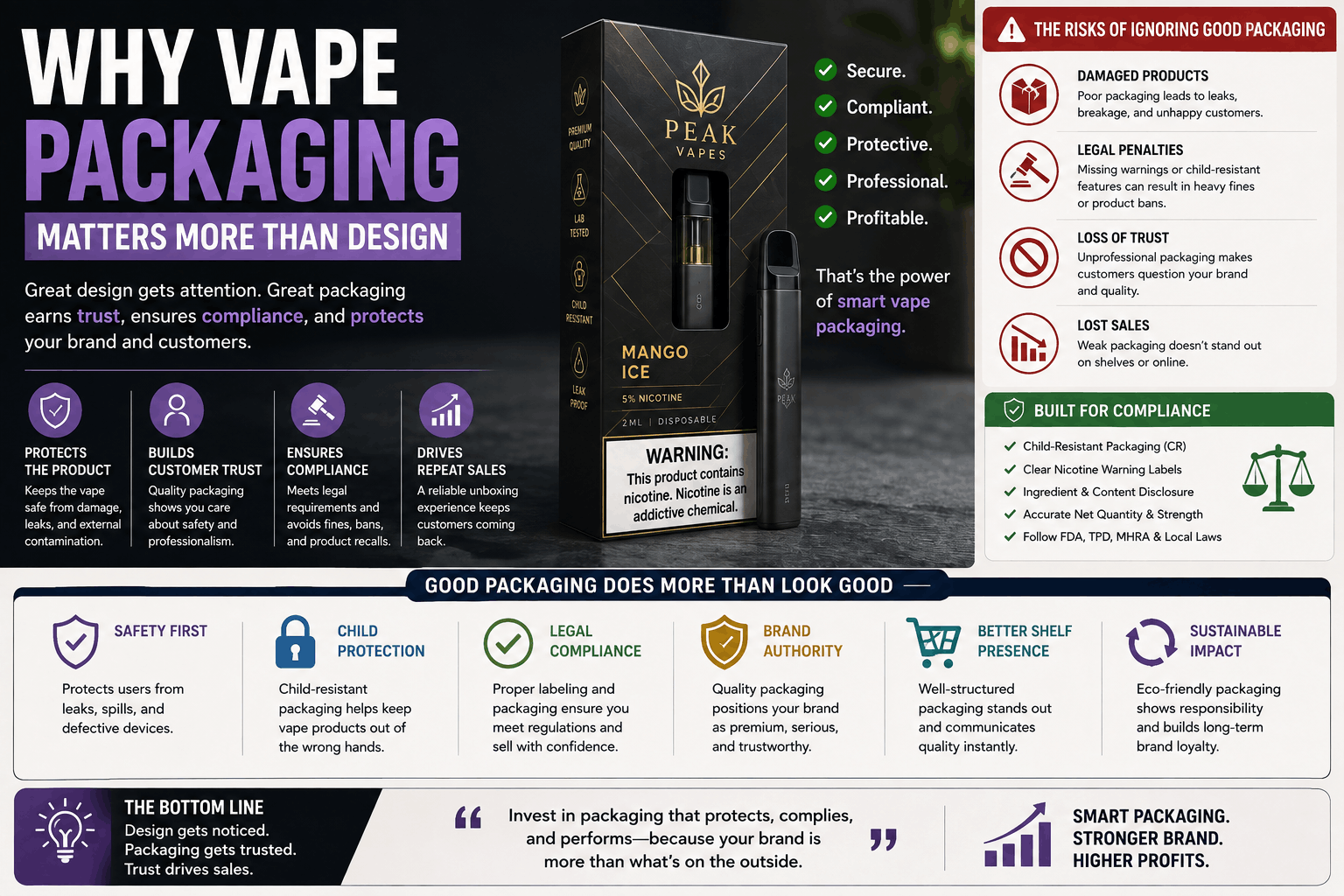
Packaging affects three things at once, and brands that only optimize for one usually lose ground on the other two:
- Protection. Vape hardware and cartridges are fragile. Glass tanks, batteries, and coils don’t tolerate rough handling, and a damaged product on arrival is one of the fastest ways to lose a repeat customer.
- Perception. Buyers associate packaging quality with product quality before they’ve even opened the box. A flimsy, poorly printed box undercuts a premium product every time.
- Compliance. This is the part most packaging blogs skip entirely, and it’s the part that can actually get your product pulled from shelves or held at customs.
Vape Packaging Materials: What Actually Fits Your Product
Not every material suits every product, so it’s worth matching the material to what you’re shipping and where.
Rigid boxes are the go-to for premium vape pens and higher-end hardware. They’re sturdy, hold their shape under pressure, and give a noticeably upscale unboxing feel — but they cost more and take up more shipping volume.
Corrugated (cardboard) boxes are the practical choice for bulk shipping and outer cartons. They handle stacking and transit stress well and are the cheapest option per unit at scale.
Kraft boxes are popular for brands leaning into a natural or eco-conscious identity. They’re recyclable, generally biodegradable, and read as “clean” to consumers — a real advantage if sustainability is part of your brand story (more on that below).
Tin and metal containers work well for small-format products like cartridges or pods where extra durability and a premium tactile feel matter more than cost.
Mylar bags are common for disposable vapes and pre-filled pods because they’re lightweight, moisture-resistant, and cheap to produce at volume — though they offer less structural protection than rigid formats.
If you’re unsure, the safest default is corrugated for shipping cartons and rigid or Kraft for the retail-facing unit box — that combination balances cost and presentation for most brands. [LINK to material options page]
Compliance: The Part Most Vape Packaging Guides Skip
This is where a lot of brands get caught off guard, and it’s worth taking seriously before you finalize any packaging order.
Child-resistant packaging is a legal requirement in many U.S. states for nicotine and cannabis vape products, following standards set by the Consumer Product Safety Commission (CPSC) for child-resistant closures. If you sell into a regulated state, your packaging supplier needs to confirm your boxes actually meet the applicable CR standard — not just “look” secure.
Federal shipping rules matter too. The PACT Act requires specific labeling and age-verification language on vapor product shipments in the U.S., and carriers can and do reject non-compliant packages.
State and local labeling laws vary — warning statements, nicotine content disclosure, and THC labeling (for cannabis vape products) differ by state, so a one-size-fits-all label often doesn’t hold up everywhere you ship.
International sellers shipping into the EU also need to account for Tobacco Products Directive (TPD) packaging and labeling requirements, which are stricter than most U.S. state rules.
The practical takeaway: ask any packaging supplier directly whether they’ve produced CR-compliant or PACT Act-compliant packaging before, and ask for an example. If they can’t answer clearly, that’s a red flag before it becomes your problem.
Printing and Finishing That Actually Moves Product
Printing quality is where “looks fine in a mockup” and “looks fine in someone’s hand” diverge. A few finishes worth knowing:
- Matte lamination reduces fingerprints and smudging — a small detail that matters a lot for dark or glossy box colors.
- Soft-touch lamination adds a velvety texture that reads as premium and holds up better against scuffing in transit.
- Spot UV / gloss accents highlight a logo or design element against a matte background without the cost of full foiling.
- Foil stamping (gold, silver, holographic) is the most cost-effective way to signal “premium” without a full custom die.
A good rule of thumb: pick one or two finishing techniques and execute them well, rather than stacking four effects that compete with each other visually.
Sustainable Vape Packaging: Increasingly Not Optional
Consumer expectations around sustainable packaging have shifted from “nice to have” to something buyers actively check for, particularly in the cannabis and CBD vape space where the customer base skews toward environmentally conscious purchasing habits. Kraft and recycled corrugated materials, soy-based inks, and minimal plastic inserts are all realistic upgrades that don’t require a full packaging redesign — and several double as a marketing point on your product page.
What Actually Drives Your Vape Packaging Cost
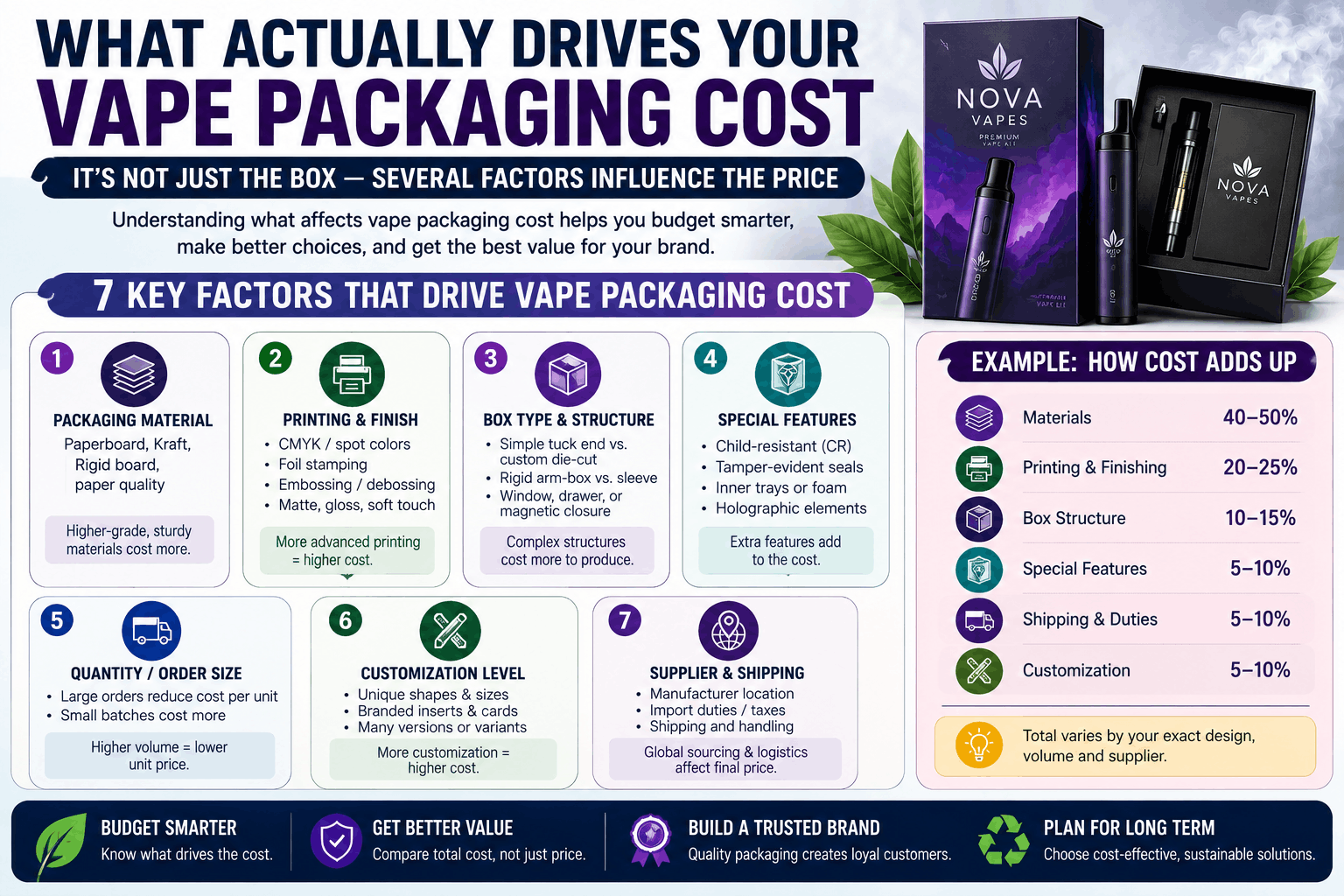
Four factors matter more than any others:
- Order quantity — cost per unit drops sharply at higher volumes since die-cut and printing setup costs are fixed regardless of run size.
- Material choice — rigid and tin cost meaningfully more than corrugated or Kraft.
- Finishing complexity — every additional lamination, foil, or UV pass adds a production step and a cost line.
- Custom die-cut structures — a fully custom box shape costs more upfront than a stock size but can be reused across future orders.
If budget is tight, spend on material quality and a clean single finish before spending on a complex custom structure — that’s usually where customers notice the difference most.
Choosing a Vape Packaging Supplier
A few questions worth asking before you commit to a supplier:
- Can they show CR-compliant packaging they’ve actually produced, not just a claim that they “can do it”?
- What’s their real turnaround time, including proof approval — not just production time?
- Do they offer low minimum order quantities if you’re testing a new SKU?
- Can they provide samples in your actual material and finish before a full production run?