A pillow box’s shape gets it noticed, but the finish is what makes someone want to pick it up. Two boxes with identical dimensions and identical print can feel like completely different products depending on how the surface is treated — one flat and unremarkable, the other with a texture or shine that makes it worth photographing. For a shape that’s already built for presentation (jewelry, favors, small gifts, retail add-ons), the finish carries more weight than it does on a plain shipping box.
Here’s what each finish option actually does, where it holds up and where it doesn’t, and how to match one to a specific product instead of picking whatever looks best in a sample pack.
Matte Finish
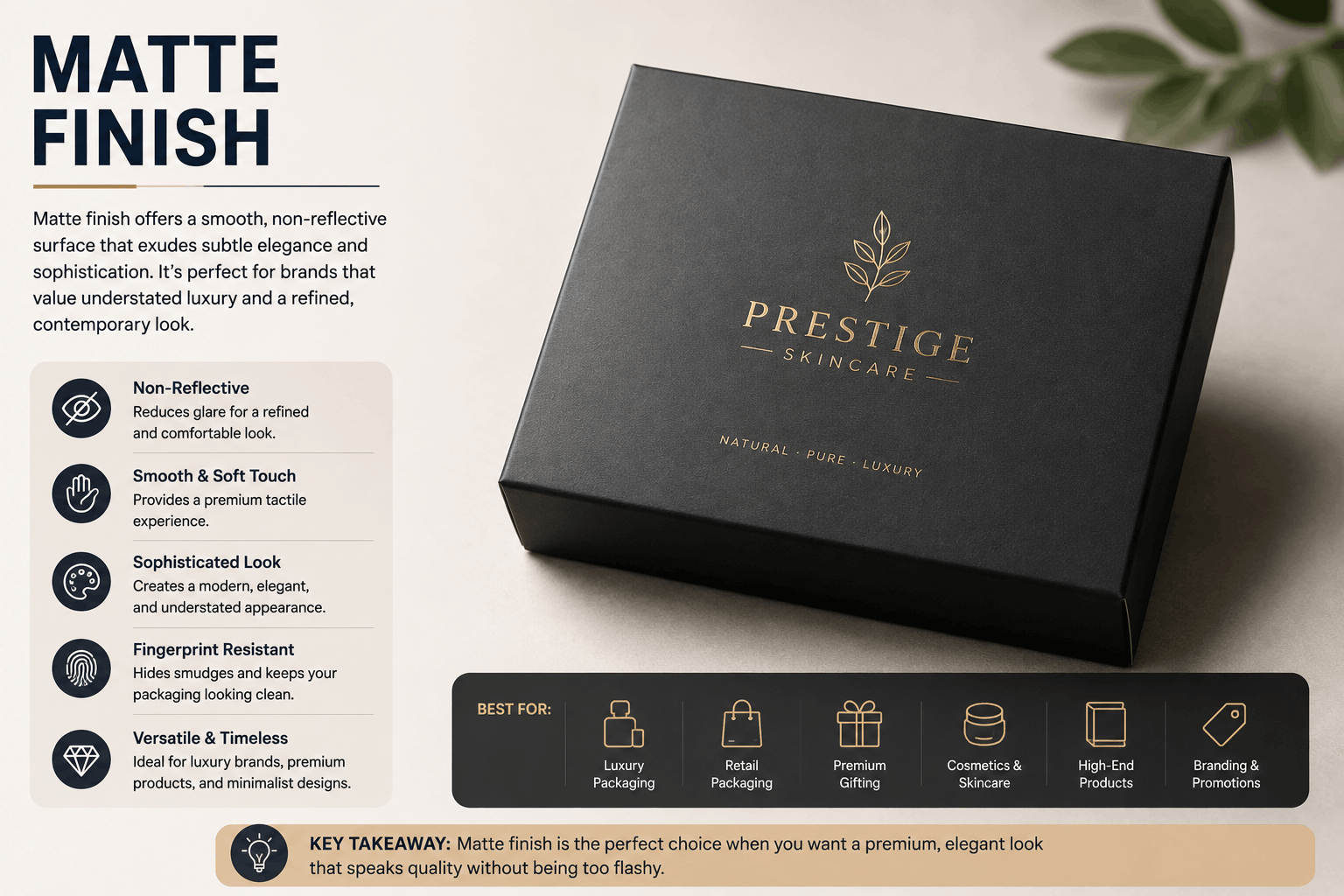
Matte coating leaves a flat, non-reflective surface with a soft, velvety feel under the fingers. It’s become the default choice for brands going for a minimalist or premium aesthetic — think skincare, jewelry, and specialty food — because it reads as understated rather than flashy.
The tradeoff is practicality: matte surfaces show fingerprints and smudges more visibly than gloss, and matte coating on its own isn’t especially scratch- or moisture-resistant. Matte lamination (a thin plastic film rather than a sprayed coating) holds up better and feels noticeably softer, but costs more and adds a small amount of thickness to the box.
Best for: boxes that will be handled once, opened, and kept — jewelry, cosmetics, gifts — where the tactile impression matters more than long-term durability.
Gloss Finish
Gloss coating creates a shiny, reflective surface that makes colors pop and print detail look sharp. It’s the finish that photographs well under store lighting and on a phone camera, which is part of why it’s still common on retail shelf packaging and anything meant to catch attention from a distance.
Gloss lamination adds a genuine layer of water resistance, since it’s a plastic film bonded to the surface rather than a coating absorbed into the paper. That makes it a reasonable pick for anything that might see light moisture — a bakery item, a product shipped in humid conditions — where matte would show water spotting faster.
Best for: brightly colored or photo-heavy print designs, retail shelf presence, and situations where a bit of splash resistance matters.
Soft-Touch Lamination
Soft-touch is a step beyond standard matte — a specialty laminate engineered specifically for a smooth, almost rubberized feel. It’s the finish most associated with high-end packaging because the tactile difference is immediately obvious the moment someone picks up the box.
It’s also the most fragile of the common finishes in one specific way: it scuffs and shows fingerprint oils more readily than gloss or standard matte, and once it’s scratched, the mark is visible because it disrupts that smooth surface. Brands that use it tend to accept that tradeoff because the first-touch impression is worth more to them than long-term surface durability.
Best for: premium and gift-tier products where the unboxing moment matters more than how the box looks after a week of handling.
Spot UV
Spot UV applies a glossy coating to specific design elements only — a logo, a pattern, a piece of text — while leaving the rest of the surface matte. The contrast is the whole point: it draws the eye to exactly what the brand wants noticed without making the entire box shiny.
It’s a finishing technique layered on top of a base finish rather than a replacement for one, which means it adds cost and a production step. For brands that want restraint everywhere except a single focal point, it’s more effective than choosing gloss or matte for the whole surface.
Best for: logo-forward branding, minimalist boxes that want one deliberate accent instead of an all-over shine.
Foil Stamping (Gold, Silver, Holographic)
Foiling presses a thin layer of metallic or holographic film onto the box using heat and pressure, producing a finish no ink or coating can replicate — genuine metallic shine rather than a metallic-colored print. Gold and silver read as classic and premium; holographic foil shifts color at different angles and tends to show up on younger, trend-driven brands rather than traditional luxury ones.
Foiling is one of the pricier finishing options and requires a separate die for the foiled area, so it’s better suited to a specific accent — a logo, a border, a single line of text — than covering large surface areas.
Best for: brands with a strong, simple logo mark that benefits from standing on its own, and gift or holiday packaging where a bit of shine fits the occasion.
Embossing and Debossing
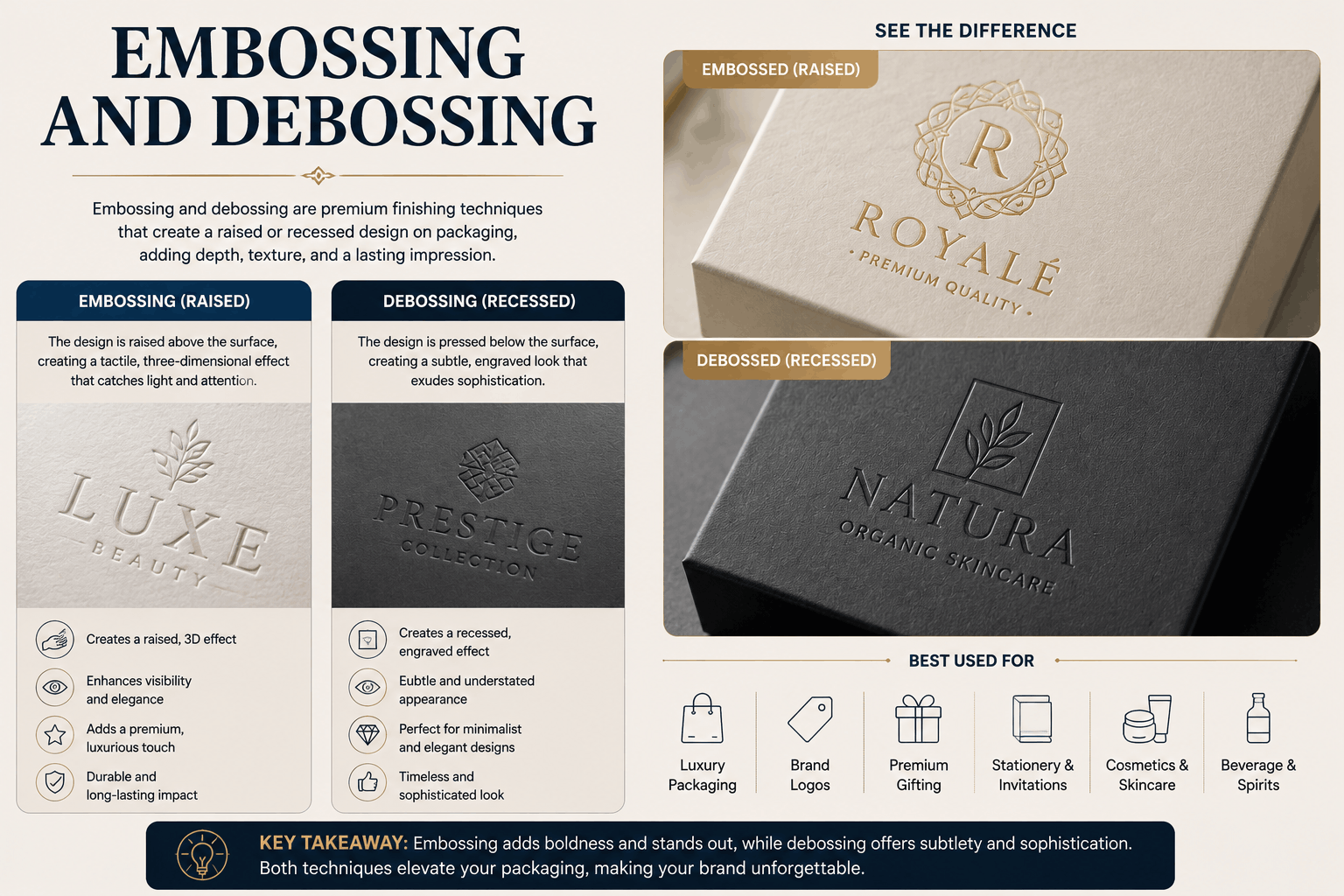
Embossing raises a design above the surface of the box; debossing presses it inward. Both are physical, tactile finishes rather than color or shine treatments — the design is felt as much as seen, which is why they’re often combined with a plain or minimally printed surface rather than a busy design that would compete with the texture.
Debossing tends to read as more subtle and refined, since the impression sits quietly into the material. Embossing is more visually assertive and pairs well with foil for a combined shine-plus-texture effect on a logo or key design element.
Best for: brands leaning into tactile, minimalist packaging, and any box where the logo or pattern deserves to be felt, not just printed.
AQ (Aqueous) Coating
AQ coating is a fast-drying, water-based coating applied as a protective layer, usually in a satin or matte-like finish. It’s less visually dramatic than the finishes above, but it’s the most cost-effective way to add a bit of scuff resistance and sheen without committing to full lamination.
Choosing a Finish for the Product Inside
The right finish depends less on what looks best in isolation and more on how the box will actually be handled:
- Jewelry and small gifts — soft-touch or matte lamination, since these boxes are opened once and often kept, and the tactile impression matters more than repeated wear.
- Bakery, confectionery, and anything shipped — gloss lamination or AQ coating, for the added moisture resistance.
- Retail shelf products — gloss or spot UV, since these need to catch attention under store lighting and stand out next to competitors.
- Minimalist or eco-positioned brands — matte coating paired with debossing, which keeps the surface understated while still giving the box a distinct feel.
- Logo-forward or gift-season packaging — foil stamping on a simple mark, which delivers the most visual impact per square inch of anything on this list.