
Edible packaging sounds like a novelty until you look at what’s actually shipping with it. Seaweed-based sachets are already replacing single-use condiment packets at food service chains. Casein films are being tested as an oxygen barrier hundreds of times more effective than the plastic wrap they’d replace. This isn’t packaging that might exist someday — it’s a category with real companies, real production lines, and real limitations that are worth understanding before treating it as a drop-in plastic replacement.
Here’s what edible packaging is actually made from, how each material behaves, and where the category still runs into real-world friction.
What Makes a Material “Edible” Packaging
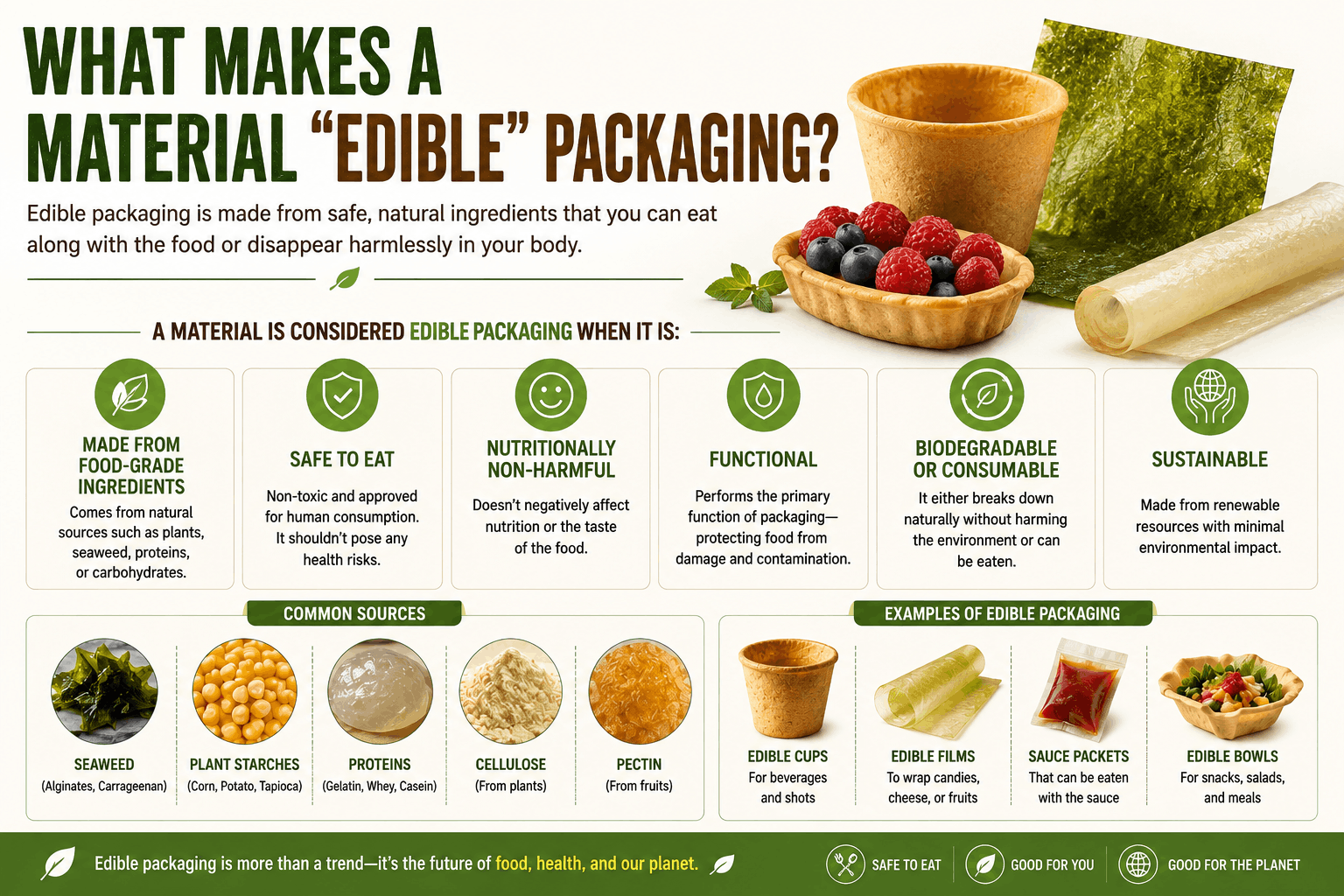
Edible packaging is film, coating, or rigid structure made from ingredients safe for human consumption — plant starches, proteins, or polysaccharides — that either gets eaten along with the product or breaks down harmlessly if discarded. The distinction that matters: a lot of “biodegradable” packaging still isn’t edible, since biodegradable only means it breaks down eventually, often requiring industrial composting conditions most consumers don’t have access to. Edible packaging is a stricter, smaller category — safe enough to eat, not just safe enough to compost.
The Core Materials
Alginate (from Seaweed)
Alginate, extracted from brown seaweed, is the material behind most of the edible packaging that’s actually reached commercial use. When sodium alginate meets a calcium solution, the calcium ions cross-link the alginate into a flexible, waterproof membrane — the same chemistry molecular gastronomy chefs use to make liquid-filled “pearls.” Notpla, a UK company, uses this process to produce Ooho — small, edible capsules that hold a single serving of liquid and can be swallowed whole, bitten into, or composted in weeks if not eaten. The company has also built seaweed-lined sachets that are already replacing plastic condiment packets at several food service chains.
Seaweed cultivation itself is a genuine sustainability advantage independent of the packaging use — it requires no fresh water, no farmland, and no fertilizer, and it absorbs carbon dioxide as it grows.
Casein (Milk Protein)
Casein-based films are being developed by USDA researchers and the American Chemical Society as an edible substitute for plastic food wrap, with oxygen-barrier performance reported to be dramatically better than conventional plastic film — meaning better protection against the oxidation that spoils fatty and perishable foods. The tradeoff is durability: casein films are more moisture-sensitive than plastic and aren’t yet a practical fit for anything that needs to survive rough handling or long shelf storage.
Starch-Based Films (Potato, Corn, Rice)
Starch extracted from potatoes, corn, or rice can be processed into thin, dissolvable films, often used for single-serving sachets — think individually wrapped seasoning packets or soluble detergent-style pods adapted for food use. These films dissolve in water and leave no residue, which makes them well suited to single-use, single-ingredient packaging rather than structural boxes or containers.
Pullulan
Pullulan is a polysaccharide produced by fermenting starch with the fungus Aureobasidium pullulans. It forms an unusually strong, oxygen-resistant, tasteless film that’s already used commercially — most visibly in the individually wrapped, dissolvable breath-strip format familiar from oral care products. It’s one of the more production-ready edible films on this list, since it’s been manufactured at commercial scale for years, just not primarily for food packaging.
Rice and Wheat-Based Rigid Materials
Beyond films, rice and wheat flour blends can be molded into rigid or semi-rigid edible items — spoons, small trays, and cutlery substitutes. These behave more like a cracker than a wrapper: they hold their shape until wet, then soften and can be eaten. They work well as single-use utensils but aren’t durable enough for repeated handling or extended exposure to moisture.
Where Edible Packaging Is Already in Use
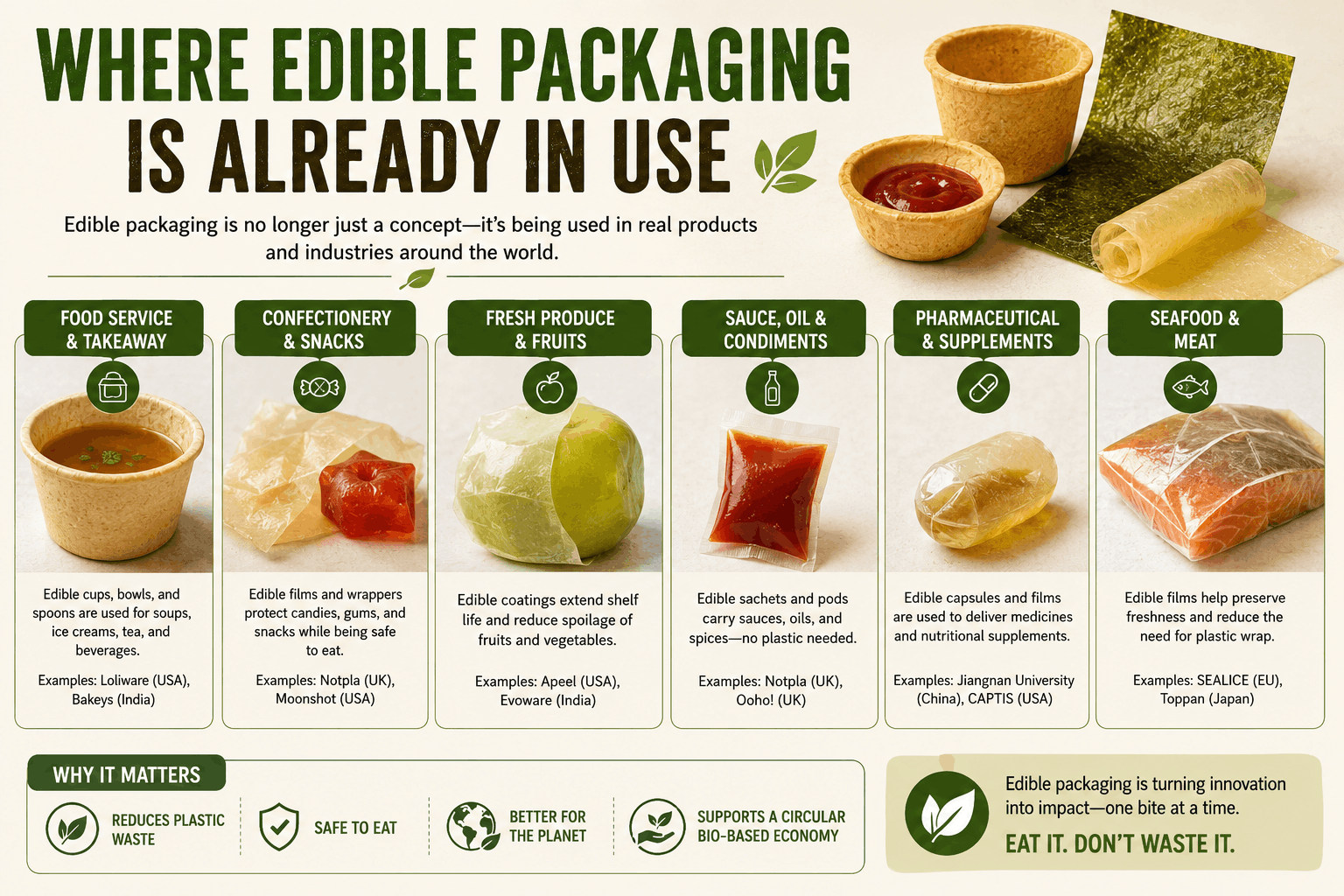
- Single-serving liquid capsules — Notpla’s Ooho format, used at sporting events and food service for water, sauces, and spirits.
- Dissolvable sachets — seaweed and starch-based packets replacing plastic condiment and seasoning packaging.
- Edible straws — sugar-based straws that soften over the course of a drink and can be eaten or composted.
- Edible cutlery — wheat, rice, and sorghum-based spoons and forks, mainly in the food service and events space.
- Wafer-based cups — cookie or wafer-material cups designed to be eaten alongside a hot beverage, more novelty than mainstream at this stage.
Where It Still Falls Short
Edible packaging isn’t a universal plastic replacement yet, and being upfront about the limitations matters more than overselling the category.
- Temperature and humidity sensitivity. Most edible films degrade faster than plastic under heat, moisture, or pressure, which limits their use for anything that needs to survive shipping, long shelf life, or variable storage conditions.
- Consumer behavior doesn’t match the pitch. A meaningful share of consumers, out of habit, still throw edible packaging away rather than eating it — which means the environmental benefit only fully materializes if the material is also genuinely compostable as a fallback, not edible as its only end-of-life path.
- Production costs and scale. Several of the companies working in this space, including Notpla and Loliware, are still scaling from pilot production to mass manufacturing — costs are higher than conventional plastic packaging until production volume catches up.
- Regulatory and food-safety scrutiny. Because the packaging itself is a food-contact and potentially food-consumption item, it faces a different, often stricter regulatory path than non-edible biodegradable packaging.
Is It Worth Considering for a Brand Right Now
For single-use, single-serving applications — condiment packets, drink capsules, straws, small utensils — edible packaging is at a point where it’s genuinely viable, not just experimental, and it sends an unmistakable sustainability signal that resonates with environmentally conscious buyers. For structural packaging — boxes, containers, anything that needs to protect a product through shipping and shelf storage — it’s not yet a realistic replacement for cardboard, kraft, or rigid stock, and won’t be until the durability and cost gaps close further.
The more practical move for most brands right now is pairing genuinely recyclable or compostable structural packaging (kraft, corrugated, molded fiber) with an edible or dissolvable component only where it makes sense — a seaweed sachet inside a kraft box, for instance, rather than trying to build an entire shipping-grade container out of a material that dissolves in water.