
My uncle’s one of those prepper-type guys, got a whole room in his basement stocked with rice, beans, wheat, all sealed up in these silver bags with little packets inside them. Been doing this for probably fifteen years now. Asked him once why he doesn’t just use regular ziplock bags or plastic containers, cheaper and easier to find at any store. He just laughed and said give it two years, then go check what’s left in a ziplock versus what’s in his mylar bags. Didn’t need to ask twice after that.
If you’re looking into long-term food storage, or even just trying to keep bulk-bought stuff fresh longer, mylar bags come up constantly. Here’s what actually matters when picking the right ones.
What Mylar Bags Actually Are
Mylar’s this metallic-looking plastic film, usually silver colored, made to block out light, oxygen, and moisture way better than regular plastic bags ever could. That’s really the whole selling point honestly, it’s not magic, it’s just a much better barrier than what most people are used to using.
Why Regular Bags Just Don’t Cut It Long Term
Ziplock bags and basic plastic containers let a decent amount of oxygen and moisture sneak through over time, slowly. Fine for a week or a month, not fine for years. Mylar’s thicker and layered specifically to stop that slow leak from happening.
Thickness Actually Matters More Than People Think
This one trips people up a lot, mylar bags come in different thicknesses, usually measured in mils, and it genuinely changes how well they perform.
Thinner Bags, Around 3.5 to 5 Mil
Fine for shorter-term storage, a year or two maybe. Cheaper, easier to seal at home with a basic iron or a hair straightener even, but not really built for a decade-plus storage situation.
Thicker Bags, 7 Mil and Up
This is what serious long-term storage actually calls for. Better puncture resistance, better barrier against oxygen and moisture over many years. Costs more per bag but honestly it’s not close for anything you’re planning to store a long time.
Size Options and Picking What Actually Fits Your Needs
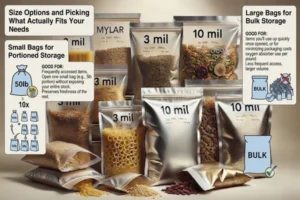
Mylar bags come in a pretty wide size range, and picking the right one depends a lot on how much you’re actually storing and how you plan to use it later.
Small Bags for Portioned Storage
Good if you want to open one bag at a time without exposing your entire stock to air. Say you’ve got fifty pounds of rice, splitting that into ten smaller bags means you’re only opening a small portion when you actually need some, keeping the rest sealed and protected.
Large Bags for Bulk Storage
Makes sense if you’re storing something you’ll use up relatively quickly once opened, or if minimizing the number of bags and oxygen absorbers you’re buying matters more to you than portion control.
Oxygen Absorbers — The Part People Often Get Wrong
Mylar bags alone aren’t really doing the full job. Oxygen absorbers packed inside the bag are honestly just as important as the bag itself.
Why You Actually Need Them
Sealing a bag doesn’t remove the oxygen that’s already trapped inside it. Oxygen absorbers pull that remaining oxygen out after sealing, which matters a ton for preventing mold, bacteria growth, and that stale, gone-bad taste over time.
Sizing Them Correctly
Too small an absorber for the bag size and there’s still oxygen left doing damage over the years. Too large isn’t harmful really, just kind of wasteful. Matching the absorber size to your bag size and how much food’s actually inside makes a real difference here.
Sealing Method Actually Matters Too
You can have the thickest mylar bag on the market and still mess up preservation if the seal itself isn’t done properly.
Heat Sealing Is the Way to Go
A proper heat seal, whether from an actual impulse sealer or something improvised like a clothes iron, creates a genuinely airtight seal along the top of the bag. Folding the bag over and taping it shut just doesn’t cut it for anything meant to last years.
Double-Checking the Seal
Worth running your fingers along the sealed edge after sealing, feeling for any gaps or weak spots that didn’t seal properly. A tiny gap defeats the whole purpose of using mylar in the first place honestly.
What You Can Actually Store in These
Not every food item stores the same way in mylar, worth knowing the difference before assuming everything works the same.
Great Candidates
Rice, beans, wheat, pasta, sugar, and other dry low-moisture goods store beautifully for years in properly sealed mylar with oxygen absorbers. This is really where mylar shines the most.
Trickier Items
Anything with higher fat content, like nuts or certain grains, doesn’t store quite as long even in mylar, since fats degrade over time regardless of oxygen exposure. Still better than regular storage, just don’t expect the same twenty-plus year shelf life some dry goods get.
A Few Practical Tips Before You Buy
Buy a bit thicker than you think you need if you’re planning on genuinely long-term storage, the price difference per bag is usually small compared to the difference in performance over years. Also grab a few extra oxygen absorbers, they degrade once exposed to air so having spares on hand for future batches saves a second order down the line.
Final Thoughts
Mylar bags aren’t complicated once you actually understand what each part’s doing, the bag blocking light and moisture, the oxygen absorber pulling out what’s trapped inside, and a proper heat seal keeping it all locked in place. Get those three things right and food that’d normally go stale in months can genuinely last years, which is honestly the whole point of using them in the first place.