Went to a little craft fair last summer, mostly just wandering around honestly, and stopped at this one soap stall cause the boxes caught my eye before the soap even did. Plain kraft box, small embossed leaf on top, nothing loud about it. Asked the guy running it why he went with that look and he said something like people already trust natural soap more when the box looks like it came from the earth too, not some factory. That stuck with me, never really thought about packaging convincing someone before they’ve even smelled the actual product.
If you’re making or selling soap and trying to sort out packaging, there’s a real sweet spot between looking premium and staying eco-conscious, and it’s honestly easier to hit than most people assume going in.
Why This Combo Just Works Especially Well for Soap
Soap’s a bit of a unique product this way. People buying handmade or natural soap already care about what’s going into it, ingredients, no harsh chemicals, all that. Wrap that same bar in shiny plastic packaging and it kind of works against the whole message.
Box should match what the soap’s actually claiming to be, basically. Natural, gentle, handmade, whatever the angle is, and then it shows up in glossy plastic covered in loud printed colors, there’s this weird disconnect people notice even if they can’t quite say why.
Getting the Premium Feel Right
Premium doesn’t automatically mean expensive-looking or flashy, that’s actually a pretty common mix-up people make.
Texture Beats Shine Most of the Time
A slightly textured kraft box with an embossed logo usually reads as more premium than something shiny and printed. Texture just makes people want to touch it, touching leads to picking it up, picking it up leads to actually buying the thing.
Less Is Usually More Here
Premium packaging tends to say less, not more. One clean logo, maybe a short line about ingredients, plenty of empty space instead of cramming every detail onto the box. Cluttered design reads as cheap oddly enough, even when what’s inside is genuinely great.
The Weight in Your Hand Matters Too
Thicker board just feels better than flimsy thin cardboard, people notice this even without consciously thinking about it. A box that feels sturdy signals quality before anyone’s even opened it up.
What Eco-Friendly Actually Means Here
Term gets thrown around loosely a lot honestly, worth breaking down what counts for real versus what’s just marketing talk.
Kraft paper and plain cardboard are widely recyclable, way more than glossy laminated boxes which usually can’t go through standard recycling cause of that plastic coating layered on top. Some packaging goes further too, actually biodegradable, breaking down naturally rather than just being technically recyclable. Uncoated kraft paper generally falls into that category.
Ink matters too honestly, standard printing inks can contain stuff that makes recycling trickier or just leaves a bigger footprint overall. Soy-based or water-based inks are the gentler option a lot of eco brands switch to specifically for this reason.
You Don’t Need a Huge Budget to Get Both
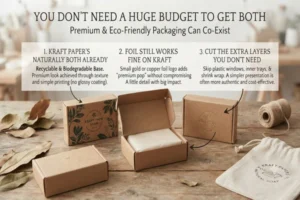
People assume premium and eco-friendly pull in opposite directions, expensive fancy look versus cheap eco materials, but that’s not really how it plays out once you actually try it.
Kraft Paper’s Naturally Both Already
Easiest win here honestly. Kraft’s already recyclable and biodegradable by default, and with the right printing or embossing it looks genuinely premium without needing any glossy coating or plastic at all.
Foil Still Works Fine on Kraft
A small gold or copper foil logo on an otherwise plain kraft box gives that premium pop without messing with the eco-friendly base material underneath. Small detail, changes the whole feel of the box though.
Cut the Extra Layers You Don’t Need
Some soap boxes come with plastic windows, extra plastic wrap, inner plastic trays holding the bar in place. Skipping these where you can keeps things eco-friendly, and honestly most customers don’t even notice they’re gone.
Picking the Right Box Style
Different soaps actually suit different box styles honestly, worth thinking through rather than just picking one design for everything you sell.
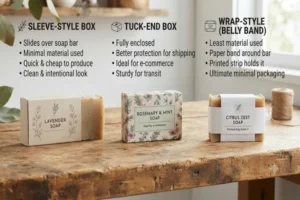
Sleeve-style boxes just slide over the bar, minimal material, quick and cheap to produce while still looking clean and intentional. Tuck-end boxes are fully enclosed, better protection during shipping, makes sense if you’re selling online and the bar needs to survive a delivery truck rather than just sitting pretty on a shop shelf. Wrap-style with a belly band uses the least material out of all these options, just paper around the bar with a printed strip holding it together, good if minimal packaging’s genuinely the priority for you.
Stuff Worth Checking Before You Order a Big Batch
Test how your soap’s scent holds up inside whatever box material you’re considering, some coatings or inks can actually react with strongly scented bars over time. Order small first too, before committing to thousands of units. Packaging that looks great in a design mockup sometimes feels totally different once you’re holding an actual bar inside it.
Final Thoughts
Premium and eco-friendly really aren’t opposites when it comes to soap packaging, if anything they reinforce each other pretty naturally. A well-made kraft box, a bit of texture, clean logo, maybe a small foil accent somewhere, tells customers your soap’s both good quality and made with some actual care for where the packaging ends up once they’re done with it. That combination’s honestly what most soap buyers are after these days, even if they couldn’t tell you that’s what they’re looking for.