Introduction
In today’s competitive marketplace, product quality alone is no longer enough to win customers. Consumers notice everything—from your logo and colors to the way your package feels when they open it. This is where bespoke packaging becomes a game changer.
Unlike generic boxes, bespoke packaging is designed specifically for your brand, product, and target audience. It creates memorable first impressions, builds customer trust, and turns ordinary products into premium experiences.
Whether you own an eCommerce business, cosmetic brand, bakery, apparel company, or luxury retail store, investing in custom packaging can significantly improve brand recognition and customer loyalty.
What Is Bespoke Packaging?
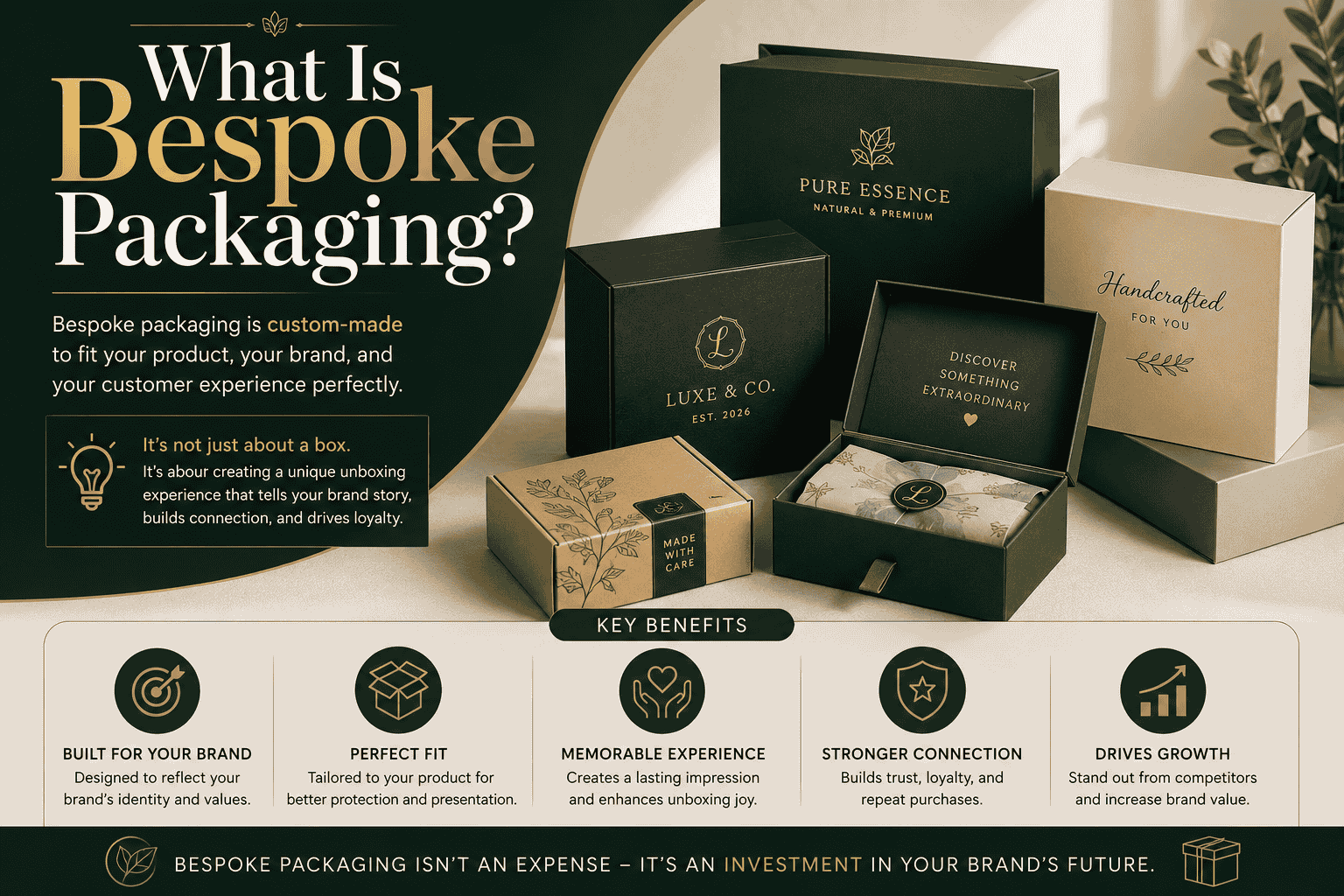
Bespoke packaging refers to packaging that is custom-designed to match a specific brand’s identity, product dimensions, and customer expectations.
Instead of using standard boxes, businesses create packaging with personalized:
- Colors
- Logo
- Typography
- Box Style
- Inserts
- Materials
- Printing
- Finishes
- Brand Messaging
The goal is to create packaging that protects the product while delivering a memorable customer experience.
Why Bespoke Packaging Matters More Than Ever
Modern customers buy experiences—not just products.
The first interaction many buyers have with your business isn’t your website or advertisement. It’s the package that arrives at their doorstep.
High-quality packaging instantly communicates professionalism, attention to detail, and product value. Research and industry experience consistently show that packaging strongly influences first impressions, perceived quality, and purchase decisions.
10 Reasons Successful Brands Invest in Bespoke Packaging
1. Creates Powerful First Impressions
Customers form opinions within seconds.
A professionally designed package creates excitement before the product is even opened.
First impressions often determine whether customers trust your brand.
2. Builds Strong Brand Identity
Consistent branding increases recognition.
Using your brand colors, logo, typography, and messaging throughout your packaging makes your business instantly recognizable.
The more often customers recognize your brand, the easier it becomes to earn repeat business.
3. Makes Your Products Look Premium
People naturally associate premium packaging with premium products.
Simple upgrades such as:
- Soft-touch coating
- Embossing
- Foil stamping
- Magnetic closures
- Custom inserts
can dramatically increase perceived value.
4. Improves Customer Experience
Unboxing has become an important part of modern shopping.
Well-designed packaging creates excitement, making customers feel appreciated and increasing the likelihood they’ll remember your brand.
5. Encourages Social Media Sharing
Beautiful packaging often inspires customers to post photos and videos online.
Every shared unboxing becomes free advertising that expands your brand’s reach.
6. Protects Products Better
Custom-sized boxes reduce movement during shipping.
Benefits include:
- Fewer damaged products
- Lower return rates
- Better customer satisfaction
- Reduced replacement costs
7. Supports Sustainable Business Practices
Many businesses now choose:
- Recyclable cardboard
- Kraft paper
- Soy-based inks
- Compostable materials
- Plastic-free packaging
Eco-friendly packaging helps brands meet customer expectations while reducing environmental impact.
8. Increases Customer Loyalty
Customers remember brands that deliver outstanding experiences.
Thoughtful packaging makes buyers more likely to return and recommend your business to others.
9. Differentiates Your Brand
Thousands of products compete for attention.
Unique packaging helps your product stand out both online and on retail shelves.
Distinctive design is one of the easiest ways to separate your brand from competitors.
10. Supports Higher Product Pricing
Premium presentation often justifies premium pricing.
Customers frequently perceive greater value when products arrive in professionally designed packaging.
Industries That Benefit Most from Bespoke Packaging
- Cosmetics
- Food & Beverage
- CBD Products
- Jewelry
- Electronics
- Apparel
- Subscription Boxes
- Gift Products
- Luxury Goods
- E-commerce Stores
Popular Types of Bespoke Packaging
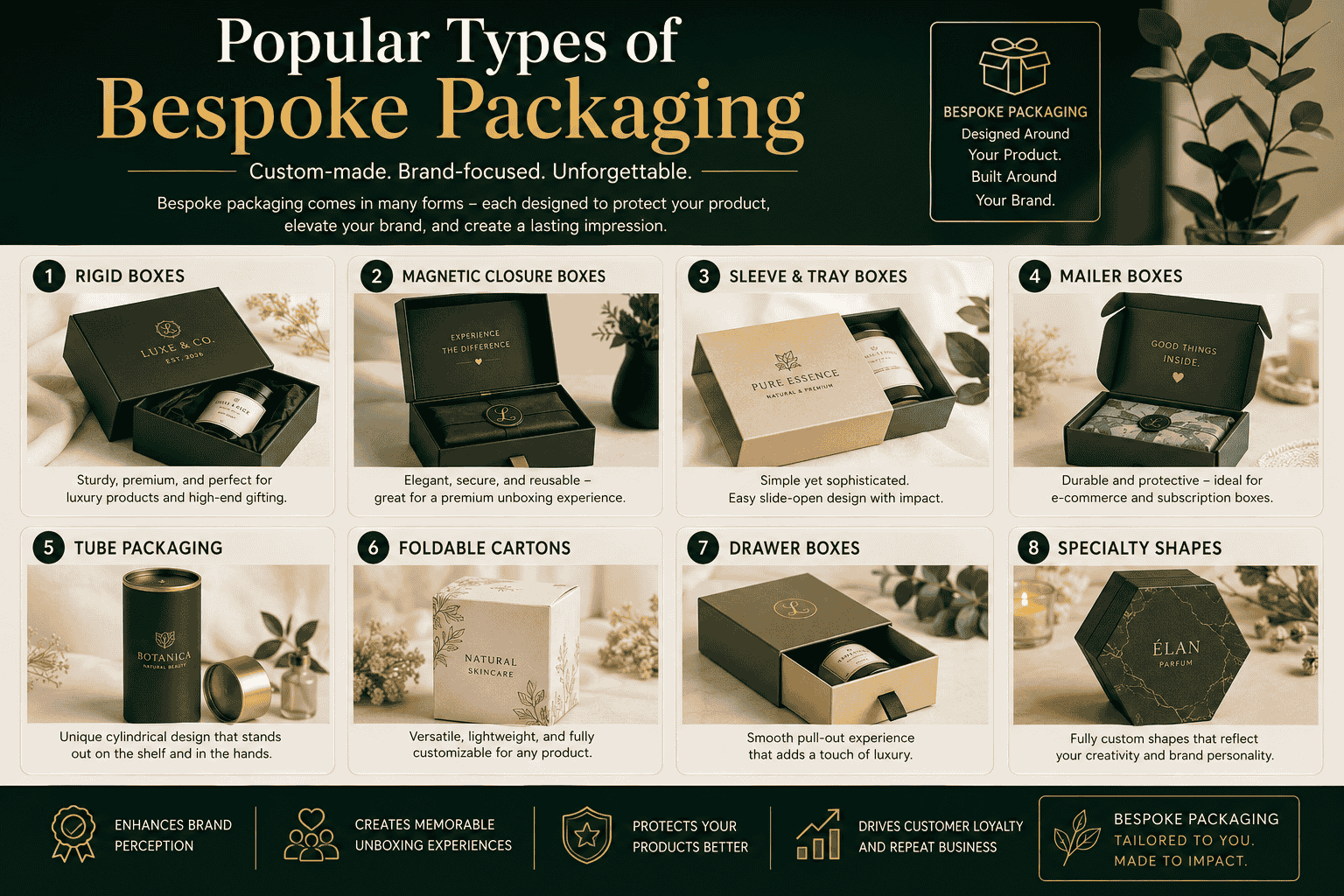
Rigid Boxes
Ideal for luxury products and premium gifts.
Corrugated Boxes
Perfect for shipping and eCommerce businesses.
Folding Cartons
Affordable and highly customizable.
Mailer Boxes
Excellent for subscription brands.
Kraft Boxes
Eco-friendly and sustainable.
Sleeve Packaging
Adds a premium branded appearance without replacing the entire box.
How to Design Effective Bespoke Packaging
Successful packaging combines creativity with functionality.
Focus on:
- Brand consistency
- High-quality materials
- Easy opening
- Sustainable options
- Readable typography
- Protective structure
- Premium finishes
- Clear product information
Common Mistakes to Avoid
- Choosing oversized packaging
- Using low-quality printing
- Ignoring customer experience
- Inconsistent branding
- Overcrowded designs
- Weak structural protection
- Poor color choices
- Forgetting sustainability
Future Trends in Bespoke Packaging
Businesses are increasingly adopting:
- Minimalist designs
- Smart packaging with QR codes
- Recyclable materials
- Personalized packaging
- Interactive unboxing experiences
- Digital printing for shorter production runs
- Reusable packaging solutions
These trends reflect growing consumer interest in convenience, sustainability, and memorable brand experiences.
Conclusion
Bespoke packaging is far more than a protective box—it’s a strategic branding tool. It shapes first impressions, reinforces your identity, enhances the customer experience, and can help your products stand out in crowded markets. By investing in thoughtful design, durable materials, and sustainable practices, businesses can create packaging that customers remember long after the purchase.