
If you’ve ever handed a customer a takeout bag that was too small for their order — or watched grease soak through one that was too thin — you already know that bag size isn’t a minor detail. It affects how your food travels, how your brand looks in someone’s hands, and how much you spend per order.
This guide breaks down the standard takeout paper bag sizes, what each one is actually built for, and how to figure out the right dimensions for your specific menu — without guessing.
Why Getting the Size Right Actually Matters
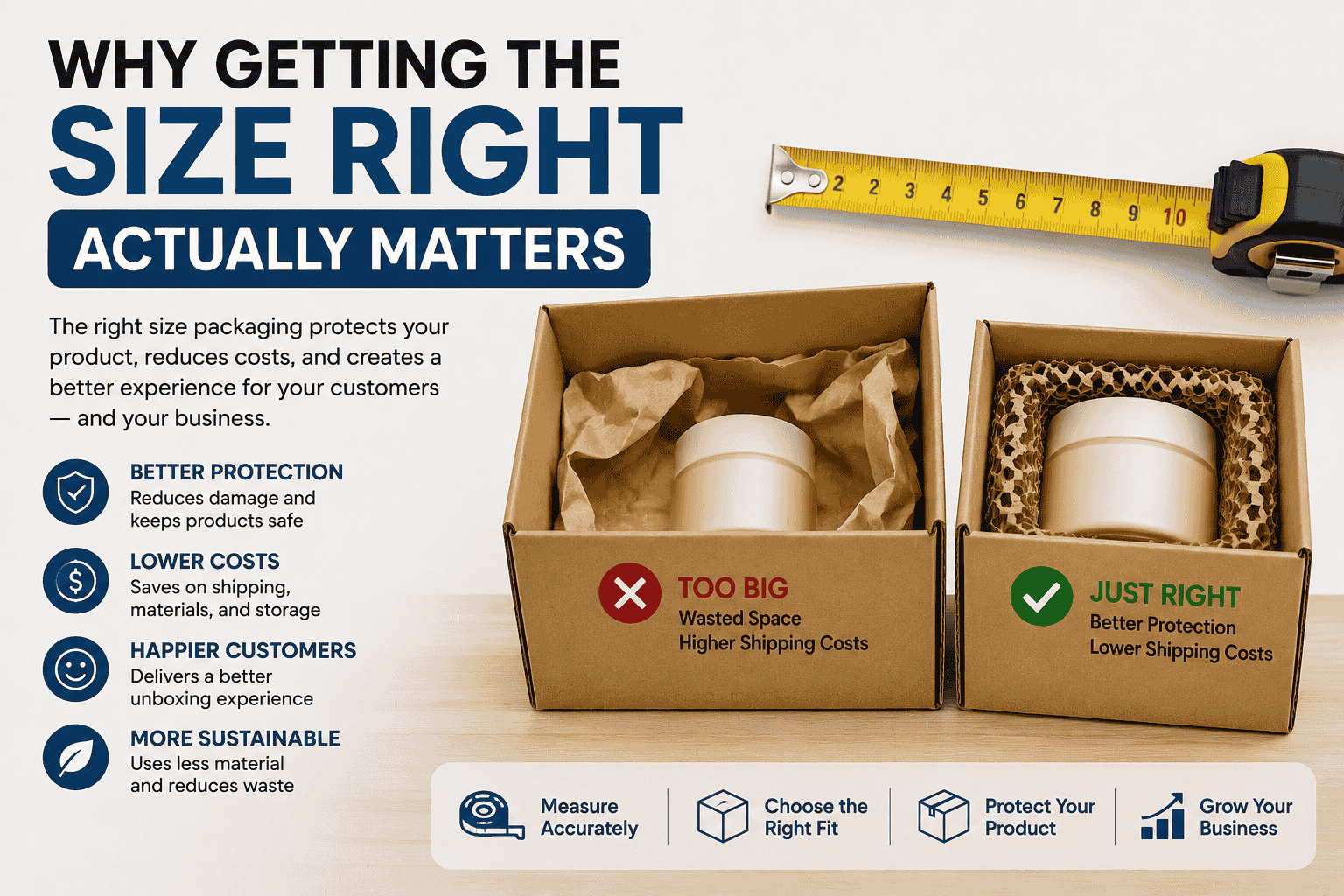
A bag that’s too big wastes money and lets food shift around during delivery, which means soggy fries and spilled sauce. A bag that’s too small tears at the seams, leaks grease onto whatever it’s near, or simply won’t close. Either mistake shows up in reviews.
Size also drives cost. Paper is priced by square inch and by paper weight (thickness), so ordering the closest possible fit for your product — instead of a “one size fits everything” bag — is one of the easiest ways to cut packaging spend without cutting quality.
Standard Takeout Paper Bag Sizes at a Glance
Paper bag sizes are usually listed as Width x Depth x Height (in inches). Here’s how the industry generally breaks them down:
| Category | Typical Dimensions (W x D x H) | Best For |
| Small | 5″ x 3.5″ x 3″ to 5″ x 3.5″ x 8″ | Candy, pastries, cookies, single bagels, small snacks |
| Medium | 6″ x 3.5″ x 10″ to 8″ x 4.5″ x 10″ | Cupcakes, muffins, a few eggs, one-person takeaway meals |
| Standard / Single-serve | 5″ x 4″ x 8″ to 6″ x 6″ x 12″ | Burgers, sandwiches, wraps, doughnuts |
| Large | 8″ x 6.75″ x 12″ to 10″ x 6.75″ x 14″ | Fries, fried chicken, salads, multi-item orders |
| Family / Bulk | 12″ x 7″ x 17″ and up | Multi-meal orders, grocery-style takeout, catering |
Breaking It Down by Bag Type
Small Takeout Bags
Small bags are the workhorses of bakeries and dessert counters. They’re sized for individual or small-batch items — think one or two cookies, a couple of donuts, or a handful of candy — and typically run between 3″ and 8″ tall depending on how much headroom the item needs.
Medium Takeout Bags
Medium bags step up to cover bakery boxes’ little sibling: cupcakes, small cakes, a light lunch for one. If you’re a café serving grab-and-go sandwiches or a bakery packaging a small custom order, this is usually your default size.
Standard (Single-Serve) Bags
This is the category most quick-service restaurants live in. Standard bags are shaped to hold one meal — a burger and fries, a sandwich, a wrap — and are usually flat-bottomed so they stand upright at a counter or in a delivery bag.
Large Takeout Bags
Large bags handle bigger single orders or multiple items bundled together: a family-size portion of fries, a whole fried chicken order, or two or three meals combined for a group order.
How to Measure Your Product Before You Order
Skip the guesswork by measuring your actual product (or its container) on three axes:
- Width – the widest point of the item or box
- Depth – front-to-back measurement, including any bulk (like a stacked sandwich or a lidded container)
- Height – how tall the item stands, plus 1–2 inches of headroom so the bag can fold or close properly
If you’re packaging boxed items (like a slice of cake in a clamshell), measure the box — not the food — and size the bag around that.
Paper Weight and Strength Matter as Much as Size
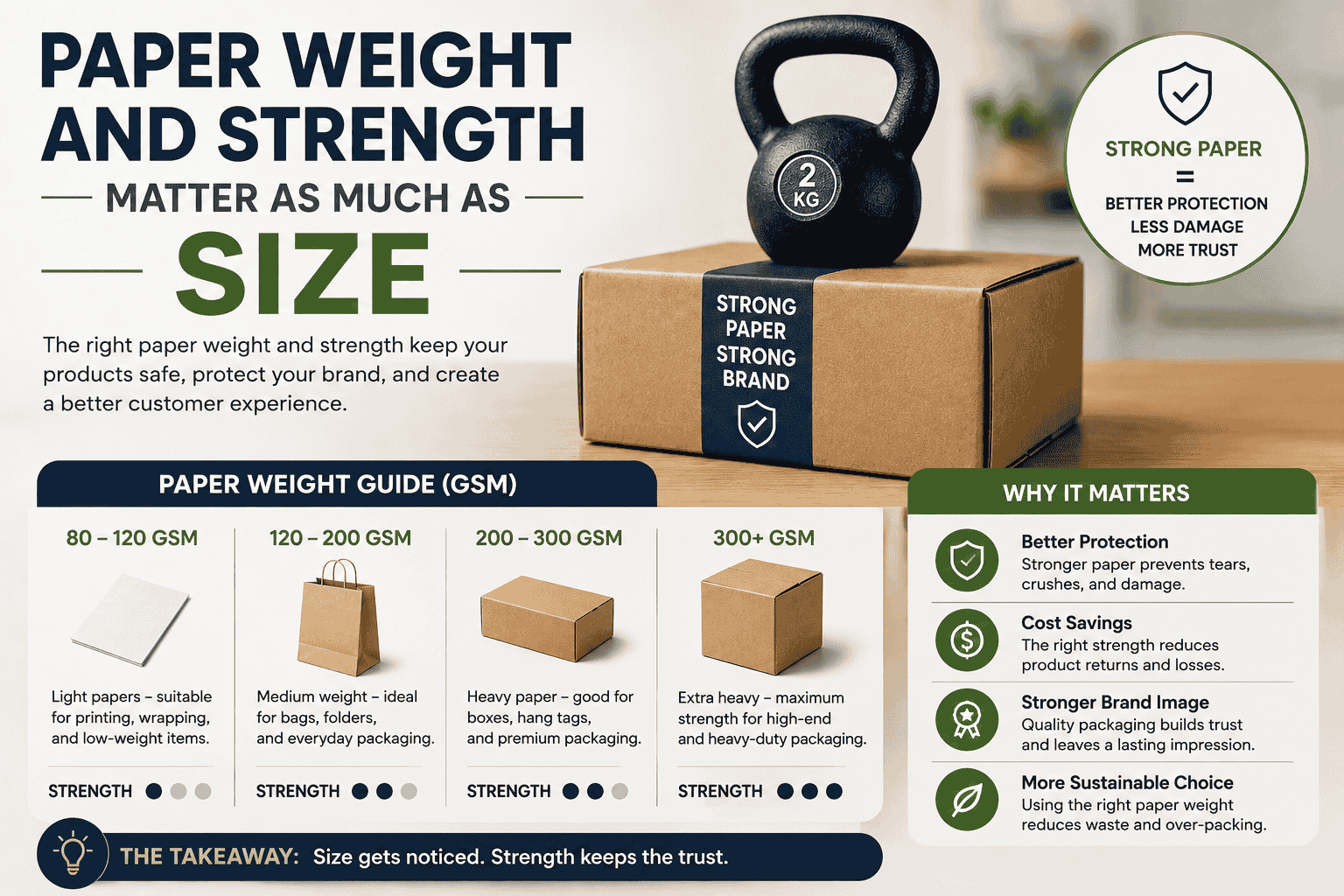
Size gets the most attention, but paper thickness (measured in pounds, like 40 lb or 60 lb kraft paper) determines whether your bag can actually carry the weight without tearing or letting grease through. As a rough guide:
- Lighter paper (30–40 lb): fine for dry, light items like pastries or candy
- Mid-weight paper (40–50 lb): standard for most sandwiches, burgers, and single meals
- Heavier paper (50–70+ lb): needed for greasy, wet, or heavier multi-item orders
A bag that’s the right size but the wrong weight will still fail in the customer’s hands.
Custom Sizes: When Standard Doesn’t Cut It
If your menu doesn’t fit neatly into the categories above — oddly shaped boxes, tall bottles, oversized catering orders — custom-sized bags are worth the (usually small) extra cost. They reduce shifting during transport, cut down on wasted paper, and make your packaging look intentional rather than improvised, which customers notice.
Quick Reference: Matching Bags to Common Menu Items
- Fries, wings, chicken tenders: Large bags with grease-resistant lining
- Burgers and sandwiches: Standard single-serve bags
- Salads and bowls: Standard to large, depending on container height
- Pastries and baked goods: Small to medium bags
- Multi-item family orders: Family/bulk-size bags with reinforced handles