Introduction
Most products on the shelf look exactly like you’d expect them to. Olive oil sits in a glass bottle. Coffee comes in a bag. Sunscreen is in a white tube. Customers walk past without thinking twice — because there’s nothing to think about.
That’s the problem chaos packaging solves.
The idea is simple: put your product in a container that nobody expects. Olive oil in a squeeze bottle. Water in a beer can. Coffee in a VHS tape. The packaging doesn’t match the product, and that mismatch makes people stop, look twice, and reach for it.
This article covers what chaos packaging actually is, why it works, which brands have done it well, and how to figure out whether it makes sense for your business.
What Is Chaos Packaging?
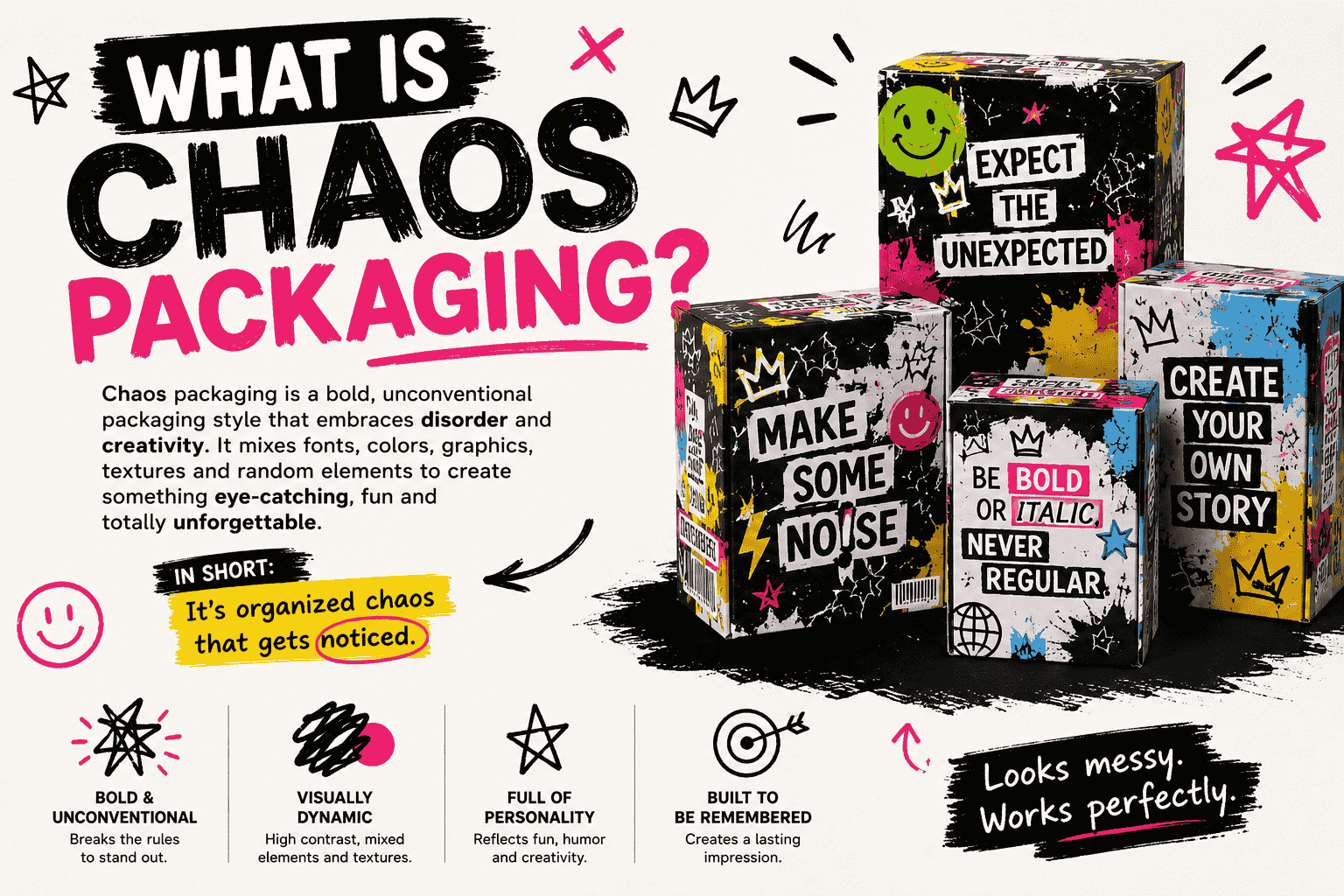
Chaos packaging is a strategy where a product is placed in a container that defies what consumers expect for that category. The goal isn’t weirdness for its own sake. It’s to create a moment of surprise — something that short-circuits the automatic, eyes-glazed-over way most people shop.
The term was coined by marketing consultant Michael Miraflor in early 2024. The Wall Street Journal picked it up, and from there it landed on NPR, the BBC, NBC’s Today Show, and dozens of podcasts. But the behavior itself has existed for decades.
Back in the 1960s, Leggs pantyhose sold their product in egg-shaped plastic containers when every competitor was using flat cardboard boxes. It stood out, customers remembered it, and the brand carved out a real market advantage just from the container shape.
The modern version is the same principle, but louder.
Why It Works: The Psychology Behind It
When a customer sees something that doesn’t match their mental model of what a product should look like, their brain pauses. Psychologists call this cognitive dissonance — the brain is trying to reconcile two things that don’t fit together. That pause is valuable. In most retail environments, a brand gets three seconds or less to catch someone’s attention. Unexpected packaging extends that window.
There’s also a curiosity factor. When something doesn’t make immediate sense, people want to understand it. That drive to resolve the confusion pulls them toward the product, not away from it.
And once they pick it up, they’re already engaged. The product has done more work in three seconds than a conventional design might do in a minute.
The last piece is shareability. People take photos of things that surprise them. A product that looks like it belongs somewhere else is inherently interesting on social media — and that earned attention has real dollar value.
Real Brands Doing It Well
Liquid Death
Water in a tallboy can that looks like a beer. The name sounds aggressive. The design looks like something you’d grab at a concert. That’s exactly the point. Liquid Death built a $1.4 billion valuation in large part because the packaging turned a commodity product — water — into a personality statement. They have over 5 million Instagram followers and 6.6 million on TikTok.
Vacation Classic Whip
Sunscreen in a whipped cream canister. Lach Hall, co-founder of Vacation, told the Wall Street Journal that the product generated around 5 million TikTok views per week during summer months without paid promotion. The packaging did the marketing.
Graza Olive Oil
Olive oil in a squeeze bottle, similar to a condiment bottle. It’s practical and unexpected. Consumers praised it for functionality, not just looks — which is important. Chaos packaging that also makes the product easier to use is more durable than packaging that’s purely a gimmick.
Flo Tampons
Tampons in an ice cream tub. The brand co-founder Susan Allen Augustin put it plainly: they couldn’t afford a billboard, so they made the product the billboard. The packaging turned a product people typically grab quickly and quietly into something people noticed, photographed, and talked about.
No Normal Coffee
Concentrated coffee paste in an aluminum tube that looks like toothpaste. Functional for travelers, surprising for everyone else.
The Difference Between Chaos Packaging and Just Weird Packaging
There’s a real line here, and some brands have crossed it.
Puracy packaged a soap refill in something that looked like a soda can. Customers were confused — some tried to drink it. The brand had to redesign. Doritos released packaging with no logo or branding, which worked because Doritos is already a household name. A smaller brand trying the same thing would just look unfinished.
The rule is this: chaos packaging works when the unexpected element either reinforces your brand’s personality, makes the product easier or more fun to use, or creates a visual that people want to share. It fails when the packaging confuses customers about what the product is, how to use it, or whether it’s safe.
The chaos has to be intentional. Surprise without clarity is just noise.
How Chaos Packaging Affects Your Marketing Budget
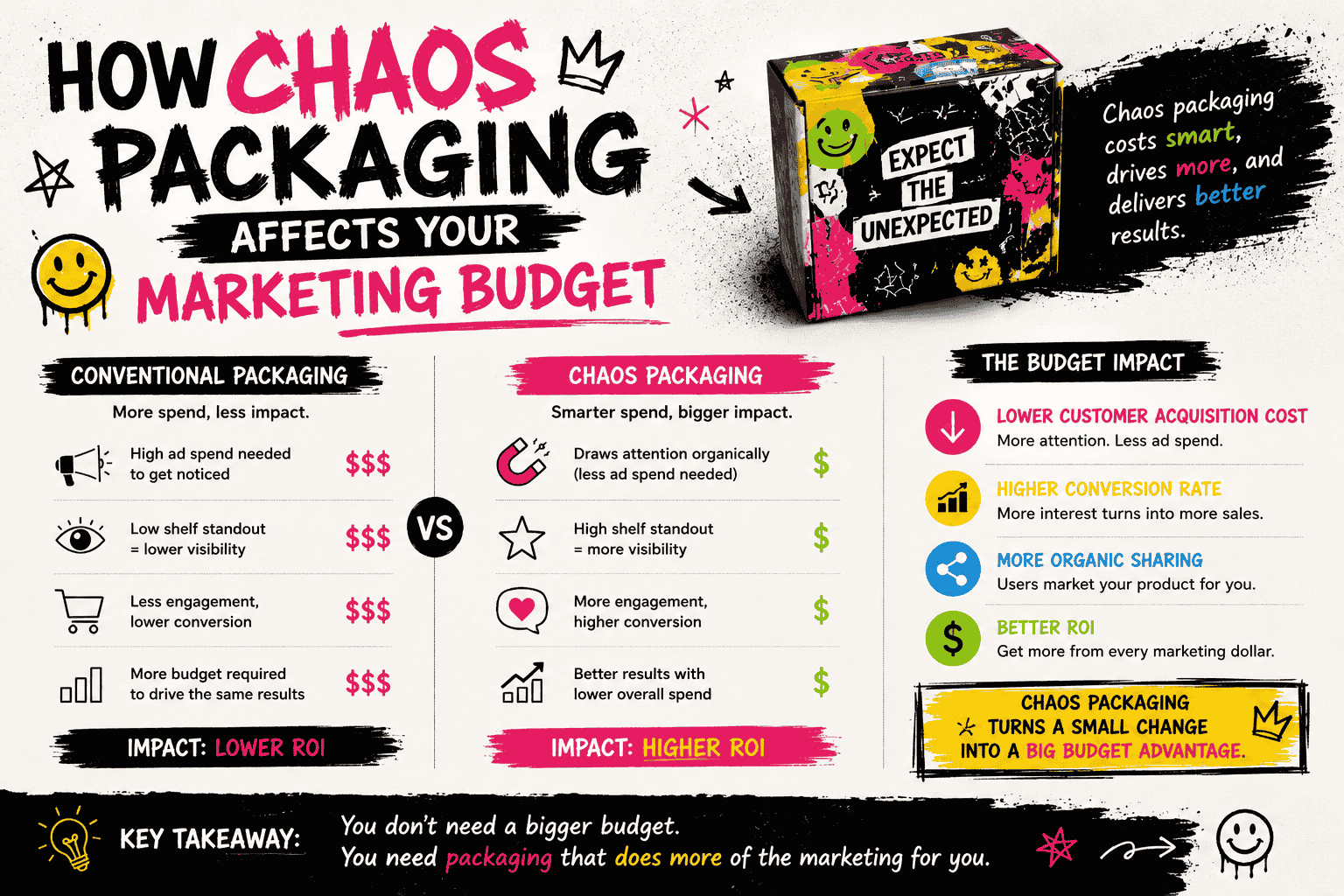
Traditional advertising is expensive, and getting more expensive. Paid social, search, influencer deals — all of it costs more than it used to for the same reach.
Chaos packaging is a different kind of investment. You spend more on design and possibly production. In return, customers share the product organically. You get press coverage, TikTok videos, and word-of-mouth without a media buy attached to it. For brands that don’t have a large marketing budget, this is meaningful.
It’s not free. You still need to manufacture the packaging, and unconventional formats can be more expensive at lower volumes. But the per-impression cost of organic social sharing is low compared to paid acquisition, and the credibility of a friend posting about a product is higher than a sponsored ad.
How to Start Testing It
You don’t have to overhaul your entire product line. A few ways to test the concept before making a large investment:
- Run a limited-edition version in an unconventional format and track whether it generates social engagement and sales compared to your standard packaging.
- Test one SKU, not your whole catalog. Pick the product with the most room for playfulness.
- Talk to your packaging supplier early. Some formats require longer lead times or different materials than standard boxes.
- Measure social sharing, repeat purchase rates, and customer feedback separately so you can isolate what’s driving results.
Final Thoughts
Chaos packaging isn’t a fit for every brand. But for brands that have a clear personality and a product that can hold up to an unconventional presentation, it’s one of the more cost-efficient ways to generate attention in a crowded market.
The brands that have done it well didn’t just pick a random container. They thought about what their customer would find surprising, what would make them laugh or do a double take, and what would make the product worth photographing. That’s the work behind the chaos.