Introduction
Coffee is a very competitive retail category around the globe. Margins are tight, expectations are high and every dollar in your supply chain counts. However, packaging costs can quietly reduce the profitability of coffee brands, large and small, without being managed.
This is where many coffee businesses go wrong: by lowering their package quality in order to reduce their packaging costs. This is a bleak way to go. Low-cost packaging contributes to the product going stale, negative reviews, decreased shelf appeal, and damaged brand reputation, and costs much more in the long term than the price of the box.
What Drives Coffee Packaging Costs?
Before you can control your packaging costs, you need to understand what’s driving them. Most coffee businesses find their packaging expenses come from five main areas:
- Material selection — The type of bag, pouch, or box you use has the biggest impact on cost. Material choice affects not just price per unit but also freshness protection, shipping weight, and storage efficiency.
- Print and design complexity — The number of colors, finish type (matte vs gloss), and customization level all affect unit costs.
- Order quantity — Ordering small batches costs significantly more per unit than bulk ordering.
- Functional features — Elements like one-way degassing valves, resealable zippers, and foil liners add upfront cost but protect product quality and reduce waste.
Bulk Ordering: The Single Fastest Way to Reduce Per-Unit Costs
One of the most proven strategies for coffee packaging cost efficiency is buying in larger quantities. The math is straightforward — higher volume orders spread fixed production and setup costs across more units, dramatically reducing the price per bag.
For stock (unprinted) bags, minimum order quantities can start as low as 500–1,000 units. For custom-printed coffee bags, most suppliers require 1,000–5,000 units as a minimum, with unit costs falling significantly at higher quantities.
Practical strategies for smarter bulk ordering:
- Forecast 3–6 months ahead so you can commit to larger runs without cash flow risk
- Standardize bag sizes across product lines to consolidate orders and reduce SKU complexity
- Order blank bags in bulk and use labels or stickers for individual SKUs — this gives you the cost benefits of bulk ordering with the flexibility to customize later
- Coordinate seasonal designs early to avoid rush production fees, which can add 20–30% to unit costs
Lightweight Packaging: Save on Shipping Without Sacrificing Structure
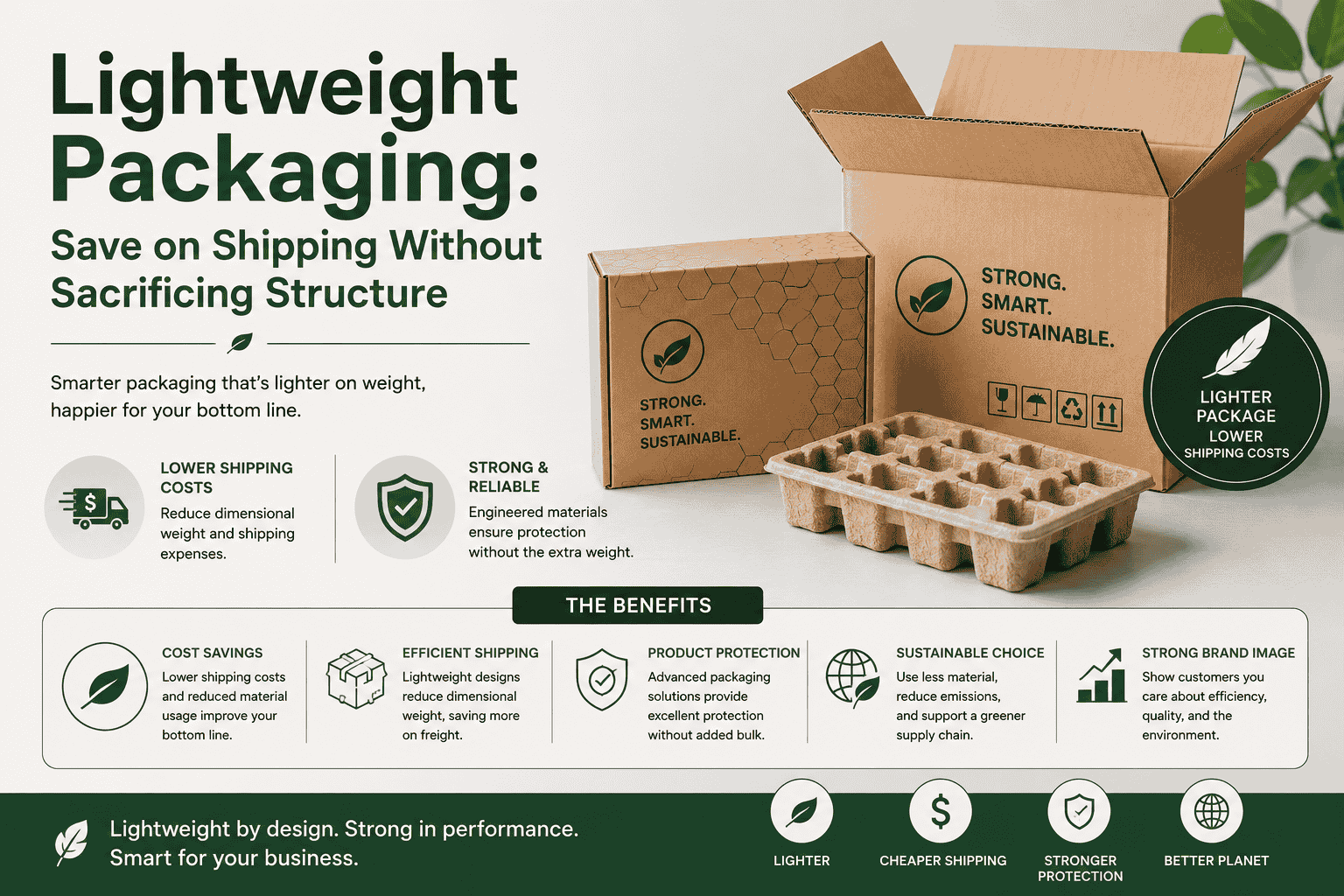
Transportation costs are often overlooked in packaging cost calculations — but they matter. Heavier or bulkier packaging directly increases shipping and warehousing expenses.
Strategies to reduce packaging weight without compromising structural integrity:
- Opt for stand-up pouches over rigid boxes where appropriate — pouches are lighter and take up less cubic space during shipping
- Use gusseted bags that expand to hold product but collapse flat when empty, saving warehouse storage space (kraft pouches, for example, can save up to 28% in storage space compared to rigid alternatives)
- Choose thinner-gauge materials where freshness protection allows — work with your supplier to identify where you can safely reduce gauge without sacrificing barrier performance
- Flat-bottom bags allow efficient stacking during shipping and retail display, reducing the number of cartons needed
Printing Strategies That Keep Costs Down
Custom printing is one of the areas where costs can spiral quickly — but also one of the areas where smart decisions make the biggest difference.
Sustainable Packaging: The Long-Term Cost Efficiency Play
Sustainability is no longer just a values conversation — it is a business efficiency and revenue strategy. Eco-friendly coffee packaging can improve cost efficiency in several ways:
Reduced material use — Minimalist packaging designs use fewer raw materials, which lowers both production cost and shipping weight.
Premium pricing justification — Research shows that consumers are willing to pay 1–3% more for sustainably packaged products. This price premium can fully offset the higher cost of eco-friendly materials while strengthening brand loyalty.
Regulatory future-proofing — Environmental packaging regulations are tightening globally. Brands that transition to sustainable packaging now avoid compliance costs and supply chain disruptions later.
Consumer loyalty — 71% of consumers actively choose products based on packaging sustainability. Losing customers to eco-friendlier competitors is a cost that never shows up on a packaging invoice, but it shows up on your revenue line.
Sustainable options for coffee brands include recycled kraft paper, compostable film pouches, recyclable mono-material structures, and packaging designed with minimal inks and coatings.
Functional Design Features That Protect Your Investment
Beyond the bag material itself, certain design features protect the freshness and quality of your coffee — directly reducing the cost of waste, returns, and customer dissatisfaction.
Resealable zippers — Allow consumers to re-close bags between uses, preserving freshness and extending the perceived value of the product. Customers who get a better at-home experience buy again.
Tin tie closures — A lower-cost alternative to zippers for bags that need reclosability. Common in craft and artisan packaging.
Foil-lined interiors — Even on kraft paper bags, a foil or film liner dramatically improves barrier properties, extending freshness without requiring a full foil bag.
Clear windows — Allowing customers to see the product inside can reduce return rates by setting accurate expectations, particularly for whole-bean coffee where grind size and bean appearance matter.
Avoiding the Most Common Coffee Packaging Cost Mistakes
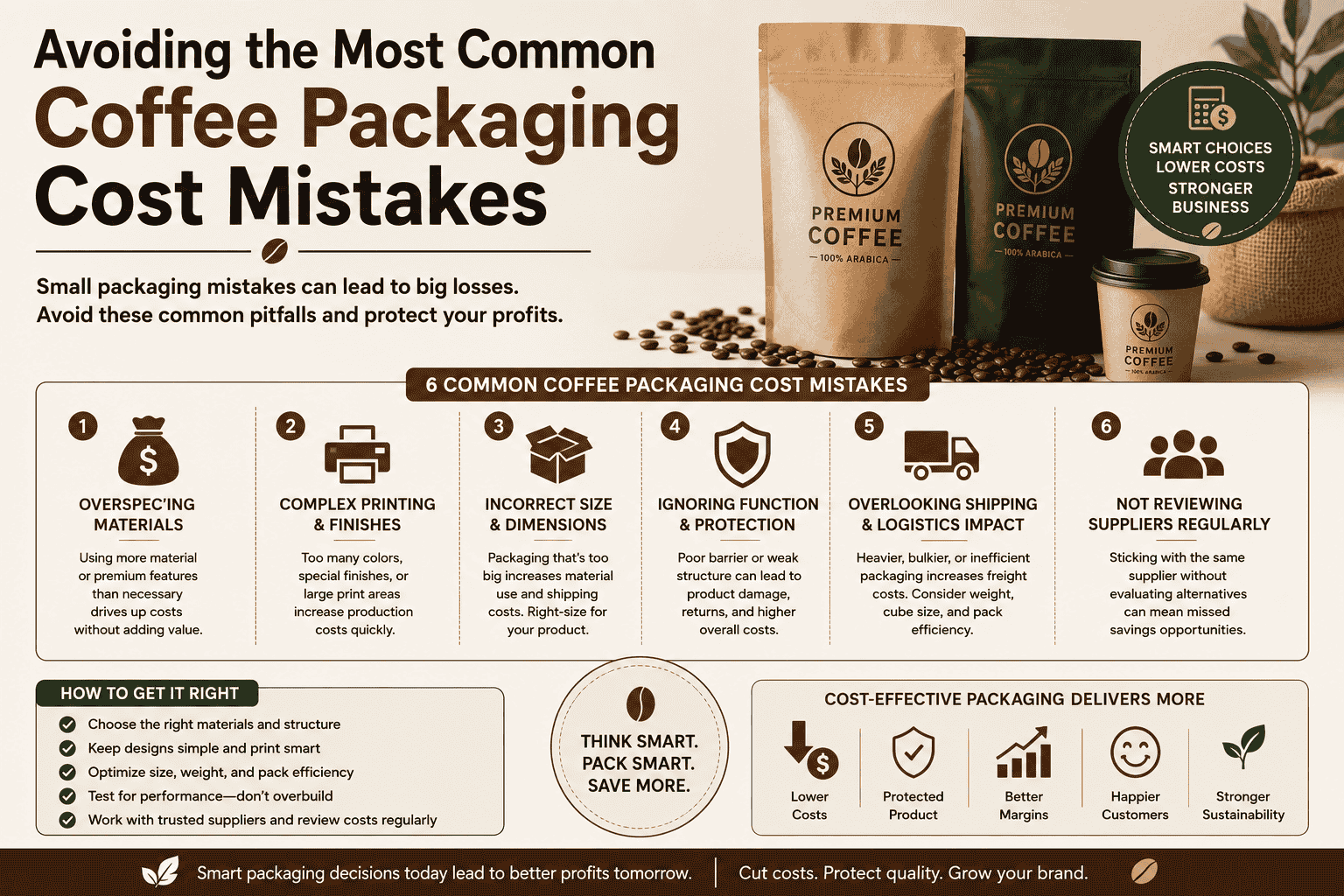
Ordering too small, too often — Frequent small orders kill efficiency. Even if you cannot afford a large run upfront, consolidating to quarterly orders rather than monthly saves meaningfully over a full year.
Choosing the cheapest material without considering total cost — As covered above, the cheapest bag often costs the most when you factor in freshness failures, waste, and customer churn.
Inconsistent sizing across SKUs — Having five different bag sizes for different product weights creates complexity, raises minimum order requirements for each, and increases storage space needs. Standardize where possible.
Skipping prototypes — Not requesting a physical sample before a full print run is a risk that often results in costly reprints. Always proof with a physical mockup.
Ignoring packaging weight in shipping calculations — A bag that costs $0.05 less but weighs 15% more can easily cost more in shipping over the course of a year than it saves in material.
Final Thoughts:
Not the cheapest packaging is the most cost-efficient coffee packaging. It is the packaging that provides both the necessary freshness protection and the branding effect, customer satisfaction, and overall cost-per-point, at the order quantity, with the packaging characteristics that are suitable for your product and your market.
When it comes to packaging, coffee brands that make smart investments in packaging by selecting packaging materials at an appropriate unit price, printing in quantity, using degassing valves, and designing packaging that reflects the brand values always perform better than those that look for the lowest possible price per unit. The benefits of proper packaging decisions are evident in reduced waste, enhanced relationships with retail partners, higher repeat purchases, and premium pricing.