Walk down the tobacco aisle of any retail store and you’ll notice something quickly: the boxes are doing just as much selling as the product inside them. In a market crowded with competing brands, packaging is often the first — and sometimes only — chance a company gets to make an impression before a customer decides what to buy. That’s exactly why custom cigarette boxes have become a core part of brand strategy rather than an afterthought.
If you’re a tobacco brand, distributor, or retailer looking to strengthen your shelf presence, here’s what you need to know about why custom packaging matters and how to choose the right option for your business.
1. Packaging Is a Brand’s Silent Salesperson
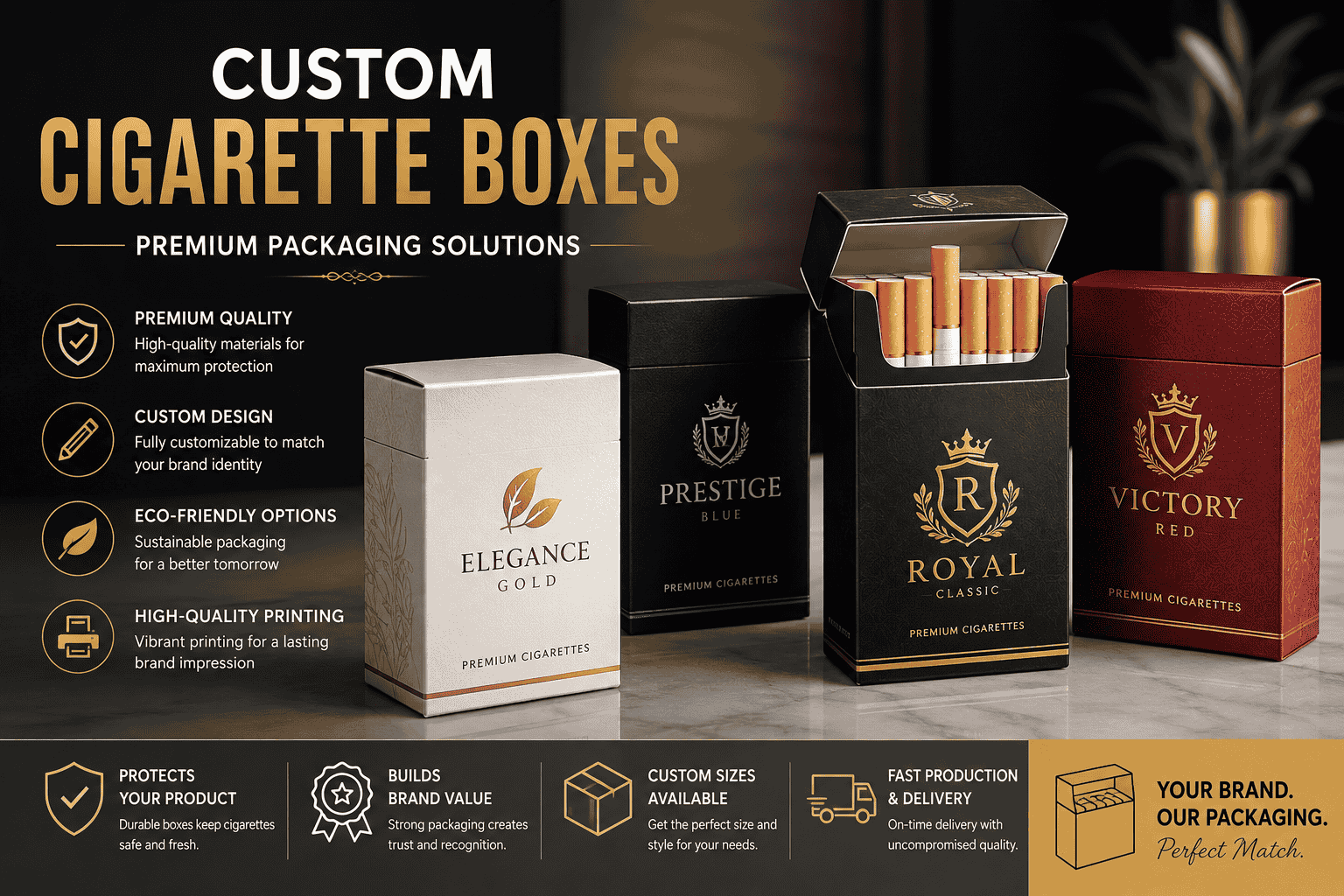
Before a customer reads a single word about your product, they see the box. The color scheme, the finish, the logo placement — all of it communicates something about the brand in a matter of seconds. A generic, unbranded box tells customers nothing. A well-designed custom box tells them your product is premium, trustworthy, and worth choosing over the competitor sitting right next to it.
Custom packaging gives you room to:
- Reinforce brand colors, logos, and typography consistently
- Print required labeling and compliance information clearly
- Differentiate your product visually from competitors on the same shelf
That visual differentiation matters more than most brands realize — in a category where products are often functionally similar, packaging becomes one of the few tools left for standing out.
2. Protection Is Non-Negotiable
Branding aside, cigarette boxes have a practical job: keeping the product intact from the production line to the customer’s pocket. Cigarettes are sensitive to moisture, heat, and physical damage, so packaging materials need to hold up through shipping, storage, and everyday handling.
This is where material choice matters. Options like sturdy cardboard, Kraft paperboard, and laminated cardstock each offer different balances of durability, cost, and sustainability. A packaging partner should help you weigh these tradeoffs rather than pushing a one-size-fits-all material.
3. Custom Sizing and Style Options
No two brands package their products the same way, and cigarette boxes shouldn’t be treated as a single, fixed format. Depending on your product line, you might need:
- Flip-top boxes for a classic, familiar format
- Slide-and-shell designs for a more premium unboxing feel
- Cartons and multipacks for bulk retail distribution
- Custom die-cut shapes for limited editions or specialty releases
Being able to adjust size, shape, and closure style means your packaging can match your product line instead of forcing your product to fit generic packaging.
4. Sustainability Is Increasingly a Buying Factor
Eco-conscious packaging isn’t a niche request anymore — it’s a growing expectation. Materials like Kraft paperboard are recyclable and biodegradable, which appeals to both environmentally aware consumers and brands looking to reduce their environmental footprint. Highlighting sustainable materials on your packaging can be a meaningful differentiator, especially as more retailers and consumers factor sustainability into purchasing decisions.
5. Compliance and Labeling Requirements
Cigarette packaging isn’t just about aesthetics — it’s a heavily regulated category. Health warnings, tax stamps, and other mandatory labeling need to be printed clearly and in compliance with local and federal regulations. Any custom packaging solution needs to build these requirements into the design from the start, not treat them as an afterthought squeezed in after the creative work is done.
6. Cost-Effectiveness at Scale
One common misconception is that custom packaging is always more expensive than generic alternatives. In reality, ordering in bulk typically brings the per-unit cost down significantly, and the marketing value custom boxes generate — stronger shelf presence, better brand recall, more repeat purchases — often outweighs the incremental cost difference. For growing brands, custom packaging is less an expense and more an investment in long-term brand equity.
Choosing the Right Packaging Partner
When evaluating a packaging supplier, look for a few key things:
- Material and finishing options that match your product positioning (matte, gloss, embossing, foil stamping, etc.)
- Compliance expertise, so labeling requirements are handled correctly
- Turnaround time and shipping reliability, especially for time-sensitive retail launches
- Design support, so you’re not left figuring out print-ready files on your own
The right partner should function less like a vendor and more like an extension of your brand team.
Final Thoughts
Custom cigarette boxes aren’t just packaging — they’re a brand touchpoint, a protective barrier, and a compliance tool all in one. Brands that treat packaging as a strategic decision rather than a logistical afterthought tend to build stronger shelf presence and customer loyalty over time.
If you’re evaluating packaging options for your cigarette brand, it’s worth working with a team that understands both the creative and regulatory sides of the category — because getting either one wrong can cost you more than the box itself.