Cosmetic products live or die on the shelf in about three seconds. That’s roughly how long a shopper spends deciding whether to pick up your product or scroll past it online. Packaging is doing most of that work — not the formula, not the ingredients list, the box. If you sell skincare, makeup, or beauty accessories, custom cosmetic boxes aren’t decoration. They’re a sales tool, a protection system, and a branding asset rolled into one.
This guide breaks down what actually matters when choosing cosmetic packaging in 2026 — the box styles, materials, design decisions, and vendor questions that separate packaging that sells from packaging that just sits there.
Why Cosmetic Packaging Has Become a Growth Lever, Not an Afterthought
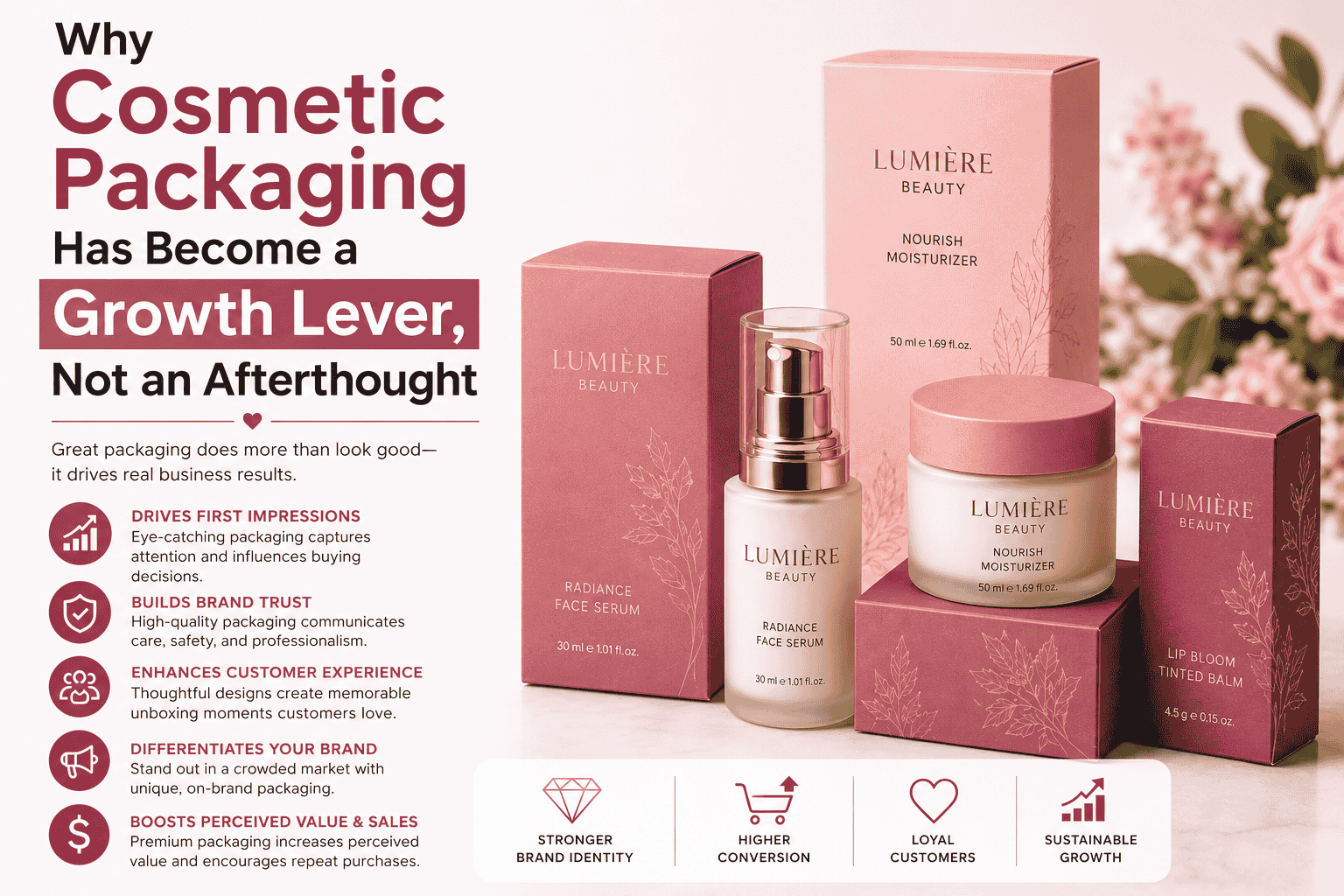
Beauty is one of the most saturated categories on Amazon, Instagram, and retail shelves alike. When ten similar serums sit side by side, the one with packaging that looks premium, feels intentional, and photographs well online wins the sale — even if the formulas are nearly identical.
Three shifts have made packaging decisions higher-stakes than they used to be:
- Unboxing is marketing. A huge share of new customers first see your product in a video or photo before they ever hold it. The box has to perform for a camera, not just a shelf.
- Sustainability is now a filter, not a bonus. A growing share of beauty buyers actively check whether packaging is recyclable or minimal before purchasing.
- Retail compliance has tightened. Ingredient panels, batch codes, and safety seals are increasingly required by both retailers and marketplaces, which means packaging has to be functional as well as pretty.
The Main Types of Custom Cosmetic Boxes
Not every product needs the same structure. Matching box style to product type is where most brands either save money or waste it.
Folding cartons are the workhorse of the industry — flat-packed, cost-efficient, and ideal for high-volume SKUs like serums, creams, and single-item skincare. They ship flat and assemble fast on a packing line.
Rigid setup boxes are the two-piece, non-collapsible boxes associated with prestige beauty. They cost more per unit but signal luxury instantly, which is why high-end skincare and gift sets lean on them.
Window boxes cut a die-cut or acetate window into the front panel so the product is visible without opening the box — useful for makeup, brushes, and anything where color or texture is a selling point.
Drawer-style (sleeve) boxes slide a tray out of an outer sleeve, giving a satisfying tactile “reveal” moment that works well for gift sets and subscription boxes.
Corrugated shipper boxes aren’t the retail box itself but the protective outer layer for e-commerce orders — critical for glass bottles and jars that can’t survive a bare poly mailer.
Choosing the Right Material
Material choice affects cost, durability, and how eco-conscious your packaging looks to the customer.
- Paperboard (SBS/C1S/C2S) — smooth, lightweight, and the standard for folding cartons. Good print surface for detailed graphics.
- Kraft board — natural, uncoated look popular with clean-beauty and organic skincare brands.
- Rigid chipboard wrapped in paper — the base of premium setup boxes.
- Corrugated fluting — used where crush resistance during shipping matters more than shelf presentation.
A good packaging supplier should be able to recommend material based on your product weight, whether it’s glass or plastic, and where it’s sold (retail shelf vs. direct-to-consumer shipping have different failure points).
Design Decisions That Actually Move Sales
Printing your logo on a box isn’t packaging design — it’s decoration. Real packaging design answers a few specific questions:
- Does the structure protect the product in transit? A beautiful box that lets a glass jar shatter in the mail costs more in refunds than it ever saved in unit price.
- Is there a clear visual hierarchy? Product name and hero benefit should be readable in under two seconds — most competitive shelves don’t give you longer than that.
- Do the finishes match the price point? Matte lamination, spot UV, foil stamping, and embossing all read as “premium” — but only when used with restraint. Overloading a box with finishes often reads as trying too hard.
- Is compliance info handled cleanly? Ingredient lists, batch/lot codes, and net weight need a designated space in the layout from day one, not squeezed in at the last minute before a retailer rejects the artwork.
Sustainability: What Actually Matters vs. What’s Just a Label
“Eco-friendly” gets used loosely in packaging marketing. What actually matters to both retailers and increasingly regulation-conscious markets:
- Recyclable or FSC-certified paperboard
- Soy-based or water-based inks instead of solvent-based
- Minimal use of laminates that make recycling harder
- Right-sized boxes — oversized packaging with excess void fill is one of the most common sustainability complaints from customers
You don’t need to overhaul your entire supply chain to make progress here. Switching lamination type or trimming box dimensions by even half an inch can meaningfully cut material use and shipping cost at the same time.
How to Choose a Cosmetic Packaging Partner
A few questions worth asking before committing to a supplier:
- What’s the minimum order quantity (MOQ)? Early-stage brands often need lower MOQs than large manufacturers are willing to offer.
- Can they provide a 3D mockup or physical sample before full production? Never approve final artwork on a proof you haven’t seen in a real dieline.
- What’s the realistic turnaround time, including any custom die-cutting for a unique shape?
- Do they handle both primary packaging (the box) and protective inserts for glass or fragile components, or will you need a second vendor?
Getting these answers upfront avoids the most common first-order headache: a beautiful box that doesn’t actually fit your product or survive a shipping carrier.
Final Thoughts
Custom cosmetic boxes sit at the intersection of protection, branding, and conversion. The brands that treat packaging as a strategic decision — not a last-minute line item — consistently see it pay off in repeat purchases, lower damage-related returns, and stronger unboxing engagement online.
If you’re scoping out custom cosmetic packaging for an upcoming launch or a redesign, [Your Brand Name] can walk you through material options, MOQs, and turnaround times based on your specific product — reach out for a free quote and 3D mockup before you commit to a print run.