Consumers aren’t just buying products anymore — they’re buying into the values behind them. A 2024 NIQ/GfK global study found that 78% of consumers say a sustainable lifestyle is important to them, and packaging is often the first physical touchpoint that signals whether a brand backs that up. For small and growing businesses, custom kraft boxes have become one of the most practical ways to prove that commitment without blowing up the budget.
This guide breaks down what kraft packaging actually is, why it works for sustainability-focused brands, what it costs, and how to choose a supplier — so you can make a decision based on facts, not just marketing copy.
What Are Kraft Boxes, Exactly?
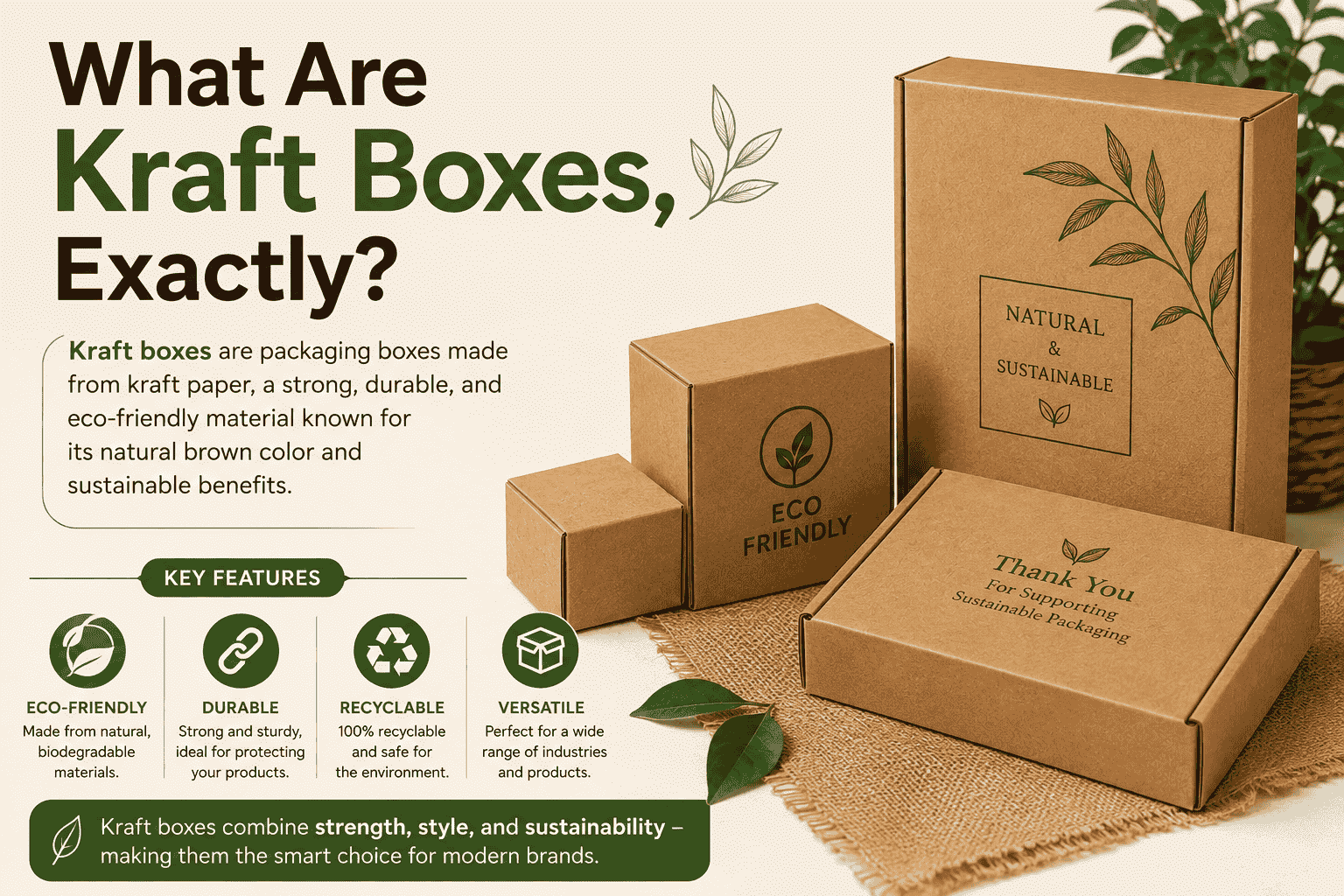
“Kraft” refers to the paper-making process (the German word for “strength”), not a specific look. Kraft paper is produced from wood pulp using the kraft (sulfate) pulping process, which produces a stronger, more tear-resistant sheet than standard papermaking methods. That’s why kraft boxes hold up better under stress, humidity, and repeated handling than many coated cardboard alternatives.
Kraft boxes are typically available in:
- Natural brown kraft – unbleached, the most eco-conscious and cost-effective option
- White kraft – bleached for a cleaner look while keeping the same fiber strength
- Colored/printed kraft – natural kraft as a base with custom CMYK or Pantone printing
Why Sustainable Brands Are Choosing Kraft Over Alternatives
1. It’s Genuinely Recyclable and Biodegradable
Unlike laminated or foil-heavy packaging, uncoated kraft paper is widely recyclable through standard curbside programs and breaks down naturally without leaving microplastics behind. If your brand claims “eco-friendly” on the box, kraft is one of the few materials where that claim holds up under scrutiny — which matters as regulators and consumers increasingly call out greenwashing.
2. Lower Environmental Footprint in Production
Kraft pulping recovers and reuses most of its own chemicals in a closed-loop process, and kraft paper can be made from recycled fiber or FSC-certified virgin fiber. Compared to plastic or heavily coated packaging, the production footprint is meaningfully smaller.
3. It Signals Brand Values at a Glance
The natural brown tone of kraft has become visual shorthand for “sustainable” and “handcrafted” — even before a customer reads a single word on the box. For food, beauty, and artisanal product brands especially, that instant association does marketing work your packaging copy doesn’t have to do.
4. Cost-Effective at Small and Mid-Size Order Volumes
Kraft board typically costs less per unit than rigid or heavily laminated boxes, and most suppliers offer low minimum order quantities — making it realistic for startups and small-batch brands, not just large enterprises.
5. Surprisingly Versatile for Branding
Modern printing techniques mean kraft is no longer “plain brown box only.” Options include:
| Finish | Best For |
| Debossing/Embossing | Premium, tactile brand feel |
| Spot UV | Highlighting a logo or key detail |
| Foil stamping | Luxury or gift packaging |
| Die-cut windows | Product visibility on shelf or online |
| Full CMYK printing | Bold graphics, photography, patterns |
Kraft Boxes vs. Other Common Packaging Materials
| Material | Recyclability | Cost | Strength | Sustainability Perception |
| Kraft paperboard | High | Low–Medium | High (tear-resistant) | Strong |
| Standard cardboard | Medium | Low | Medium | Moderate |
| Rigid boxes | Low–Medium | High | Very High | Weak (often laminated) |
| Plastic/poly packaging | Low | Low–Medium | High | Weak |
Kraft isn’t the strongest option on paper — rigid boxes offer more structural protection — but for brands prioritizing sustainability and affordability, it hits a balance few other materials can match.
Industries Getting the Most Value From Kraft Packaging
- Food and beverage (bakery, coffee, snacks) — kraft’s natural look pairs well with “handmade” and “small-batch” positioning
- Beauty and skincare — especially clean-beauty and natural-ingredient brands
- Apparel and accessories — kraft mailers and boxes reduce plastic mailer use
- Subscription boxes — cost-effective at scale with strong unboxing appeal
- Gifting and retail — foil and spot UV finishes elevate kraft beyond “basic”
What to Look for When Choosing a Kraft Box Supplier
Before you order, check that a supplier offers:
- Material sourcing transparency — ask whether their kraft stock is FSC-certified or made from recycled fiber
- Low minimum order quantities — important if you’re testing a new SKU or launching small
- Realistic turnaround times — printed custom packaging typically takes 2–4 weeks; be wary of suppliers promising same-week custom print runs at low cost
- Digital proofs or 3D mockups before production
- Clear pricing on plates/dies — some suppliers charge separately for printing plates, which affects true cost per unit
Final Thoughts
Custom kraft boxes aren’t just a packaging trend — they’re a practical answer to a real shift in what customers expect from brands. They’re recyclable, cost-effective, and flexible enough to support everything from minimalist branding to bold, foil-stamped luxury presentation.
If you’re evaluating packaging options for an upcoming product launch or rebrand, [Your Brand Name] can help you compare materials, finishes, and order volumes based on your actual product and budget — not just a one-size-fits-all pitch.