Running a bakery is easy compared to what comes after the baking is done. Getting a cake, a tray of cookies, or a fresh loaf from your counter to someone’s kitchen table without it falling apart along the way — that’s the part nobody prepares you for. I’ve spent years working alongside bakery owners, and packaging is what comes up again and again. More than flavor. More than pricing.
Bakery products are just fragile. A t-shirt survives a bumpy delivery ride. A cupcake doesn’t. That’s basically the whole reason customized food boxes have quietly become one of the biggest decisions a bakery makes.
Why Bakery Products Need Special Packaging Attention
Bread goes stale within hours if it’s sealed wrong. Cream desserts start sliding the moment a delivery van sits in traffic under the sun. Cookies snap if there’s not enough room, cakes tip over if there’s too much. Anyone who’s actually shipped baked goods knows this already, but a surprising number of new bakery owners still learn it the hard way.
Generic wholesale boxes weren’t built with any of that in mind. They’re built for “a box shape” — not for a red velvet cake with soft frosting sitting an inch from the lid. That gap between generic and specific is where most complaints come from.
The Cost Nobody Puts on a Spreadsheet
I’ve watched bakeries lose repeat customers over a squashed box, not a bad recipe. Someone orders a cake for their kid’s birthday, it shows up with frosting smeared into the lid, and no apology fixes that. The recipe was fine. The box wasn’t. And that customer doesn’t come back — they just quietly order somewhere else next time.
What Makes Customized Food Boxes Different
Custom boxes get built around the product instead of forcing the product to fit whatever box is on hand. A cupcake box has dividers so six cupcakes don’t smear into each other on the drive over. A cake box has a locking base so the cake stays put when the driver brakes hard. A cookie box is sized close enough that there’s nowhere for the cookies to slide.
Protection is the bigger reason, but it’s not the only one. What the box looks like the second a customer lifts the lid matters almost as much.
Small Structural Choices That Solve Real Problems
A die-cut window on a pastry box lets someone see what’s inside before they even open it — small thing, but it drives a lot of counter-side impulse buys. Vented boxes for warm bread do something similar in reverse: without a vent, trapped steam turns a crisp crust soft within the hour. None of this is complicated engineering. It’s just paying attention to what generic packaging usually skips.
Your Box Is Already Doing Marketing, Whether You Meant It To or Not
I tell clients this a lot: a plain brown box says nothing about your business. One with your logo, your colors, maybe a short line printed on the lid — that tells the customer someone thought about this. And with how often people photograph food before eating it now, a good-looking box turns into free advertising every time it ends up on someone’s phone.
Materials That Actually Work for Bakery Packaging
A lot of businesses just grab whatever material is cheapest, and that’s usually the wrong call, because different bakery products genuinely need different things.
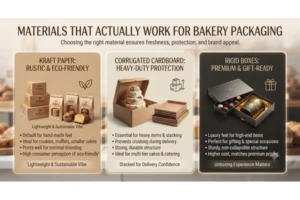
Kraft Paper
Kraft has become the default for bakeries going for that rustic, hand-made feel. It holds up fine for cookies, muffins, and smaller cakes, and it prints well if your branding leans minimal and earthy. People also read kraft as “eco-friendly” almost automatically now, fair or not, and that association carries real weight with buyers.
Corrugated Cardboard for Anything Heavy
Multi-tier cakes, large pastry orders, catering trays — anything with real weight needs corrugated, not kraft. It handles stacking without caving in, which matters more than people expect once a delivery van has three or four boxes stacked on top of each other.
Rigid Boxes for the Premium Stuff
For high-end items — wedding cake slices, artisan chocolate assortments, anything meant to be gifted — rigid boxes give that gift-shop feel plain cardboard can’t. They cost more per unit, but a product already priced like a luxury item needs packaging that matches it, or the whole thing feels off.
Custom Sizing Prevents Damage Before It Happens
This is the part people underrate the most. A box that’s even a little too big is a problem waiting to happen — every brake, turn, or pothole gives the item room to slide or tip.
A properly sized box fits the product close enough to limit that movement, without making it a fight to get the thing out afterward. Bakeries that switch from stock sizing to product-specific sizing usually notice fewer damage complaints within the first few weeks. It sounds like a small fix. It rarely feels small once you see the difference in returns.
Printing and Design Choices That Actually Sell
Don’t Try to Say Everything on One Box
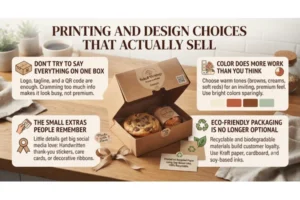
A box doesn’t need your whole brand story printed on it. A logo, a tagline, maybe a QR code to your store — that covers it. Cram too much text or too many colors onto a small surface and it stops looking premium and starts looking busy.
Color Does More Work Than People Give It Credit For
Warm tones — browns, creams, soft reds — tend to suit bakery branding because they feel inviting instead of clinical. Bright, saturated colors can work too, but they need a lighter touch, or the box starts looking like it belongs to a toy store instead of a bakery.
The Small Extras People Actually Remember
A handwritten thank-you sticker. A little care card taped to the lid. A ribbon instead of tape. None of it costs much, but it’s exactly the kind of thing that ends up in a review or a photo someone posts without even thinking about it.
Eco-Friendly Packaging Is No Longer Optional
More customers are actively choosing bakeries based on whether the packaging is recyclable or biodegradable, and at this point that’s not a trend so much as an expectation. Kraft paper, recycled cardboard, and soy-based inks are easy to source now and don’t add much to the cost. Even a small line on the box that says “recyclable packaging” tends to build loyalty with customers who genuinely factor that into where they spend money — younger buyers especially.
Finding a Supplier Who Actually Gets Bakery Packaging
Not every packaging supplier understands what bakery products need, and that gap shows up fast once you start working with the wrong one. A supplier who mostly does boxes for electronics or cosmetics probably isn’t thinking about ventilation, grease resistance, or food-safe coatings the way someone focused on food packaging would. Before signing with anyone, ask about their experience with food packaging specifically, their minimum order sizes, and how long turnaround takes — especially around wedding season and holidays, when order volume spikes and a packaging delay can hold up an entire delivery schedule.
Final Thoughts
Bakery products live or die on presentation and freshness, and packaging touches both at once. A good box isn’t just protecting a cake or a batch of cookies — it’s doing marketing, brand recall, and damage prevention all at the same time, whether the owner planned it that way or not. Bakeries that treat packaging as an afterthought usually pay for it later, through complaints, refunds, or customers who just quietly stop ordering. The ones that put real thought into structure, material, and design tend to see it pay off in ways that are hard to put a number on but easy to notice over time — fewer damaged orders, better reviews, and customers who remember how good the box looked, not just how the cake tasted.