Years ago I was consulting for a small chocolate shop, and I watched a customer pick up two boxes off the same shelf — same chocolatier, same chocolate, same everything really — and buy the more expensive one without blinking. Didn’t even check the price twice. The cheap one was a plain window box. The other had a rigid two-piece design, magnetic lid, a little ribbon pull. That’s it. That was the entire difference. I’ve thought about that moment more than I probably should, because it says everything about how much the box matters with chocolate specifically.
Nobody buys chocolate purely for nutrition, obviously. It’s a gift, a treat, a “you deserve this” kind of purchase most of the time. And the box is carrying a huge chunk of that feeling before a single piece gets eaten. So picking the right style isn’t some minor afterthought — it’s worth actually understanding your options instead of just going with whatever the printer pushes on you.
Why Chocolate Packaging Plays by Different Rules
Chocolate melts if it gets warm. It scratches easily. It picks up smells from whatever’s sitting near it if the seal isn’t tight. That’s a lot more to manage than most products need, and on top of all that practical stuff, the box still has to look good enough to hand to someone as a gift. Two very different jobs, one box.
That’s really the reason there’s no single “best” chocolate box. What works for a $5 grocery bar and what works for a $60 gift set aren’t remotely the same thing, and they shouldn’t be.
Rigid Boxes
The Ones That Feel Expensive Before You Even Open Them
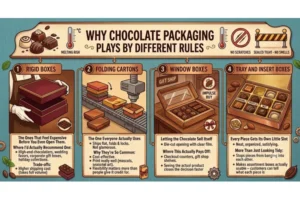
Rigid boxes don’t fold flat — they’re built from thick board wrapped in a nicer outer layer, and that sturdiness is basically the whole point. You pick one up and it just feels like it cost more, even before you know what’s in it. Costs more to ship too, since they take up full volume even empty, but for the right product that trade-off is worth it.
Where I’d Actually Recommend One
High-end chocolatiers, wedding favors, corporate gift boxes, holiday collections — anywhere the packaging is supposed to say “this is special” on its own. Two-piece designs with a lift-off lid especially, because that little moment of lifting the lid off just feels more deliberate than flipping open a flap ever does.
Folding Cartons
The One Everyone Actually Uses
Say “box of chocolates” to most people and this is what they picture. Ships flat, folds and locks or glues together at the packing stage, costs a fraction of what rigid does. Not glamorous. Doesn’t need to be, for most of what’s sold in this category.
Why They’re So Common
Cost, mainly, but also because they print really well. Seasonal designs, mascots, holiday art — all cheap and easy on a folding carton, whereas the same design change on a rigid box gets expensive fast because you’re often redoing tooling. For brands that rotate designs a few times a year, that flexibility matters more than people give it credit for.
Window Boxes
Letting the Chocolate Sell Itself
Die-cut opening, usually with a clear film over it, showing off what’s inside without anyone lifting a lid. Glossy truffles, nicely molded bars — chocolate photographs well, and a window box takes advantage of that instead of hiding it.
Where This Actually Pays Off
Checkout counters, impulse buys, gift shop shelves — anywhere someone’s deciding in about three seconds whether to grab something. Seeing the actual product closes that decision faster than reading a description on a closed box ever will.
Tray and Insert Boxes
Every Piece Gets Its Own Little Slot
You’ve seen this — open a box of assorted chocolates and each piece sits in its own molded cavity, usually plastic or pulp. Neat, organized, and honestly kind of satisfying to open.
More Than Just Looking Tidy
It stops pieces from banging into each other in transit, which matters a lot for delicate or decorated chocolates that would scuff if they slid around loose in a plain box. It also makes assortment boxes actually usable — customers can tell what each piece is instead of digging through a pile hoping for the caramel one.
Bag-in-Box and Pouch Style
For When It’s Not a Gift, Just a Craving
Not every chocolate purchase is ceremonial. Sometimes it’s someone grabbing a treat for themselves off a grocery shelf, and a lot of brands have leaned into simple pouch packaging for exactly that — sometimes with a small window, often not.
Why It Works Where It Works
Cheaper to produce, cheaper to ship, fits grocery shelves well. For an everyday snack purchase, all that ceremony a rigid box carries would just be wasted money.
Custom and Novelty Shapes
When the Box Itself Becomes the Gift
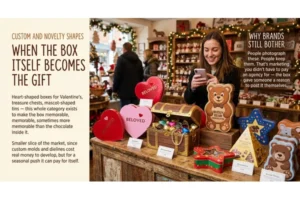
Heart-shaped boxes for Valentine’s, treasure chests, mascot-shaped tins — this whole category exists to make the box memorable, sometimes more memorable than the chocolate inside it. Smaller slice of the market, since custom molds and dielines cost real money to develop, but for a seasonal push it can pay for itself.
Why Brands Still Bother
People photograph these. People keep them. That’s marketing you didn’t have to pay an agency for — the box gave someone a reason to post it themselves.
So Which One Should You Actually Pick
Match It to the Occasion, Not Just the Product
A well-made truffle deserves more than a flimsy carton if you’re pricing it as a luxury item, and a $3 snack bar doesn’t need rigid packaging inflating its cost. Be honest with yourself about where your product actually sits before you pick a style — don’t just chase whatever looks nicest in a catalog.
Shipping Reality Matters as Much as Shelf Appeal
Chocolate doesn’t handle heat or rough handling well, so whatever you choose has to survive actually getting to the customer, not just look good sitting on a store shelf. This matters even more if you’re shipping direct to people’s homes, where boxes get tossed around a lot more than they would going through a retail supply chain.
A Small Upgrade Can Do More Than You’d Think
You don’t have to jump straight from a basic carton to full rigid packaging. Sometimes a better finish, a proper insert, or one structural tweak shifts how premium something feels without wrecking your budget.
Final Thoughts
None of these box styles is objectively better than the others — they’re just built for different jobs. Rigid carries the luxury weight, folding cartons keep things affordable, window boxes let the chocolate do the talking, insert trays keep everything neat and unscuffed, pouches handle the grab-and-go end, and novelty shapes turn the box into part of the gift itself. Figure out what your product actually is and who’s buying it, and the right style gets a lot more obvious. Get that match right and, honestly, the box starts doing some of the selling on its own — same way it did for that customer who never even glanced at the price tag twice.