
Grab a “storage bag” and a “freezer bag” off the shelf and they can look almost identical — same clear plastic, same zip-top closure, same aisle. But put the wrong one in your freezer for a few weeks and you’ll find out the hard way that they’re not interchangeable.
The short version: freezer bags are thicker, more airtight, and built to survive sustained sub-zero temperatures without cracking or letting air in. Storage bags are thinner, cheaper, and designed for short-term pantry, fridge, or countertop use. The difference isn’t marketing — it comes down to plastic composition, wall thickness, and how the seal is engineered.
Here’s the full breakdown, including the numbers most guides skip.
The Core Difference: Plastic Thickness and Composition
Both bag types are typically made from low-density polyethylene (LDPE), but the grade and thickness are what separate them.
| Feature | Storage Bags | Freezer Bags |
| Typical thickness | 1.5–1.75 mil | 2.7–4 mil |
| Base material | LDPE (standard grade) | LDPE or polyethylene vinyl acetate (heavier grade) |
| Seal type | Single press-seal or basic zipper | Double-track zipper, often with a slider or reinforced lock |
| Temperature tolerance | Best above 32°F (0°C) | Stable down to 0°F (-18°C) and below |
| Puncture resistance | Low to moderate | High |
| Ideal storage window | Days to a few weeks | Weeks to several months |
| Typical use | Pantry snacks, sandwiches, fridge leftovers | Meat, soups, sauces, bulk meal prep, long-term freezing |
A mil is one-thousandth of an inch — so a 3-mil freezer bag is roughly double the thickness of a standard 1.5-mil storage bag. That extra thickness matters more than it sounds like it should, for one specific reason: plastic contracts in the cold.
Why Thickness Actually Matters at Freezing Temperatures
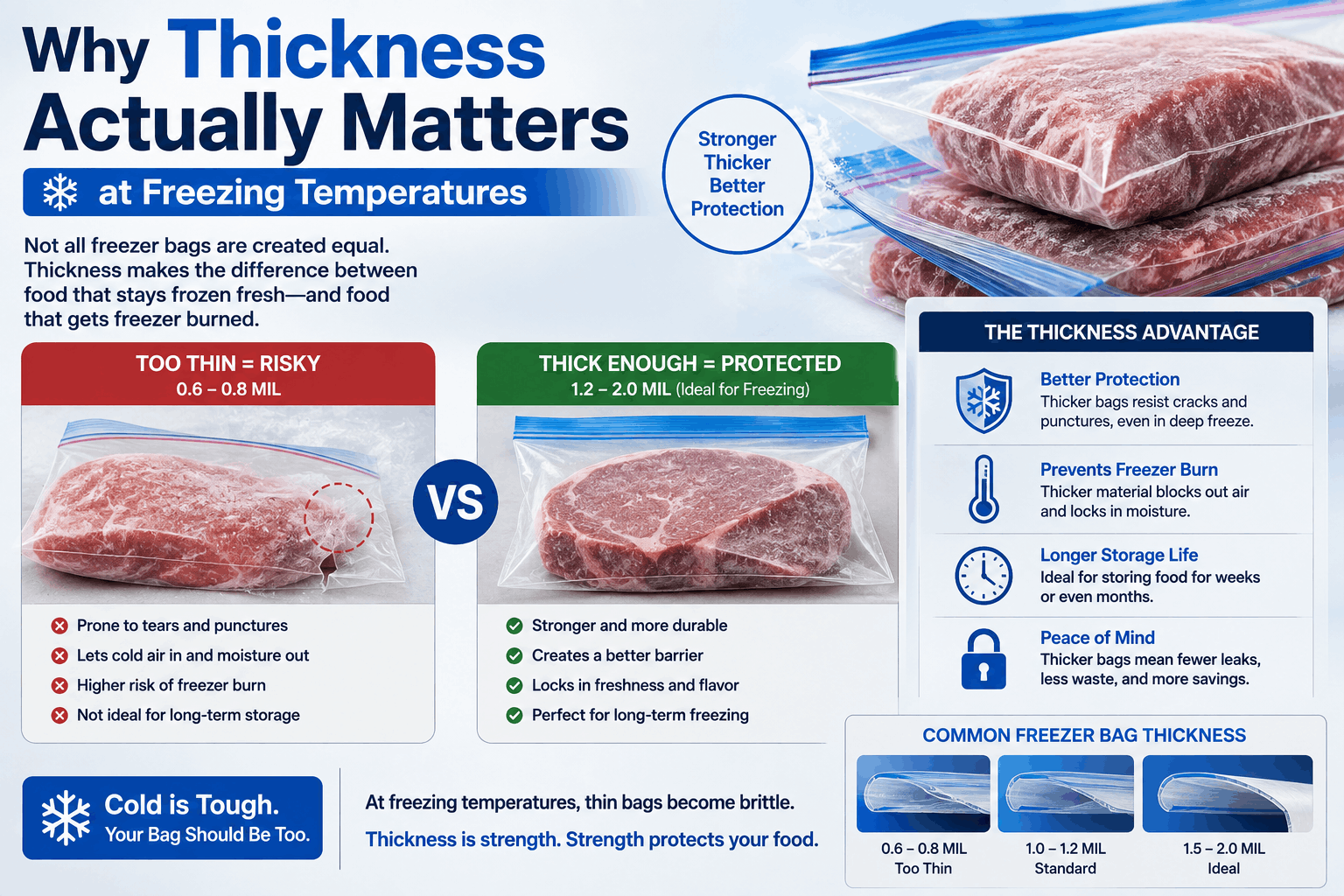
When plastic gets cold, it becomes more rigid and less forgiving. A thin storage bag that flexes easily at room temperature can turn brittle in the freezer, and repeated handling — stacking, shifting, pulling bags in and out — can cause micro-tears you won’t notice until your food has freezer burn or a leak in the bottom of your freezer drawer.
Freezer bags are engineered specifically to stay flexible at low temperatures. The thicker LDPE or vinyl-acetate blend resists cracking, and most freezer bags also include reinforced side seams for exactly this reason — the seam is usually where a thin bag fails first.
Freezer Burn: The Real Reason the Seal Design Differs
Freezer burn isn’t caused by cold — it’s caused by air contact. When oxygen reaches frozen food, it triggers oxidation and moisture loss, which is what gives freezer-burned food that grayish, dried-out texture and off flavor.
This is the actual functional reason freezer bags have heavier-duty zippers (often double-track or slider-style): a tighter seal means less air exchange over the weeks or months the bag sits in the freezer. Storage bags use a lighter seal because they’re not expected to hold an airtight barrier for that long — they just need to keep food fresh for a day or two.
Practical takeaway: if a storage bag is well-sealed with the air pressed out, it can work in the freezer for short-term use (a week or two). It’s not ideal, but it’s not going to ruin your food overnight. What it won’t do is protect food for the 2–6 months typical of proper freezer storage.
Can You Use a Storage Bag in the Freezer?
Yes — with caveats:
- Short-term only. A few days to two weeks is reasonable for items like bread, chopped vegetables, or portions you’ll use soon.
- Press out as much air as possible. Since the seal isn’t airtight-rated, manual air removal matters more.
- Double-bagging helps but doesn’t fully substitute. It reduces puncture risk but doesn’t change the plastic’s cold tolerance.
- Avoid it for liquids, meat, or anything long-term. The seal and plastic aren’t rated for it, and you risk leaks or freezer burn.
Can You Use a Freezer Bag for Regular Storage?
Yes, and there’s no downside except cost — freezer bags work fine in the pantry or fridge. You’re just paying for thickness and seal strength you don’t need for a sandwich. Most people keep a box of each rather than using freezer bags for everything, purely for cost efficiency.
Child-Resistant and Food-Safety Features
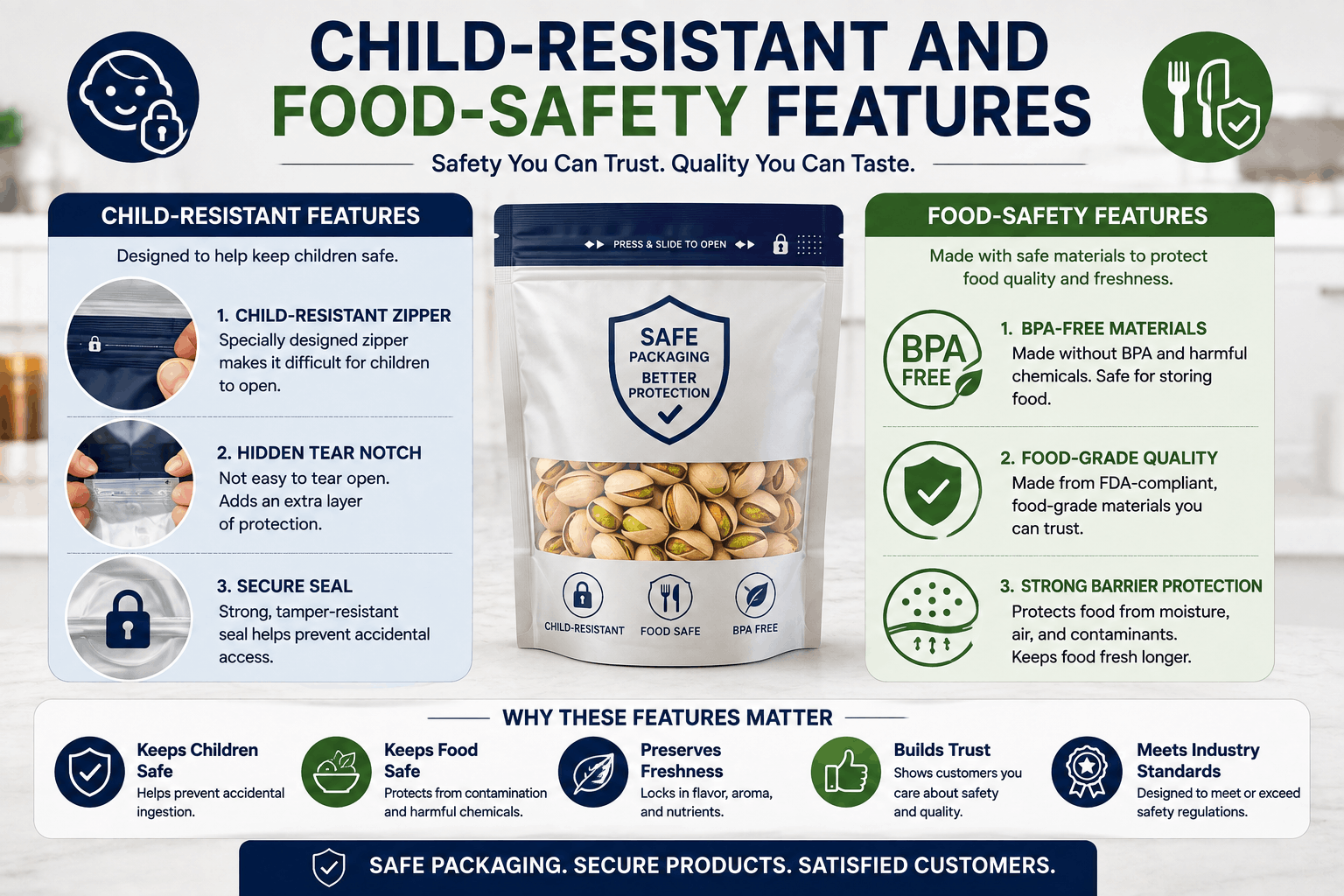
Both bag types can be manufactured with child-resistant zip closures, and most reputable brands — regardless of bag type — are BPA, phthalate, and lead-free. This isn’t a differentiator between the two categories; it’s a baseline safety standard you should check for on any food-contact packaging, freezer or storage.
Quick Decision Guide
Choose a storage bag if:
- You’re storing something for under a week
- It’s staying in the fridge or pantry, not the freezer
- You’re prioritizing cost over durability
Choose a freezer bag if:
- You’re freezing anything for more than 2 weeks
- The contents are liquid, meat, or prone to freezer burn (berries, bread, sauces)
- You need the bag to survive handling, stacking, or reheating
The Bottom Line
Freezer bags and storage bags share a family resemblance, but they’re built for different jobs — one prioritizes short-term convenience, the other prioritizes long-term protection against cold, air, and physical wear. Matching the bag to the storage duration is the single biggest factor in whether your food actually stays fresh.
If you’re sourcing either at scale — for a restaurant, meal-prep business, or retail product line — thickness, seal type, and material grade are exactly the specs to nail down with your supplier before you order, since “freezer bag” isn’t a strictly regulated term and quality varies a lot between manufacturers.