
Okay so picture this. You’re halfway through baking something, recipe says ounces, your scale only does grams. Annoying right. This happens to way more people than admit it, usually at the worst time too, hands covered in flour, no time to go look anything up.
Not just a baking problem either honestly. Jewelers hit the same wall. People doing import-export work too. Even folks packing boxes for shipping need this number eventually. So let’s just sort it, no long intro, straight in.
What’s an Ounce Even Mean
An ounce is a weight unit. Comes from the Imperial system, the one the US still leans on, plus a few other English speaking countries here and there. Used for normal stuff, food, liquids, things off a shelf. You’d want an actual scale for this, by the way, guessing weight by hand never goes the way you think.
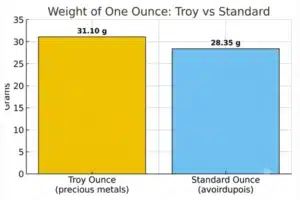
Here’s where it gets a bit annoying though. There’s two kinds of ounces, not one. The regular kind, Avoirdupois (weird word, don’t stress saying it right), covers basically everything everyday. Sits at 1 oz = 28.3495 grams. Then there’s Troy ounce, only for the fancy stuff, gold, silver, gemstones, slightly heavier at 1 troy oz = 31.1035 grams.
So unless you’re literally weighing actual gold, just go with the regular one. People mix this up more than you’d think.
And a Gram Is
Grams, metric system, way more common worldwide than ounces if I’m honest. Europe’s on it. Australia too. Most of Africa. Canada. The US is one of the few that just doesn’t run on grams day to day, oddly grouped with Liberia and Myanmar on that short list, which is kind of a strange trio when you stop and think about it.
Grams work better for small, precise amounts probably. That’s likely why so much of the world went metric over the decades.
Okay So How Many Grams Is One Ounce
Here’s the number you came for. 1 ounce equals 28.3495 grams. Worth remembering that one, whether cooking something foreign, weighing ingredients, or doing trade work where both sides need to speak the same measurement language basically.
US vs Pretty Much Everywhere Else
Americans stick with Imperial mostly, ounces and pounds run that whole show. Almost everyone else just uses metric. You feel the difference fast the second you try a British recipe and it’s all grams while American recipes are still stuck on cups and ounces.
Quick Chart, Because Math Is Annoying
| Ounces (oz) | Grams (g) |
| 1 oz | 28 g |
| 2 oz | 57 g |
| 3 oz | 85 g |
| 4 oz | 113 g |
| 5 oz | 142 g |
| 6 oz | 170 g |
| 7 oz | 198 g |
| 8 oz | 227 g |
| 9 oz | 255 g |
| 10 oz | 283 g |
| 11 oz | 312 g |
| 12 oz | 340 g |
| 13 oz | 369 g |
| 14 oz | 397 g |
| 15 oz | 425 g |
| 20 oz | 566 g |
Save this somewhere. It’ll stop you from googling the same thing five times a month, trust me.
Measuring Dry Stuff the Right Way
Not complicated once you know it. Bowl on the scale first. Turn the scale on before adding anything. Pick your unit, ounces or grams, don’t switch halfway. Hit tare so it forgets the bowl’s weight. Then pour slow until you hit your number.
That tare step, everyone forgets it. Skip it and the whole measurement’s wrong from the start, every time.
Imperial vs Metric, the Actual Difference
Two systems really run the whole show globally, Imperial and Metric. Imperial’s older, ounces and pounds, goes back centuries, loosely tied to old human body proportions, weirdly interesting bit of trivia honestly. Mostly just the US uses it now plus a couple other spots.
Metric runs on grams and kilograms, used almost everywhere else, tends to be more precise too since it’s built on clean decimal math instead of odd fractions and weird leftover units from centuries ago.
Doing the Math Yourself
Want to calculate it yourself instead of checking a chart every time? Here’s the formula. Grams divided by 28.3495 gives ounces. Flip it, ounces times 28.3495 gives grams.
Quick one. Converting 100 grams to ounces. 100 divided by 28.3495 lands at 3.5274 ounces. That’s the whole formula really, nothing hidden behind it, just basic division.
Stuff Worth Remembering
1 ounce equals 28.3495 grams for regular things. 1 troy ounce equals 31.1035 grams, specifically for precious metals. Both technically measure weight, sure, just from two totally different systems built centuries apart from each other.
Matters more than people assume too, especially with recipes, shipping, trade, and packaging. Even a tiny error in weight can throw off an entire shipment down the line, sometimes in ways that cost real money. Teams handling product packaging, ZJ Packaging for example, deal with this kind of detail constantly since getting the weight label right affects shipping costs directly, plus whether customers trust what they’re actually holding in their hands.
So, Wrapping This Up
“How many grams in an ounce” isn’t that deep once the number sticks honestly, 28.3495 grams per ounce. Shows up everywhere though. Cooking. Jewelry. Trade. Packaging. Basically any spot where two measurement systems need to talk to each other and actually land on the same page.
Student, chef, jeweler, packaging designer, doesn’t matter which one you are. Knowing this cold just makes life a bit easier somehow. One less thing to stop and second guess halfway through whatever you’re doing that day.