
You are just starting out with your store and unsure on the size of cards to pick. Maybe you are selling your digital art as printed products and are having trouble determining dimensions. If this is the case, you’re not alone. Sizing for greeting cards are often one of those things that appear easy to figure out however they actually have an immense amount of underlying complexity
Why the Size of Your Greeting Card Matters
People usually don’t give much thought to the size of their greeting cards until they encounter an issue — a card that won’t fit in its envelope, or the design looks too cramped, or the postage on the card is more than expected. If you choose your size correctly from the start, you won’t have any of those issues.
Cost Efficiencies of Mailing
A card that fits a regular envelope sends through the mail at the regular postal rate. If you go outside the normal envelope size range, your postal service will charge you additional postage on the card. Thus, if you’re a business sending hundreds of cards in the mail, these additional postage expenses can quickly add up. By using “standard” sizes of jobs will allow you to have predictable mail expenses.
Professional Appearance of Your Card
If your card is out of proportion, it doesn’t look right. A card that is too wide, too tall or too small compared to what is on the card does not look like a professional card. The sizes for greeting cards are “standard,” because they have been determined as sized to provide balance and a professional look to the card. By designing your card within those same sizes, you will achieve a polished look and feel on your card.
Your Design Space and Messaging
The dimensions of the card will determine the amount of space you will have available for your design (artwork/photos/text). In the case of a card, a small A2 will allow you to create a simple thank you. A large A7 card will allow you to include a large photo as well as your message and your logo. Use the size of your card to determine how much you need inside the card to complete your design. Also, ensure that any established production timelines are going to support your design space with the current card size.
How big is a greeting card?
Greeting cards are generally not created in just one size; there are multiple options that can vary from style to shape, to whether the card is flat or folded based on their purpose. However, the two most frequently used sizes of greeting cards are the A2 (4.25” x 5.5”) and the A7 (5” x 7”). Although these are two of the more popular options for greeting cards, there are numerous other standard sizes of greeting cards that you may wish to consider.
The flat and folded versions of the card will yield different results because of the way they were created. For example, an A5 card (folded) will be cut from an A4 sheet before the card is folded. Therefore, understanding how the cards are formed is important when creating designs for a print shop to print, cut, and fold.
Flat and Folded Greeting Cards
- For flat cards, the size shown is the final size of the card
- For folded cards, the size shown is the final folded size — an A5 card (folded) will have a sheet size 2 x 2, and twice as tall as the final size — depending on the fold direction.
Metric Standard Sizes
Merchants doing business using metrics or to customers outside the US will appreciate these standard measurements in cm for greeting cards:
| Format | Dimensions (cm) |
| A5 | 14.8 x 21 cm |
| A6 | 10.5 x 14.8 cm |
| A7 | 7.4 x 10.5 cm |
| Square | 15 x 15 cm |
| DL | 9.9 x 21 cm |
The Size of Greeting Cards: Which one is the Most Common?
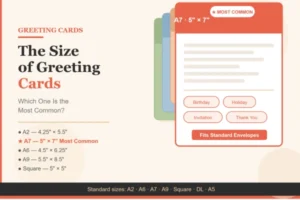
The A6 (10.5 cm x 14.8 cm) is the most common greeting card size in metric countries for general purpose greeting cards. The A5 (14.8 cm x 21 cm) is primarily used as a gift card or higher quality greeting card that requires additional space for photographs or longer messages to be printed on.
Standard Sizes of Greeting Cards in the US (inches)
When looking for greeting card sizes in the United States, they will usually be specified in inches and there are two generally used standard sizes available among other size options, the A2 and A7 sizes will both be used quite often; depending on your uses for the card whether or not you want to create a one-of-a-kindcard to send to someone on a special occasion or if your needs for content on the card determine the size of the card.
| Format | Dimensions (inches) |
| A2 | 4.25″ x 5.5″ |
| A6 | 4.5″ x 6.25″ |
| A7 | 5″ x 7″ |
| A9 | 5.5″ x 8.5″ |
| Square (small) | 5″ x 5″ |
| Square (large) | 6″ x 6″ |
Should you get an A2 or an A7?
A2 is the best size for everyday cards including thank you notes, birthday cards, informal correspondence, etc. It is also a smaller, less expensive card to print and mail than A7. A7 is the most frequently used card for special occasions like holiday cards, wedding invitations, etc. since there is a larger amount of space available on the card for design and a longer personal message.
Common sizes of greeting cards in millimeters
Most designers and printers work with millimeter measurement of greeting card sizes for accuracy. The following list contains most of the commonly used sizes of greeting cards in millimeters:
| Format | Dimensions (mm) |
| A7 | 127 x 178 mm |
| A6 | 105 x 148 mm |
| A5 | 148 x 210 mm |
| Small Square | 100 x 100 mm |
| Large Square | 150 x 150 mm |
| DL | 99 x 210 mm |
| A2 | 108 x 140 mm |
Importance of Physical Measurements for Print Formatting…
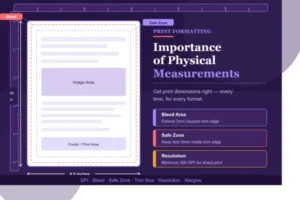
Millimeters are helpful for creating print formats and allow you to be specific. The majority of professional design programs like Adobe InDesign, Illustrator, and Canva Pro will also allow you to specify the size of your file’s document using millimeters (mm). It is very important when creating a print-ready document to include a minimum of 3mm of additional space on each side of the document for bleed. This will help you prevent having blank borders when printing the card.
Common Birthday Card Sizes
Birthday cards are one of the most popular cards to purchase and the size of the card can affect how much area you have to create a design, how much area you have for your photograph and how much space you have available to write your message in.
| Format | Dimensions |
| A7 (most popular) | 5″ x 7″ |
| A6 | 4.5″ x 6.25″ |
| A2 | 4.25″ x 5.5″ |
| Square | 5″ x 5″ or 6″ x 6″ |
The most popular size for birthday cards is 5 inches by 7 inches. This particular dimension also fits nicely into an A7 envelope, has enough room for a complete design, and/or a photo, and is weighty, yet not overpoweringly large when held in hand. Most individuals envision a greeting card as being 5 x 7.
Square Cards for Modern Birthday Designs
Birthday cards are increasingly being made in square shapes (e.g. 5×5 or 6×6) due to their popularity and modern/minimalistic aesthetic appeal. The square shape visually differentiates them from typical rectangular cards and visually supports a large piece of artwork when centered on the front of the card. A caveat has to be noted regarding postage; at the time of writing, some square envelopes incur an additional postal surcharge based upon the postal zone dimensions at which you mail them from.
| Format | Dimensions |
| A7 (classic folded) | 5″ x 7″ |
| A2 | 4.25″ x 5.5″ |
| Square | 5″ x 5″ |
| Postcard style (A6) | 4″ x 6″ |
Holidays: Flat vs. Folded
When you have a family picture to share inside a holiday card, using the folded layout gives you four total surfaces – front, inside left, inside right and back.
Sending Cards in High Volume
If you’re sending a high volume of holiday cards, flat or postcard styles are less expensive and simpler to print than folded cards.
Mailing Holiday Cards
Both the 4.25″ x 5.5″ and 5″ x 7″ sizes fit into standard mailing envelopes and use the same postage rate. When sending out holiday cards to a large list assist with postage and selection of a size to avoid any surprises.
Standard Size Envelopes for Greeting Cards
To allow for easy insertion of the card into the envelope, the envelope will be larger than the card being sent. The most common greeting card envelopes will be:
| Card Format | Matching Envelope Size |
| A2 card (4.25″ x 5.5″) | A2 envelope — 4 3/8″ x 5 3/4″ |
| A6 card (4.5″ x 6.25″) | A6 envelope — 4 3/4″ x 6 1/2″ |
| A7 card (5″ x 7″) | A7 envelope — 5 1/4″ x 7 1/4″ |
| A9 card (5.5″ x 8.5″) | A9 envelope — 5 3/4″ x 8 3/4″ |
The Importance of Envelope Size
If an envelope is too tight, the greeting card will be creased when you go to put it in. If an envelope is too big, the greeting card will slide around inside it and may become damaged. The standard sizes mentioned above provide a perfect fit; the card fits snugly with minimal movement, making it easy to insert.
Using Colorful Envelopes for Branding
For businesses that sell stationery products, the envelope is part of the whole package. Having a colored or patterned envelope that matches the card adds value and gives the consumer the impression that the whole package was created with consideration. All A-size envelopes are available in colors.
Common Sizes for Thank You Cards
Thank you cards are generally on the smaller side because they are designed to convey a simple message without needing much space to function. Here are a few common sizes of thank you cards:
Right Greeting Card Size: Things to Keep in Mind
Consider Weight of Card Stock
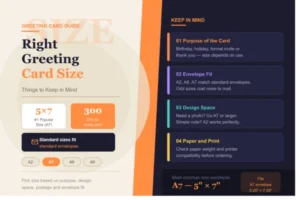
A thicker stock feels more expensive, but if you choose a heavy card stock (350gsm+), it may not fit well in the envelope. So be sure to check that your envelope can accommodate whatever weight stock you end up using.
Check Your Printer Capabilities
Your printer has limitations regarding the largest card sizes it will print — usually a minimum size of A4. Before choosing your card size, check first to make sure that your printer/printer service is able to print on whatever dimensions you end up using without sacrificing quality at the edges.
Postage Costs
If your card exceeds a certain size when mailed, it will cost you extra. USPS has additional charges for envelopes that are too large, too rigid or square. Check their size regulations prior to finalizing an order if you need to monitor your postage costs.
Design the Card First; Choose the Size Afterwards
Designing free of any constraints is always going to result in much better designs; i.e.: you’ll have room for all your design elements without having to crop them and/or what looks like odd spacing from card elements being crammed into odd spaces.
Conclusion
Setting the correct dimensions of your greeting cards is the single most significant thing you can do for your stationery company to be successful. Correct sizing yields lower postal costs, better presentation of the card’s content, and an overall better fit between the design and the content of the card.
The general sizing for everyday greeting cards is A2 and A7; they will be sized for the vast majority of cards. For birthday cards and holiday cards, the best size for the cards will always be 5″ by 7″. Thank you cards can be created in a standard size of 4.25″ by 5.5″. For note cards, the size of the note card will depend enitrely on how they will be used.