
Introduction
One of the least appreciated expenses in your business is packaging. In total, Guide Optimizing Packaging represents about 10% of the retail price on average, and that can quickly reach the thousands per month when businesses are sending thousands of boxes monthly.
But most of the guides don’t consider this: packaging cost and packaging logistics are not two separate problems! They form a single whole system. Optimize them together, and you’ll not only save money, but you’ll also improve fulfillment, lower damage claims, and build your brand.
Whether you’re working on a startup or a big operation, this guide will help you with a step-by-step framework to do just that.
Understanding the 3 Levels of Packaging
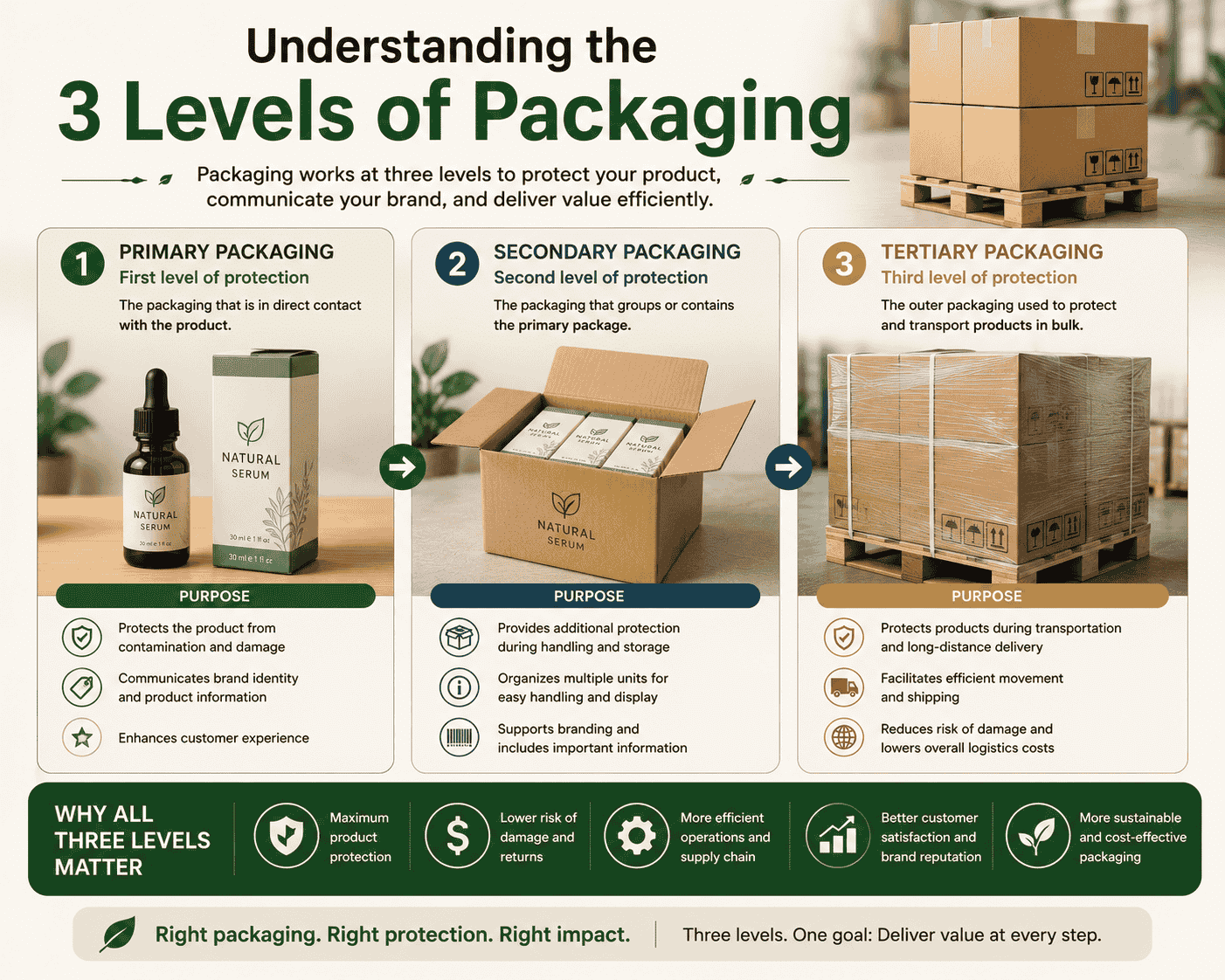
The first step in cost optimisation is to know what you are paying for. Packaging has three levels, each having its own cost drivers:
Primary Packaging — Packaging that comes in direct contact with the product. Sample: bottle, blister pack, retail box. This is the branding layer and has an impact on the customers’ perception.
Secondary Packaging — Bundles primary packages for retailing or further transportation. Examples: 12 bottles in a cardboard tray, a shelf-ready display unit.
Tertiary Packaging — Bulk Packaging for Warehousing & Transport. Corrugated shipping boxes and pallets fall here. This layer has not been created for its beauty but for protection and handling efficiency.
7 Proven Strategies to Reduce Packaging Costs
1. Right-Size Your Packaging
Most carriers are now using dimensional weight pricing. This may lead to being charged according to box size and not weight. Extra big box – extra cost – twice.
The action to take: Conduct a top 10 most-shipped inventory audit. Take the actual size measurements of the product and compare to the box you will be using. Shipping costs per unit can be reduced by as much as 5-15% at scale for each side of a box that is reduced.
2. Standardize Your Box Sizes
While it seems like a good idea to go with one-off sizes for each product, it wastes time and space in your warehouse and makes your product cost per unit higher. Standard sizes enable you to:
- Purchase large volumes of products to obtain a lower cost per unit.
- Reduce the number of SKU variations in packaging material.
- Save time being spent making decisions on the floor of the package by speeding up the process.
3. Choose the Right Packaging Material
Not all materials are created equal. Your material choice affects cost, weight, protection, and sustainability all at once. Here’s a quick comparison:
| Material | Best For | Cost Level | Sustainability |
| Single-wall corrugated | Lightweight retail products | Low | Recyclable |
| Double-wall corrugated | Heavy or fragile items | Medium | Recyclable |
| Rigid boxes | Premium/luxury products | High | Moderate |
| Kraft paperboard | Cosmetics, gifts | Medium | High |
| Poly mailers | Soft goods, apparel | Very Low | Low (unless recycled) |
Switching from rigid boxes to premium corrugated, for example, can reduce material costs by 20–30% while still delivering a strong unboxing experience with the right print finish.
4. Reduce Void Fill and Over-Packaging
Excessive protective inserts add cost in three ways: the material itself, the labor to add it, and the added weight on the shipping label. Over-packaging also frustrates customers and signals low sustainability awareness — both brand risks.
The fix: Test your packaging with drop tests and shake tests. Find the minimum level of protection that keeps your damage rate under 0.5%. Then standardize that configuration and remove what isn’t needed.
5. Order at Volume with the Right Supplier
Packaging unit costs drop dramatically at volume thresholds. A box that costs $1.20 each at a quantity of 500 may cost $0.45 each at 5,000. If your sales volume justifies it, consolidating your packaging orders with a single supplier and committing to larger runs can generate significant savings.
If your volume is too low to benefit alone, consider a spend aggregation approach: partner with complementary businesses using similar box sizes to pool orders and unlock volume pricing together.
6. Eliminate Excess SKUs in Your Packaging Inventory
Many businesses accumulate dozens of packaging variants over time — different tape types, multiple box sizes for similar products, redundant label formats. Each variant occupies warehouse space and requires separate purchasing.
Conduct a packaging audit annually. Identify variants that can be consolidated. Reduce your active packaging SKU count by 30–50% without impacting product protection or presentation.
7. Negotiate Carrier Contracts With Packaging Data
Your packaging choices directly affect your shipping spend — and your shipping data is negotiating leverage. If you can demonstrate to a carrier that you’ve reduced your average DIM weight, increased your average shipment density, or reduced damage claims, you have a strong basis for negotiating better rates.
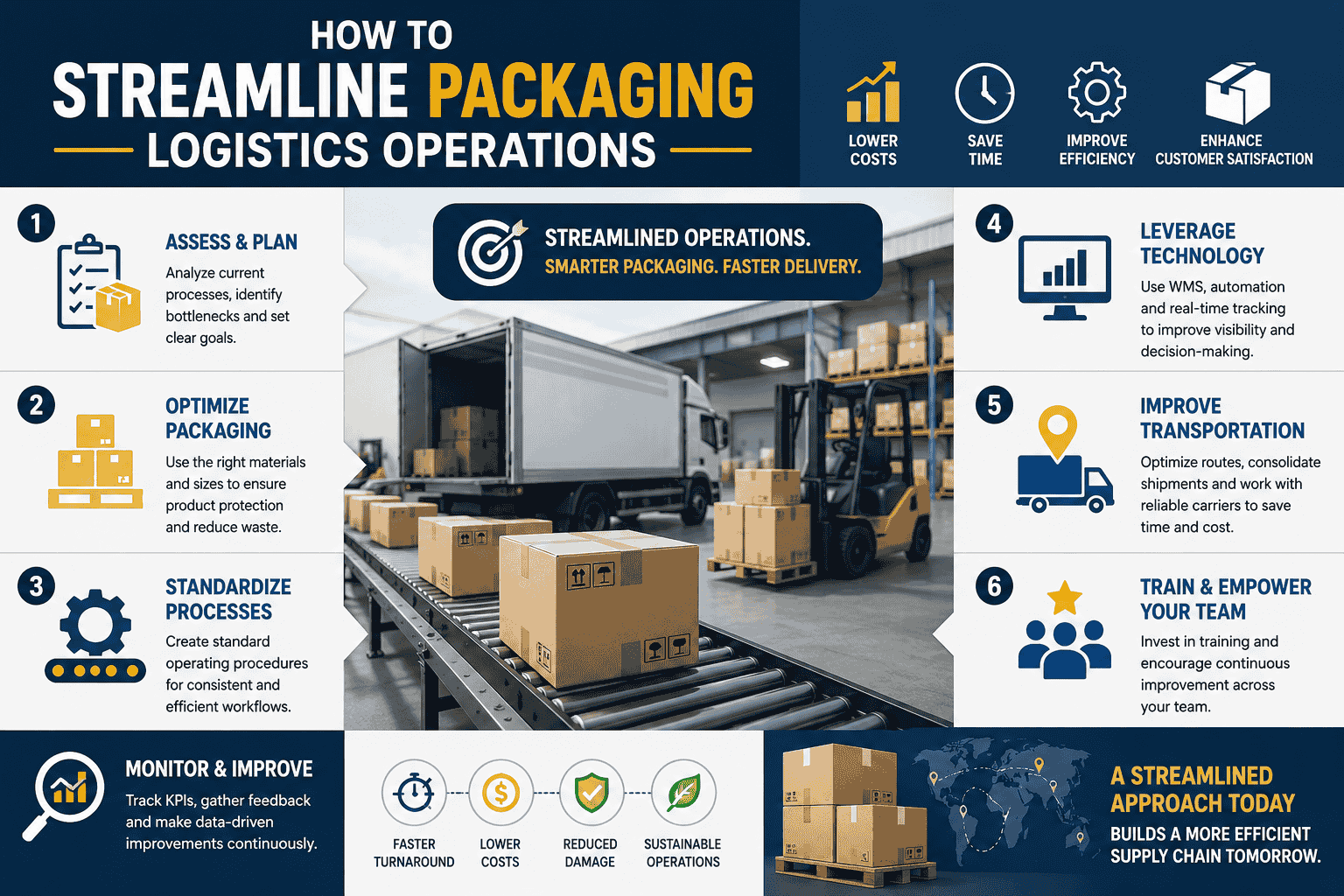
How to Streamline Packaging Logistics Operations
Implement Quality Control Checklists
Inconsistent packaging is expensive. A missed seal, wrong insert, or mislabeled box leads to customer complaints, returns, and rework costs. Build a simple quality control checklist that your team completes for every new product run:
- Correct box dimensions confirmed
- Fills and inserts are properly positioned in place
- Labeling is accurate and legible
- Seal integrity tested
- Weight matches expected range
Use Inventory Management Systems for Packaging Materials
Running out of boxes mid-shift or over-ordering specialty materials are both costly mistakes. Modern inventory management tools — even basic ones — can set reorder points for packaging materials based on your actual usage rate and lead times from suppliers.
Set minimum stock levels for your top packaging SKUs. Automate purchase orders when stock drops below the threshold. This eliminates emergency orders (which typically carry premium pricing) and prevents production delays.
Optimize Warehouse Layout for Packaging Efficiency
The physical layout of your warehouse or packing station has a direct impact on labor costs. Packaging materials should be stored as close to the packing area as possible. High-velocity items — your most-shipped SKUs ‘ packaging — should be at arm’s reach. Less common sizes can go in secondary storage.
The goal is to reduce the number of steps a packer takes per order. This sounds small, but in high-volume operations, it directly reduces labor cost per shipment.
Leverage Technology and Automation
Automation doesn’t require a large capital investment. Even basic tools make a difference:
- Carton selection software: Automatically recommends the optimal box size for each order based on product dimensions, reducing DIM weight charges
- Weigh-in-motion systems: Catch packing errors before they leave the building
- RFID and barcode tracking: Provides real-time visibility into packaging inventory levels and reduces shrinkage
- Pack station ergonomics: Reduces packing time and worker fatigue for labor cost savings
Sustainable Packaging: Cost Driver or Cost Saver?
It’s often thought that sustainable packaging is always more expensive. Many times it’s does not, and sometimes it’s cheaper.
Lightweighting (use of thinner, lighter materials that maintain the level of protection) lowers material cost and shipping weight. It is usually cheaper to hire recyclable corrugated than to use mixed material alternatives. The use of paper products instead of unnecessary plastic void fill can help to reduce returns from eco-conscious consumers, as well as material costs.
In addition to direct costs, sustainable packaging also lowers the risk of regulation, as more markets implement packaging material tax and recycled content policies. By investing in sustainable materials now, they avoid compliance costs later.
Choosing the Right Packaging Partner
Your packaging supplier is a strategic partner, not just a vendor. The right partner will:
- Offer structural design support to help you right-size packaging
- Provide pricing flexibility across different order volumes
- Stock or quickly produce your standard sizes so you’re never caught short
- Support your sustainability goals with certified materials
- Handle quality control on their end before materials ship to you
When evaluating suppliers, don’t compare price alone. Look at lead times, minimum order quantities, quality consistency, and their ability to scale with your business.
Conclusion
It’s not a one-and-done packaging optimization project; it is a discipline! The companies that get packaging right regard it as a system, and every aspect of the materials and boxes chosen, as well as the supplier, relates to the fulfillment times, damage rates and bottom line.
Begin with the most popular SKUs. Right-size the boxes. Standardize where possible. Integrate measures for quality control into your process. Next, scale up what works.
The benefits of the savings add up as does the competitive advantage.