Scroll through Instagram or TikTok for five minutes and odds are you’ll land on someone slowly peeling open a box, gasping a little too dramatically, holding the product up to the camera like they just found buried treasure. That reaction isn’t an accident. And it definitely isn’t free labor the brand got lucky with. That’s influencer packaging doing exactly the job it was built for.
Ever wonder why some brands seem to show up in every “get ready with me” video, while others with an honestly better product just… don’t? Packaging is a much bigger part of that answer than most people assume. Let’s actually dig into why.
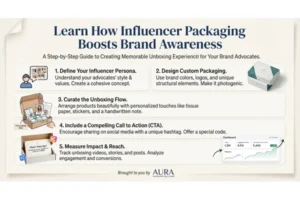
So What Is “Influencer Packaging,” Really?
It’s not some separate category of box, to be clear. It’s normal product packaging, just designed with one extra thing in mind — how it looks and feels on camera, in someone’s hands, in a fifteen-second clip that autoplays before a total stranger even decides whether to keep watching.
It’s Built for an Audience, Not the Influencer
Here’s the part people usually miss: this packaging isn’t really designed for the influencer at all. It’s designed for whoever’s watching over their shoulder through a phone screen. That shifts almost everything about the design brief — colors need to read clearly on camera, textures need to hold up through video compression, and the reveal itself needs a little built-in drama.
Why Brands Suddenly Started Caring
A few years back, packaging was basically an afterthought for PR mailers. Now it’s often the very first thing a marketing team designs, because somebody figured out that a boring shipping box gets cut in the edit, while a genuinely interesting one earns its own thirty seconds of screen time.
Why This Actually Moves the Needle
Fair to be skeptical here. Does a nice box really do that much? Turns out, yes — arguably more than a lot of traditional ads manage, and for reasons that make sense once you think about them.
It Gets Filmed Without You Asking
This is the big one. You can’t force someone to make content about you, but a genuinely well-designed unboxing practically begs to be filmed. Creators are chasing footage that performs, and a striking box with a satisfying reveal gives them exactly the kind of moment that keeps people watching instead of swiping away.
It Reaches People Who Already Trust the Messenger
Traditional ads get skipped, muted, scrolled past almost on instinct at this point. But when someone follows a creator willingly, watches their stuff on purpose, and sees them genuinely excited about a box — that carries a kind of trust an ad simply can’t buy at any price. The packaging is what gives the creator something worth showing off in the first place.
It Sparks a Second Wave of Content You Never Paid For
Something brands rarely plan for: viewers screenshot the box, ask in the comments where to buy it, sometimes even try to recreate the unboxing themselves. One good package can quietly spin off its own little wave of secondary content, without another rupee spent on production.
It Turns a Delivery Into an Event
There’s a real difference between opening a plain envelope and opening something that clearly took thought. People notice that, even through a screen, and it shapes how they judge the product long before they’ve seen it used.
What Actually Makes This Kind of Packaging Work
Not every pretty box performs the same way on camera. There’s a fairly specific set of things separating packaging that gets filmed from packaging that just gets tossed aside, off-camera, without a second glance.
Bold Colors That Survive a Camera Soft pastel tones that look elegant in person can wash out completely under a phone’s camera lighting. Brands designing for content tend to lean bolder, more saturated — colors that hold their own no matter what lighting setup a creator happens to be filming in.
A Reveal That Happens in Stages Boxes that open in steps — an outer sleeve, then a lid, then tissue paper, then finally the product — give creators natural pause points for reactions and little bits of commentary. A box that opens in one single motion doesn’t leave much room for that slow build that keeps people watching.
A Small Surprise Tucked Inside A handwritten note, an unexpected little extra, a die-cut window that hints at what’s coming before the box is even fully open — these tiny touches are exactly what makes a creator go “wait, look at this” on camera, which is the precise moment that stops a thumb mid-scroll.
Branding That Survives Compression
Social platforms are not kind to fine detail. Logos and colors need to be bold enough to survive that compression and still read clearly on a small phone screen, which rules out a lot of the subtle, minimalist choices that look great in person but basically vanish on video.
How Smaller Brands Can Actually Use This
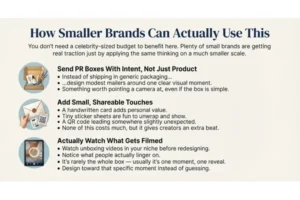
You don’t need a celebrity-sized budget to benefit here. Plenty of small brands are getting real traction just by applying the same thinking on a much smaller scale.
Send PR Boxes With Intent, Not Just Product
Instead of shipping the product in generic packaging with a press release stapled on top, smaller brands are designing even modest mailers around one clear visual moment — something worth actually pointing a camera at, even if the rest of the box stays fairly simple.
Add Small, Shareable Touches A handwritten card, a tiny sticker sheet, a QR code leading somewhere slightly unexpected — none of this costs much, but it gives creators an extra beat worth including in their edit.
Actually Watch What Gets Filmed Before redesigning anything, spend an evening watching unboxing videos in your niche and notice what people actually linger on. It’s rarely the whole box — usually it’s one moment, one texture, one reveal. Design toward that specific moment instead of guessing at the whole picture.
A Word of Caution
It’s tempting to go overboard — piling on extra inserts and elaborate structures purely to chase a video moment. That tends to backfire. Creators, and their audiences, can usually tell when something was built purely to be filmed rather than genuinely thought through, and that distinction quietly affects how authentic the whole thing feels. The best influencer packaging still works as normal, everyday packaging first. The camera-friendly touches sit on top of that — they’re not a replacement for it.
Bottom Line
Influencer packaging isn’t really a separate discipline from good packaging in general. It’s good packaging with one extra thing kept in mind — how it holds up when someone else is filming it for their own audience. Get that right, and your box stops being just protection for a product. It becomes ongoing, free marketing that keeps turning up in places a traditional ad budget never quite reaches.