
Mangoes are one of the most loved fruits on the planet — rich, fragrant, and deeply satisfying. But getting a ripe, unbruised mango from an orchard in Pakistan, India, or Mexico to a grocery shelf halfway across the world is no small feat. It takes smart packaging, careful handling, and the right materials at every single stage.
If you’ve ever wondered how is mango packaged — whether you’re a grower, an exporter, a retailer, or just curious — this guide covers everything. We’ll walk through the full journey: from post-harvest sorting all the way to custom retail-ready boxes that build your brand.
Why Mango Packaging Matters More Than You Think
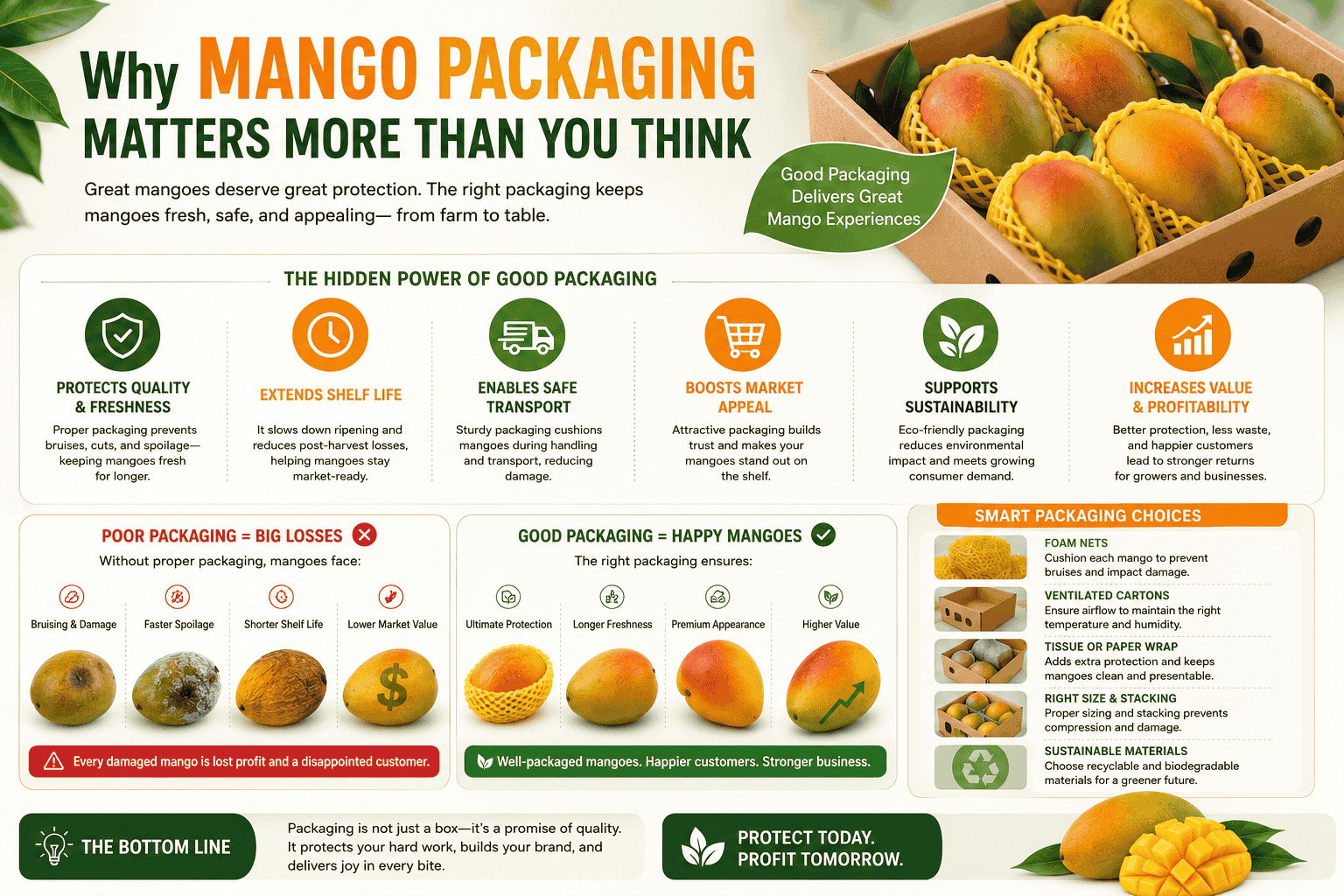
Mangoes are climactic fruits. That means they keep ripening after they’re picked, converting starches to sugar and releasing carbon dioxide and moisture as they go. If the packaging doesn’t manage that process, you end up with fruit that’s overripe, bruised, or moldy before it ever reaches the buyer.
Bad packaging costs money in two ways: spoilage losses and lost customers. A bruised mango in a store sends shoppers to a competitor — and they may not come back. Good packaging, on the other hand, does three things at once:
Step 1: Post-Harvest Handling Before Packaging
The packaging process starts in the field, not the factory. Here’s what happens before a single box is sealed:
Harvesting
Mangoes are hand-picked to minimize bruising. Even a small drop can create an invisible internal bruise that turns dark and mushy within days. Pickers use padded bags or gentle picking tools to keep each fruit intact.
Sorting and Grading
After harvest, mangoes are sorted by size, weight, ripeness level, and visual quality. Damaged or misshapen fruit is set aside. Uniformity matters — both for packing efficiency and for meeting export grading standards like those set by APEDA (India) or CODEX Alimentarius for international trade.
Cleaning and Inspection
Mangoes are washed to remove field dust and surface bacteria. Some producers apply a mild food-safe disinfectant rinse to extend shelf life. After drying, each fruit goes through a final inspection for defects.
Pre-Cooling
For export-bound mangoes, pre-cooling is critical. Fruits are brought down to around 13–15°C before packaging. This slows respiration, reduces ripening speed, and gives the packaging system a head start on shelf life.
Step 2: Primary Mango Packaging — What Touches the Fruit
Primary packaging refers to anything that directly contacts the mango. This layer is all about protection and preservation.
EPE Foam Net Sleeves
Expanded polyethylene (EPE) foam nets are one of the most widely used primary packaging materials for mangoes. Each individual fruit slips into a soft, stretchy sleeve that cushions it against impact and prevents skin-to-skin abrasion inside the box.
EPE foam nets are food-grade, lightweight, and shock-absorbent — making them ideal for both local and international shipping. They also give the mango a clean, premium look when the box is opened.
Kraft Paper Wrapping
For more traditional or eco-conscious operations, individual mangoes are wrapped in food-grade kraft paper. The paper absorbs minor moisture, provides a layer of friction protection, and is fully biodegradable. Kraft wrapping is common for domestic markets and premium gift packaging.
Polyethylene (PE) Films
Thin polyethylene films serve a different purpose: they act as a moisture barrier. By reducing water loss from the mango’s skin, PE films help prevent the fruit from becoming dry or shriveled during extended storage or long transit times. They’re especially useful in arid climates or air-conditioned cold storage environments.
Molded Pulp Trays
Molded pulp inserts are shaped cavities — typically made from recycled paper pulp — that cradle each mango individually inside a box. They distribute weight evenly, prevent rolling and contact between fruits, and absorb minor shocks. Research has shown that impact-resistant inserts like molded pulp can reduce bruising by 35–60% compared to loose packing methods.
Tissue Paper and Shredded Paper Fill
Shredded paper, tissue paper, or wood wool (excelsior) is often used to fill gaps inside boxes, providing additional cushioning and preventing fruit movement during transit.
Step 3: Secondary Mango Packaging — The Outer Box
Secondary packaging is what you see from the outside: the box, crate, or container that holds the primary-packed mangoes together for storage and transport.
Corrugated Cardboard Boxes
Corrugated fiberboard cartons are the gold standard for mango packaging across local and export markets. They’re durable, stackable, lightweight, and — critically — they can be designed with ventilation holes that allow heat and carbon dioxide to escape as the fruit continues to ripen.
For export, boxes are typically 3-ply to 5-ply depending on the weight they need to support. Standard sizes range from 2.5 kg to 10 kg per carton, with 4–5 kg being the most common for international shipments.
Custom corrugated boxes can be printed with your brand name, product origin, variety, and handling instructions — turning a functional shipping box into a marketing asset.
Plastic Crates
Reusable plastic crates are commonly used for short-distance or domestic transport. They’re sturdy, easy to clean, and stackable — but they require mangoes to be individually wrapped first, since the rigid interior provides no cushioning on its own. Ventilation holes are standard on most designs.
Wooden Crates
Wooden crates are a traditional packaging choice, especially in some South Asian and Southeast Asian markets. They’re strong and breathable, though heavier than cardboard alternatives. Wooden crates are generally lined with paper or hay before mangoes are placed inside.
Step 4: Advanced Packaging for Export and Long-Distance Shipping
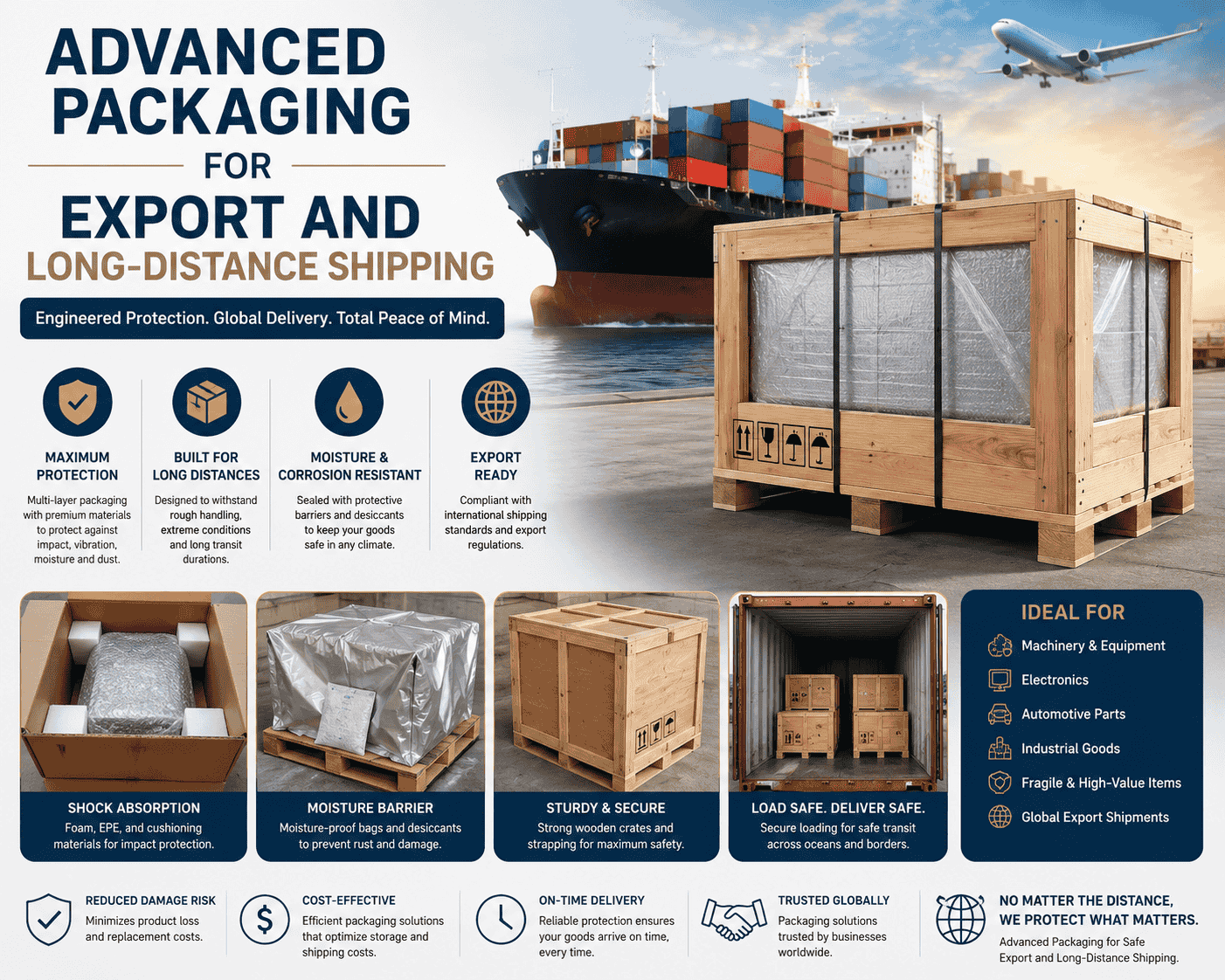
When mangoes are traveling across oceans or continents, standard packaging isn’t always enough. These advanced solutions extend shelf life significantly.
Modified Atmosphere Packaging (MAP)
MAP works by altering the gas composition inside the packaging. By reducing oxygen levels and elevating carbon dioxide, it slows the mango’s respiration rate — essentially pausing the ripening clock. This is particularly valuable for sea freight, where transit times can range from 10 to 30+ days.
MAP is often combined with refrigerated containers set between 11°C and 14°C to maximize shelf life, which can extend to 35 days or more with Active Modified Atmosphere Packaging (AMAP) or Controlled Atmosphere (CA) reefer containers.
Ventilated Carton Design
Export cartons are specifically engineered with die-cut ventilation holes that allow airflow around the fruit. Without adequate ventilation, heat and CO₂ build up inside the box, accelerating ripening and increasing the risk of mold. The placement and size of these vents is calculated based on the fruit variety, pack weight, and expected transit duration.
Air Freight Packaging
For premium or highly perishable mango varieties — like Alphonso mangoes destined for EU or US markets — air freight is often used. Mangoes are packed in corrugated fiberboard cartons and loaded into Unit Load Devices (ULDs) per IATA regulations, minimizing handling and ensuring controlled conditions throughout the journey.
Labeling: The Final Layer
Every mango package that enters formal trade — domestic or export — needs proper labeling. Beyond regulatory compliance, labels carry information that builds buyer trust and enables traceability through the supply chain.
A properly labeled mango carton should include:
- Variety name (e.g., Sindhri, Chaunsa, Alphonso, Keitt)
- Grade (based on size and quality standards)
- Net weight
- Country/region of origin
- Packager/exporter details
- Date of packing
- Handling instructions (“Handle With Care,” “This Side Up,” “Keep Refrigerated”)
- Certification logos where applicable (organic, food safety, export authority)
Custom Mango Packaging: Where Function Meets Brand
Beyond protecting the fruit, packaging is one of the most powerful branding tools available to mango businesses. Custom-printed corrugated boxes, gift baskets, and retail-ready packages turn a commodity product into a recognizable brand experience.
Here’s what well-designed custom mango packaging can do:
- Increase perceived value — premium packaging justifies premium pricing
- Drive repeat purchases — a memorable unboxing experience builds loyalty
- Stand out on retail shelves — color, typography, and design differentiate your product from plain brown boxes
- Communicate your story — origin, variety, farming practices, and certifications build consumer trust
Ready to Package Your Mangoes the Right Way?
Whether you’re sourcing packaging for farm-gate sales, domestic distribution, or international export, getting the material, structure, and customization right makes a real difference in quality, shelf life, and brand perception.
We offer fully custom mango packaging solutions: corrugated export cartons, foam net sleeves, retail gift boxes, and everything in between — printed with your brand, built to your exact specs, and ready to protect your product from farm to shelf.