
Cigarette manufacturers around the world have settled on the 20 stick cigarette carton as the standard size due largely to regulation and taxation. The way this particular size originated is that it was considered to be about one day’s worth of cigarettes for an average smoker and at the same time would fit easily into a rectangular, pocket sized cigarette pack. There are countries that sell higher quantity cartons of 25 or 30 sticks, but there are also countries that have prohibited the sale of smaller 10 pack “kiddy” packs to discourage youth from smoking or by making cigarette packs relatively expensive when purchased in a smaller quantity.
Importance of Knowing How Many Cigarettes in a Pack

Financial Budgeting and Cost Analysis
For many, the main motivation for being aware of the number is anticipated economic benefit. Since cigarette prices are frequently affected by high taxation rates, knowing an exact amount of sticks per volume allows one to determine cost per stick. This especially relates to bulk packaged cigarettes (25-30 sticks) because it will allow one to determine if they are receiving an actual bulk price.
Monitoring and Cessation of Health
The first and foremost step in tracking a learned behavior is quantifying the number of sticks consumed. A common industry standard for medical professionals to assess a smoking history is by measuring it in pack-years. The knowledge that there are 20 sticks in a pack allows the smoker to more accurately monitor his/her daily consumption and establish measurable goals for cutting back. Also, common methods for tapering off cigarettes involve a gradual reduction of the daily smoke count by an exact number (i.e., 1 or 2 sticks less per day) which requires an accurate record of the total pre-reduction daily smoke count.
Compliance with Regulations and Laws
As another part of their responsibility to serve the public, government entities use the pack size as a tool for public health intervention. Many governments have made it mandatory that a minimum of 20 sticks be contained in each pack to eliminate the availability of smaller, lower-priced packs that could be more readily available to those under legal age. Understanding this regulation will assist consumers and retailers in explaining the absence or presence of a specific pack size in their respective local market.
How Many Cigarettes are Packed in a Box?
Generally, a standard pack of cigarettes is 20 cigarettes in total and has a neat, compact arrangement established to make the product more durable. Most countries require that the standard size of cigarette packages be 20 to maintain consistency in regulation/taxation but countries that sell these products may also sell larger packages (25 & 50). The 20 pack will typically then be packaged into a box of ten units, resulting in a total of 200 cigarettes in this carton size.
Legislative Guidelines for Number of Cigarettes in a Box
Countries like the U.S. & Australia have some laws that specify the minimum number of cigarettes in a package and prohibit the sale of smaller (little-kid, or “kiddie”) packs (such as 10-20). The purpose of these laws is to discourage young people from using cigarettes by making them more difficult to find. It is intended to promote consistency of application of excise tax stamps on cigarette packages and limit minors’ access to tobacco products.
Impact of Cigarette Box Dimensions on Brand
Many luxury brands make use of “Slim” or “Super Slim” packaging. The packaging is longer and narrower than regular packs indicating they are elegant or sophisticated. They also provide a lightweight experience.
Many luxury brands use Beveled Edge or Round Corner type boxes to provide a more modern style that is ergonomic for users, which helps to distinguish their product from the traditional, sharp corners found on budget packs.
In certain pencil cases with larger counts (25’s or 30’s), the lid of the case appears full when there are only a few items inside (and they look full). In the same context, the 20-count “King Size” pencil case is thick enough to be easily carried in a pocket. Therefore, “King Size” pencil cases become a convenient and usable item for everyday life.
How Many Boxes of Cigarettes Are in a Carton?
A carton usually holds 10 boxes of cigarettes, or packs. Each pack contains 20 cigarettes, therefore A carton has 200 cigarettes.
The 10-pack arrangement is the standard way that all manufacturers package and ship cigarettes to make it easier for distributors and retailers to manage inventory using the standard rectangular box because it is uniform in shape and stacking, and the boxes are easier to tax stamp. The 10-pack is the worldwide standard for cartons however, there are a few duty-free and specialty retailers that sell cartons that contain either 5 packs (half a carton) or 20 packs (jumbo carton).
What Factors Affect Cigarette Box Sizes?
The size of the box is derived from several primary factors”:
Size of Cigarettes
Cigarette size is the primary driving force behind the size of the box. Standard cigarette lengths (84mm for King-size) and diameters determine how much physical volume (cubic or other volume) is inside the box:
King-size (84mm long) requires an 88mm tall box.
Super Slims cigarettes have their own unique design that allows for more elongation (up to 100mm). Therefore, super slims will have a longer/narrower box to indicate elegance or a lighter weight when smoking.
100s and 120s represent the “extra-long” cigarette category. These types require longer packaging to help them stand out on the store shelf.
Nesting of Cigarettes
Cigarettes are packaged in a staggered nesting pattern, using 20-pack cigarette stout to allow for adequate padding during transition into a user’s pocket and relative to product durability. Common nesting patterns are staggered 7-6-7 for a 20-pack, maximising internal function/structure and creating the smallest overall physical size of the box.
Government Regulations
The government’s regulations on this matter vary from country to country, but generally, that city’s regulations will stipulate minimum requirements in terms of the box’s total surface area.
Economic and Marketing Considerations for Cigarette Packaging
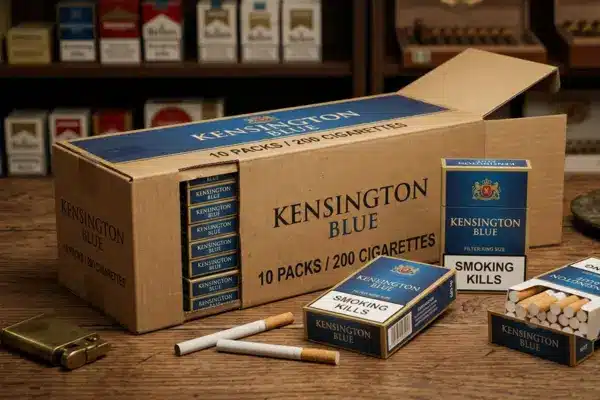
Cigarette boxes can serve many purposes besides just containing cigarettes; they can also be used economically and strategically to overcome heavy taxation, regulations and competition among brands.
Cost Efficiency and Manufacturing
Standardisation drives the economy of producing cigarettes.
Material Minimisation
Manufacturers create boxes from ultra-thin, yet highly durable paperboard to reduce their raw material expenditure. A millimetre or two off of the dimensions of the box can save manufacturers millions of dollars when applied to cigarettes produced at the global level.
High-Speed Automation
Cigarette packing machines operate at extremely high speeds (up to 1,000 packs per minute), and any changes made to the dimensions of the box will require manufacturers to invest in the expensive retooling of machinery, which is why the King Size 20-pack remains the industry standard for cigarette packaging.
Marketing in a Dark Market
In several areas of the world, cigarette advertising has been outlawed resulting in the cigarette box becoming the last remaining means for manufacturers to market their product.
Silent Salesman
Texture (embossing of logos), finish (metallic or dull), and style (flip-top or side slide) provide many brands with an all-important sense of premium product quality.
Targeted Shape
Slender and long cigarette boxes appeal to female and/or fashion-oriented customers, suggesting “light” and “elegance”; however, wider and more rugged packaging appeals to a more traditional and/or “masculine” customer base.
Types of Cigarette Packaging Boxes

Soft Pack
This is used primarily for classic brands. The soft pack consists of thinly wrapped paper on the outside and foil inside that keeps them fresh.
Ideal For: Portability as the pack will reduce in size as cigarettes are consumed.
Shell & Slide (Shoulder Box)
This type of box is considered a premium and consists of an internal drawer (actual sliding unit) and external sleeve.
Ideal For: Luxury branding and high-quality specialty cigarettes.
Additional Features: Very strong due to being constructed from two layers of material.
Slim & Super Slim Packs
These packs are taller and noticeably thinner than standard-size packages; they are intended only for thin-diameter cigarettes.
Ideal For: Meeting the needs of a particular demographic that prefers a “streamlined” or “sophisticated” look.
Shape: Slim & Super Slim Packs are frequently elongated to accommodate either 100mm or 120mm cigarettes.
Beveled or Rounded Corner Packs
The packs are normally known as hard case but are similar to each other, but the corners will be either included bevels or rounded.
Ideal For: Ergonomically designed: Packet construction gives the user a smooth feeling in their hands.
Styles of Cigarette Boxes

Standard:
The most popular type of cigarette package, with 90° angles and square corners. The Standard design has long been the industry standard and is created for easy storage and vending machine use.
Faceted Edged:
Cigarette packages in this type have straight-cut edges that have been cut at an angle of 45°, resulting in the appearance of multiple sides/facets and therefore making the package appear thinner and newer than it actually is when viewed from a hand-held position.
Round Cornered:
The traditional sharp corner of a pack has been rounded off to give the package an upgraded/ergonomically designed look. They are designed to slip easily into the back of pants pockets, without catching on anything, when placed there.
Slim/Super Slims:
Tall and narrow in shape and dimensions. These packs were produced for use with smaller-size cigarettes. In addition, they have been designed with special attention to high-end appearance or elegance.
Wide Format:
Are much wider than the other styles of cigarette pack and are used for larger quantities of cigarettes, such as 25/30/50. The wide format cigarette packs provide a greater sense of value, but do not provide as much convenience because they do not store as easily.