Introduction
A first impression is vital in 7 seconds or less, on the shelf or in the online world. That is the moment when a shopper chooses to pick it up, click it, or walk away. Most of the time, that’s not the reason it was made.
The packaging is what it’s all about.
As found in research, 81% of consumers have bought something new just because of its packaging, and 72% say that the packaging design directly affects their purchase decision. Those are mind-boggling numbers — and that translates to your packaging isn’t simply a box or a bag. It’s your strongest, all-time salesperson.
Why Packaging Is More Than Just Protection
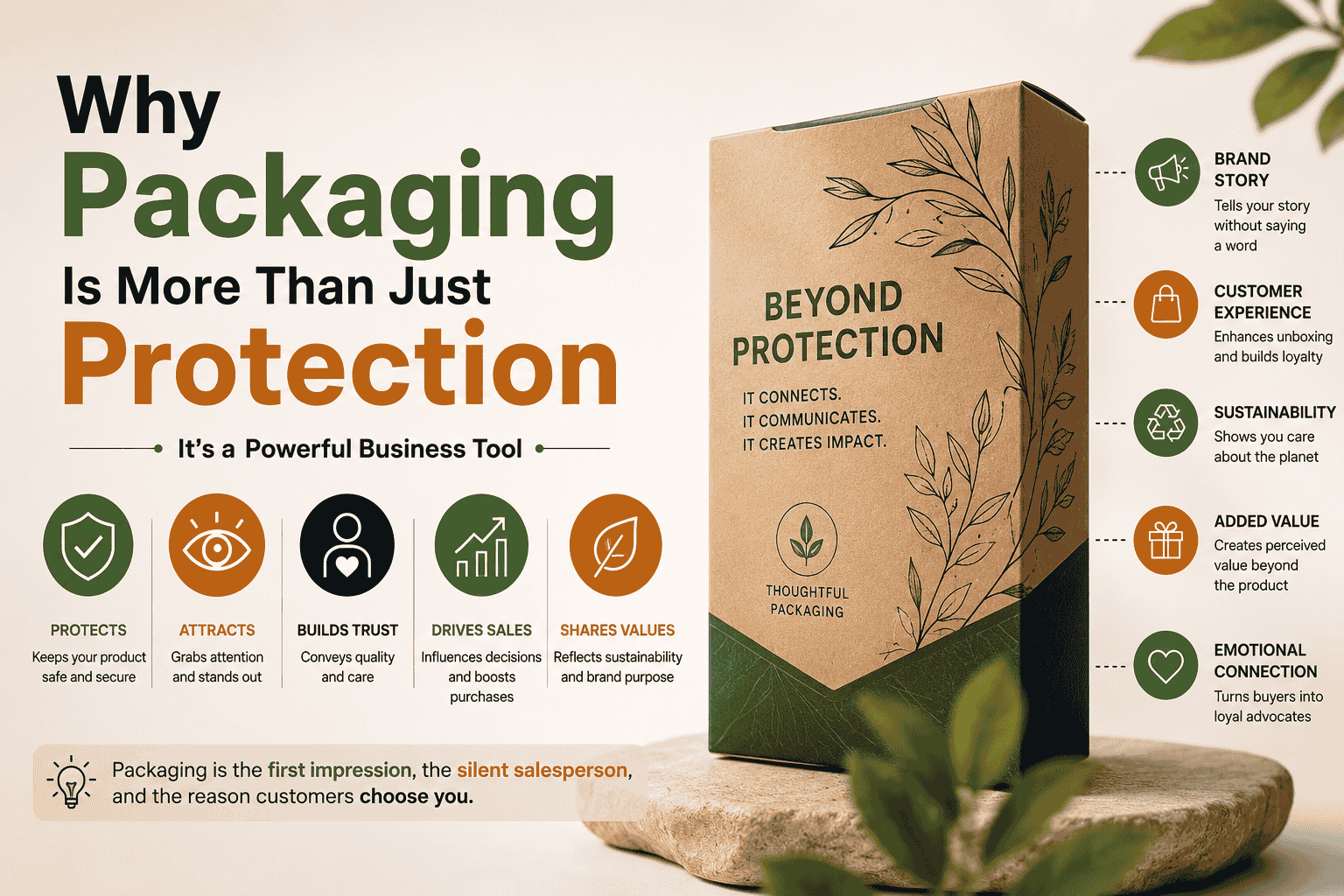
Most business owners consider packaging as a mandatory requirement that is used to transport the product safely to the destination. However, the attitude wastes a lot of dough.
Packaging is the unsung ambassador of your brand. It expresses your values, quality, and personality before you even read a word. When a product is virtually indistinguishable from its competitors, like water, skin care, or snack foods, packaging can determine whether or not it sells.
Here is what packaging actually does for you:
- Grabs attention in a crowded marketplace
- Communicates product quality and brand value instantly
- Triggers emotional responses that lead to purchase
- Builds brand recognition and repeat loyalty
- Converts a first-time buyer into a lifelong customer
The Psychology of Packaging: What Happens in the Consumer’s Brain
1. First Impressions Are Formed in Milliseconds
A human brain takes less than 100 milliseconds to process visual information. The subconscious has already formed an opinion before a customer reads your product name. Clean, well-structured, and appealing packaging is the message of quality and trustworthiness — even when the product inside is the same as a competitor’s.
-
Color Psychology: The Most Powerful Tool in Your Packaging Toolkit
Color is the single fastest way to trigger an emotional response. Different colors activate different feelings and associations, and smart brands use this deliberately:
| Color | Emotion / Association | Common Use |
| Red | Urgency, excitement, energy | Food, beverages, clearance sales |
| Blue | Trust, reliability, calm | Healthcare, finance, technology |
| Green | Health, nature, sustainability | Organic, eco-friendly, wellness |
| Black | Luxury, sophistication, power | Premium, high-end products |
| Yellow | Optimism, warmth, attention | Snacks, children’s products |
| White | Cleanliness, simplicity, purity | Skincare, minimalist brands |
Research confirms that color alone can increase brand recognition by up to 80%. It also influences whether a product feels “right” for its category — warm colors on indulgent food items boost purchase intent, while cool colors work better on health and wellness products.
-
Shape and Structure: The Tactile Trust Factor
Packaging is not just visual — it is physical. The shape, weight, and feel of a package communicate quality before the product is even used.
- A heavy, rigid box signals premium quality
- A sleek, ergonomic shape suggests thoughtful design and user experience
- A matte finish conveys sophistication and eco-consciousness
- A glossy surface reads as modern and polished
-
Typography and Fonts: The Voice of Your Brand
The fonts you choose speak before your copy does. Consider the personality each style projects:
- Clean, minimalist fonts → modern, efficient, premium
- Serif fonts → traditional, established, trustworthy
- Handwritten or script fonts → artisan, personal, authentic
- Bold, heavy typefaces → energetic, strong, confident
-
Imagery and Storytelling: Selling the Experience, Not Just the Product
People are fascinated by stories and feelings. Story-telling packaging in this sense is created by imagery, illustrations or well-chosen text, and is more potent than functional packaging, which does not evoke emotion.
Consider how your customer will react to the use of your product. Confidence? Comfort? Excitement? Wellness? Your packaging images should convey that rather than just the product.
A brand of coffee with a cozy morning scene is not selling caffeine; it’s selling a feeling. A skincare company with botanical illustrations to its products offers purity and nature, not just a moisturizer.
How to Conduct Consumer Behavior Analysis for Your Packaging
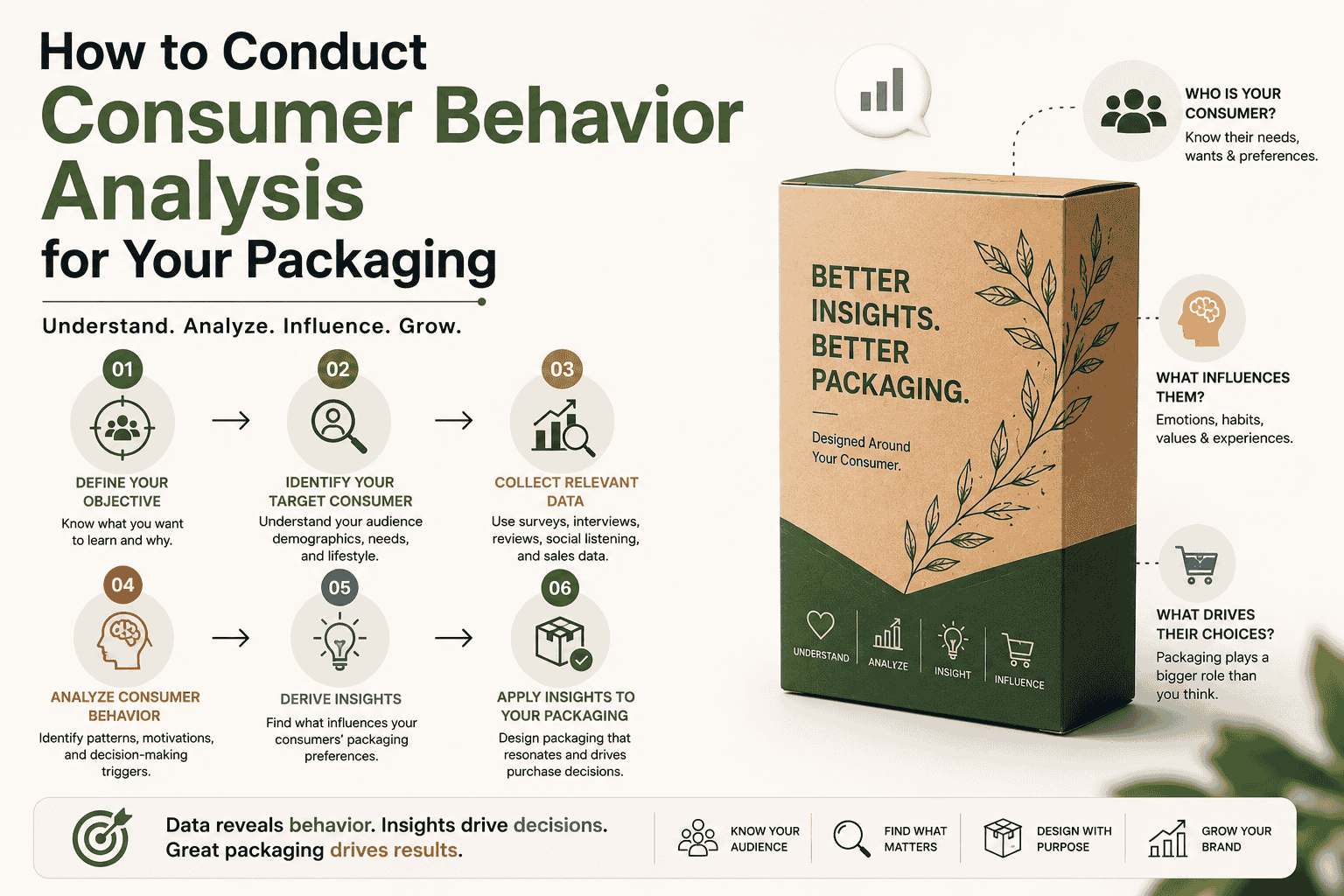
Don’t redesign packaging without genuine data on how your target audience reacts to packaging design. A simple framework:
- What are their values, lifestyle, age group, and purchase motivations? The packaging strategies for a premium wellness brand and a budget snack brand will be completely different.
- Research competitors – look at what your competitors are doing, but do not copy it, find gaps. If all brands in your category are blue, then you can stand out with green or black.
- Avoid launching an A/B test without conducting a test, and test various packaging designs with focus groups or small market tests. Collect some feedback before going for a full production run of first impressions, perceived quality, and purchase intent.
Seasonal and Limited-Edition Packaging: Creating Urgency
One of the most effective methods to make people make an instant purchase is seasonal or limited edition packaging. Themes, special anniversary packaging, or co-branded packaging will add an element of scarcity and urgency — two of the most potent psychological push buttons in the buying process.
If the customer has to place an order within a certain period of time, they will do so quickly if they might otherwise hesitate to do so. Also, this is a means of generating buzz on social media, as customers take photos of new packages.
Final Thoughts: Your Packaging Is a Sales Tool — Treat It Like One
Packaging is not an add-on. It’s a business tool that’s both a psychological and design/marketing factor. If executed properly, it helps to grab the reader’s attention, passes value, elicits feelings, and makes the reader want to buy, without ever having to read a single word of sales copy.
From creating a new product to refreshing an existing line, you need to carefully consider all aspects of your packaging. All of these elements – color, shape, typography, material, sustainability, and functionality – combine to create a first impression that makes a sale.