
I’ve worked on more chocolate packaging projects than I could honestly count at this point, and there’s one thing every successful one has in common — the box gets designed around the moment someone receives it, not just the moment they eat what’s inside. A gift box lives a completely different life than a retail box does. It gets held, admired, sometimes kept, before a single chocolate even gets touched. Here’s what actually goes into getting that small box right.
Why Gift Packaging Isn’t Just a Smaller Retail Box
Before getting into specifics, worth being clear on why gift-focused chocolate packaging needs a different approach entirely.
The Emotional Job Is Bigger Than the Practical One
A retail box just needs to survive a shelf and communicate flavor and price at a glance. A gift box needs to communicate care — that someone thought about this, chose it on purpose, wanted the person opening it to feel something the second they saw it. That emotional weight changes almost every decision that comes after.
Small Genuinely Has an Advantage Here
Small chocolate boxes carry a charm bigger assortments just don’t have. They read as thoughtful instead of excessive, personal instead of corporate — and honestly, they’re easier for someone to justify buying on impulse than a huge, pricey box. Designing well inside that tiny footprint is its own skill, separate from designing a larger box well.
Picking the Right Structure
Structure shapes the whole experience before anyone’s even seen the print design.
Hinged Lids for a Bit of Ceremony
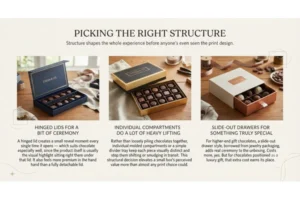
A hinged lid, instead of one that lifts off completely, creates a small reveal moment every single time it opens — which suits chocolate especially well, since the product itself is usually the visual highlight sitting right there under that lid. It also just feels a bit more premium in the hand than a fully detachable lid does.
Individual Compartments Do a Lot of Heavy Lifting
Rather than loosely piling chocolates together, individual molded compartments or a simple divider tray keep each piece visually distinct and stop them shifting or smudging in transit. This one structural decision elevates a small box’s perceived value more than almost any print choice could on its own.
Slide-Out Drawers for Something Truly Special
For higher-end gift chocolates, a slide-out drawer style, borrowed straight from jewelry packaging, adds real ceremony to the unboxing. Costs more to produce, sure. But for chocolates positioned as a luxury gift rather than an everyday treat, that extra cost tends to earn its place.
Getting the Visual Design Actually Right
Once the structure’s locked in, print design carries the rest of the emotional weight.
Match Colors to the Occasion, Not Just the Brand
Gift boxes benefit from palettes that feel intentional for gifting specifically — soft, warm tones for everyday gifts, richer jewel tones or metallics for something more celebratory. A box built purely around brand colors, ignoring the actual gifting context, can end up feeling less special than one designed with the moment of giving actually in mind.
Typography Sets the Tone Instantly
Elegant serif fonts read as refined, considered. Playful, rounded fonts read as fun, approachable. Neither’s wrong — they just need to match the emotional note you’re actually trying to hit, since typography’s often the first thing someone notices, even before the color scheme fully registers.
Leave Room for a Personal Touch If You Can
A small blank space for a handwritten name, or a simple ribbon that could hold a gift tag, adds a layer of personalization a fully closed, printed design just can’t offer. Matters more than people expect, honestly, since a lot of chocolate gifting happens around specific occasions where that personal touch genuinely elevates the whole gesture.
Materials That Actually Move the Needle Here
Not every material decision matters equally, but a few genuinely do.
Rigid Board Beats Folding Cartons for This
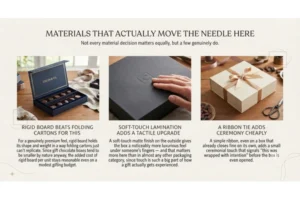
For a genuinely premium feel, rigid board holds its shape and weight in a way folding cartons just can’t replicate. Since gift chocolate boxes tend to be smaller by nature anyway, the added cost of rigid board per unit stays reasonable even on a modest gifting budget.
Soft-Touch Lamination Adds a Tactile Upgrade
A soft-touch matte finish on the outside gives the box a noticeably more luxurious feel under someone’s fingers — and that matters more here than in almost any other packaging category, since touch is such a big part of how a gift actually gets experienced.
A Ribbon Tie Adds Ceremony Cheaply
A simple ribbon, even on a box that already closes fine on its own, adds a small ceremonial touch that signals “this was wrapped with intention” before the box is even opened.
Small Details That Are Easy to Miss
A handful of smaller things that genuinely affect how well the final box actually performs.
Don’t Forget Chocolate’s Temperature Sensitivity
Chocolate is temperature-sensitive in a way most other gift items simply aren’t. If your box design and shipping method don’t account for that, all that beautiful packaging becomes irrelevant the moment the product inside has melted or bloomed. Insulated inner packaging, or shipping only during cooler weather windows, might be worth considering depending on your climate and delivery timeline.
Size the Box to the Product, Not to Convenience
Oversized boxes with a lot of empty space read as wasteful rather than generous, especially in a category where “small box” is literally part of the appeal. Size the structure tight to the actual chocolate count instead of defaulting to a bigger standard size just because it’s easier to source.
Test How It Photographs, Not Just How It Looks in Person
A huge chunk of gift chocolate purchases happen online, based entirely on photos. Test your final design under typical product photography lighting before locking anything in — some colors and finishes that look gorgeous in person photograph flat or lose all their detail under standard lighting setups.
A Mistake Worth Avoiding
Businesses sometimes cram a small chocolate box with too many design elements, trying to say everything at once — the brand story, the ingredients, a seasonal theme, decorative patterns, all fighting for attention on a genuinely tiny surface. Restraint matters more here than in almost any other packaging category, simply because there’s so little physical space to work with. Pick one clear visual idea. Let it breathe.
Bottom Line
A delightful small box of chocolates isn’t really about the chocolate at all, at least not from a design standpoint — it’s about designing for that specific moment someone hands this box to another person and watches their face change. Structure that creates a small reveal, colors and typography that match the occasion, materials that feel intentional in someone’s hand, and a size that stays genuinely small instead of trying to be more than it needs to be. Get those details right, and the box does half the emotional work before a single chocolate ever gets tasted.