There are few things more frustrating than reaching for your bag of coffee and realizing it has gone flat, stale, and lifeless. Coffee does not spoil the way milk does — it does not grow mold overnight or make you sick. But it loses what makes it worth drinking: the aroma, the depth, the acidity that makes a good cup feel like an event.
The good news is that stale coffee is almost entirely preventable. Whether you run a coffee brand, own a café, or just want your morning cup to taste the way it should, the methods in this guide will help you keep coffee fresh significantly longer — without complicated equipment or expensive storage solutions.
The 4 Enemies of Fresh Coffee
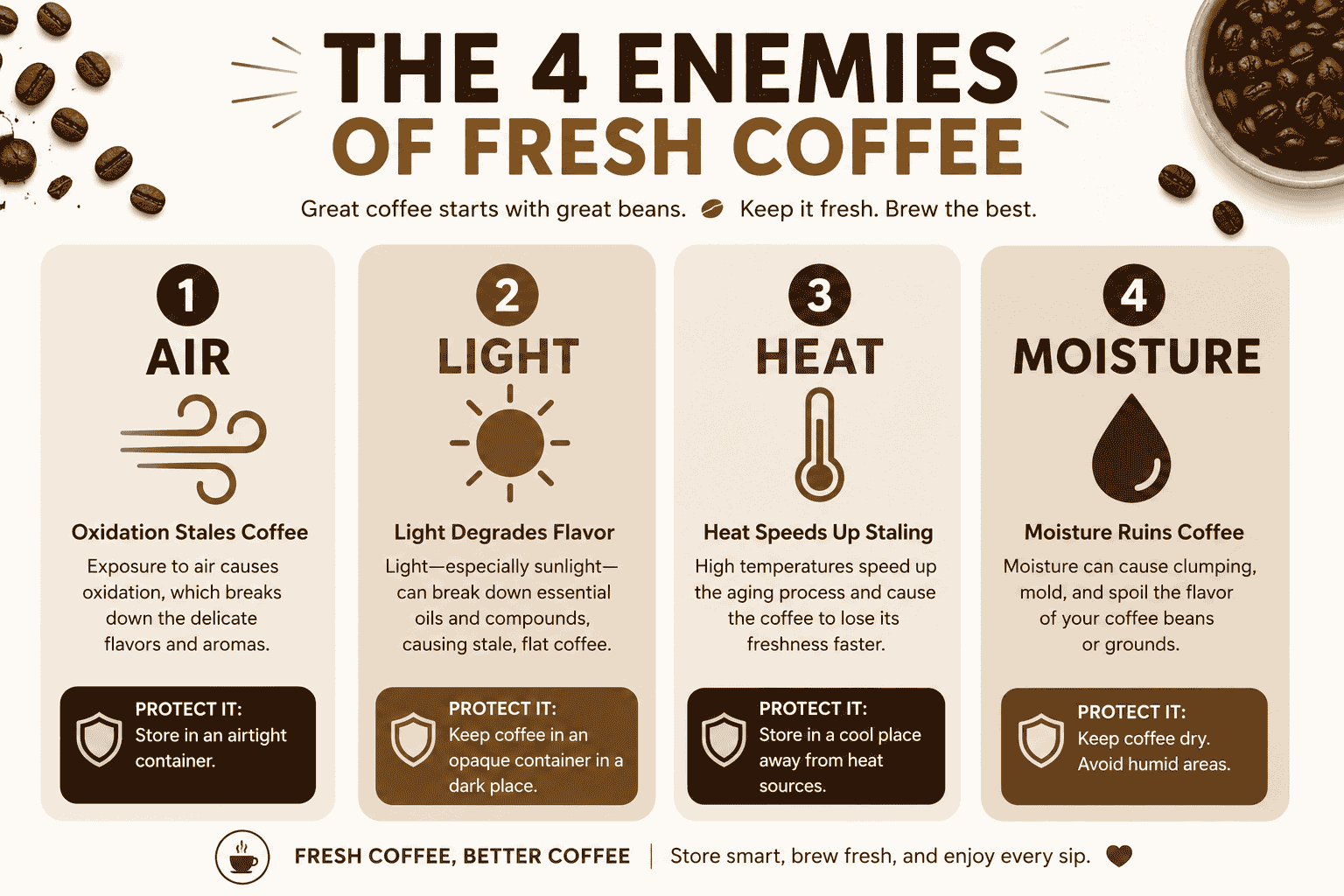
Every tip in this article is really about controlling four things:
- Oxygen — the biggest threat. Coffee beans are full of oils and aromatic compounds that oxidise rapidly when exposed to air. This is why freshly opened coffee smells so good and week-old coffee smells like cardboard.
- Moisture — causes clumping in ground coffee and can trigger mould in extreme cases. Even small amounts of ambient humidity accelerate staling significantly.
- Light — UV light degrades organic compounds. Clear containers and bright retail shelves actively damage coffee over time.
- Heat — accelerates every chemical reaction, including all the bad ones. Heat speeds up oxidation and moisture absorption alike.
Control these four factors and you have solved most of your coffee freshness problems.
10 Methods to Extend Coffee Shelf Life
1. Start With Freshly Roasted Coffee
This is the foundation everything else builds on. Coffee peaks in quality between 4 and 14 days after roasting — this is when CO₂ has degassed enough for brewing but before oxidation sets in meaningfully. Buying coffee roasted weeks or months ago and then trying to store it carefully is working backwards.
If you run a coffee business, build your supply chain around roast dates, not just expiry dates. If you are a home brewer, buy from roasters who print the roast date (not just the best-by date) on the bag.
2. Buy in Smaller Quantities
Buying in bulk feels economical, but with coffee it often works against you. A 1 kg bag that takes you 6 weeks to finish will taste noticeably worse by week 4 than a 250 g bag you finish in 10 days.
The right quantity to buy is roughly what you will consume within 2 to 3 weeks of opening. For most home drinkers, that is 250–500 g at a time. For cafés and food service, batch planning around roast schedules matters more than buying large volumes at once.
3. Choose Whole Beans Over Ground Coffee
Grinding dramatically increases surface area, which dramatically increases oxidation speed. A whole coffee bean has a relatively small surface area exposed to air. Once ground, that same bean becomes hundreds of tiny particles, each one exposing fresh oils and aromatic compounds to oxygen simultaneously.
The difference is not subtle. Coffee ground 10 minutes before brewing tastes measurably better than the same coffee ground 3 days ago. If freshness matters to you or your customers, grind just before brewing, every time.
4. Use an Airtight Container — The Right Kind
Not all “airtight” containers are equal when it comes to coffee. Standard kitchen canisters with rubber-sealed lids are better than nothing, but they trap existing oxygen inside with your beans. The best containers for coffee storage are:
- Vacuum-sealed canisters — these actively remove oxygen from the internal environment. Brands like Airscape and Fellow Atmos are popular examples. They make a meaningful difference.
- One-way valve bags — this is what good specialty roasters use. The valve lets CO₂ from freshly roasted beans escape without letting oxygen in. Never transfer coffee to a container with no valve if the beans were roasted in the last 2 weeks.
5. Store in a Cool, Dark, Dry Place
The ideal storage environment for coffee is cool (around 15–20°C / 60–68°F), dark, and away from humidity sources. A cupboard away from the oven or kettle works well. Most kitchen countertops are worse than you think — they are warm, often in direct or indirect sunlight, and catch steam from cooking.
Specific places to avoid:
- On top of or next to the oven
- Next to a kettle or coffee machine that produces steam
- A windowsill or counter in direct sunlight
- On top of the refrigerator (warm and humid from the compressor)
6. Never Store Coffee in the Refrigerator
This is one of the most persistent myths in coffee storage: the fridge keeps things fresh, so it should keep coffee fresh. It does the opposite.
Refrigerators are humid environments, and coffee is highly porous. It absorbs odours and moisture from the fridge rapidly — in a matter of hours. Your coffee will pick up traces of whatever else is stored nearby, and the temperature cycling every time you open the door causes condensation. Cold coffee also tends to get used less frequently, meaning it sits in that hostile environment longer.
7. Freezing Coffee — When It Works and When It Does Not
Freezing is a legitimate long-term storage method, but only if done correctly. Done wrong, it accelerates damage rather than preventing it.
When freezing works: If you have a large quantity of freshly roasted whole beans that you cannot use within 3–4 weeks, portioning them into airtight, freezer-safe bags (with as much air removed as possible) and freezing immediately after purchase can preserve quality for up to 3 months.
The critical rule: once you remove coffee from the freezer, never put it back. Freeze-thaw cycles cause condensation to form on and inside the beans, which accelerates staling dramatically. Portion your beans before freezing so you only take out what you need.
When freezing does not work: freezing opened bags, refreezing, or freezing ground coffee. None of these produce good results.
8. Use the Right Packaging for Commercial Coffee
If you sell coffee, packaging is not a branding decision — it is a freshness decision that also happens to carry your brand. The packaging choices that extend shelf life most effectively are:
Valve bags with multi-layer barrier film — the standard for specialty coffee. The one-way valve handles CO₂ off-gassing, and the multi-layer film (typically polyester + aluminium foil + polyethylene) blocks oxygen, moisture, and light simultaneously.
Vacuum brick bags — ideal for ground coffee and for products where shelf life matters more than allowing off-gassing. These are hermetically sealed with no valve, creating a compact, oxygen-free environment. Common in supermarket retail.
Resealable zipper pouches — excellent for consumer convenience and repeat purchases. The resealable closure does not completely eliminate oxygen exposure, but it significantly reduces it versus rolling a bag closed with a clip.
Nitrogen-flushed packaging — before sealing, oxygen inside the package is displaced with nitrogen (an inert gas). This is a common practice in commercial coffee packaging and can extend shelf life by months.
9. Avoid Constant Opening of Storage Containers
Every time you open a container, you introduce fresh oxygen and potentially humidity. If you buy a large bag of coffee, resist the urge to keep it open on the counter for scooping throughout the day. Instead, portion out enough for 2–3 days into a small, everyday-use container, and keep the main supply sealed.
This is particularly relevant for cafés that go through large bags over several days — every time a barista opens the bag for a scoop, the remaining coffee is exposed to the busy kitchen environment. Decanting into smaller day-use canisters is a simple operational change with a noticeable impact on cup quality.
10. Understand the Difference Between Best-By Dates and Roast Dates
A “best by” date tells you when the manufacturer expects the product to start declining in quality. A roast date tells you when the beans were actually roasted — which is far more useful for coffee.
Two bags of coffee with the same best-by date might have been roasted 2 weeks apart, making one significantly fresher than the other. When buying whole bean coffee, always look for the roast date and prioritize beans roasted within the last 2–6 weeks.
Special Considerations for Coffee Brands and Roasters
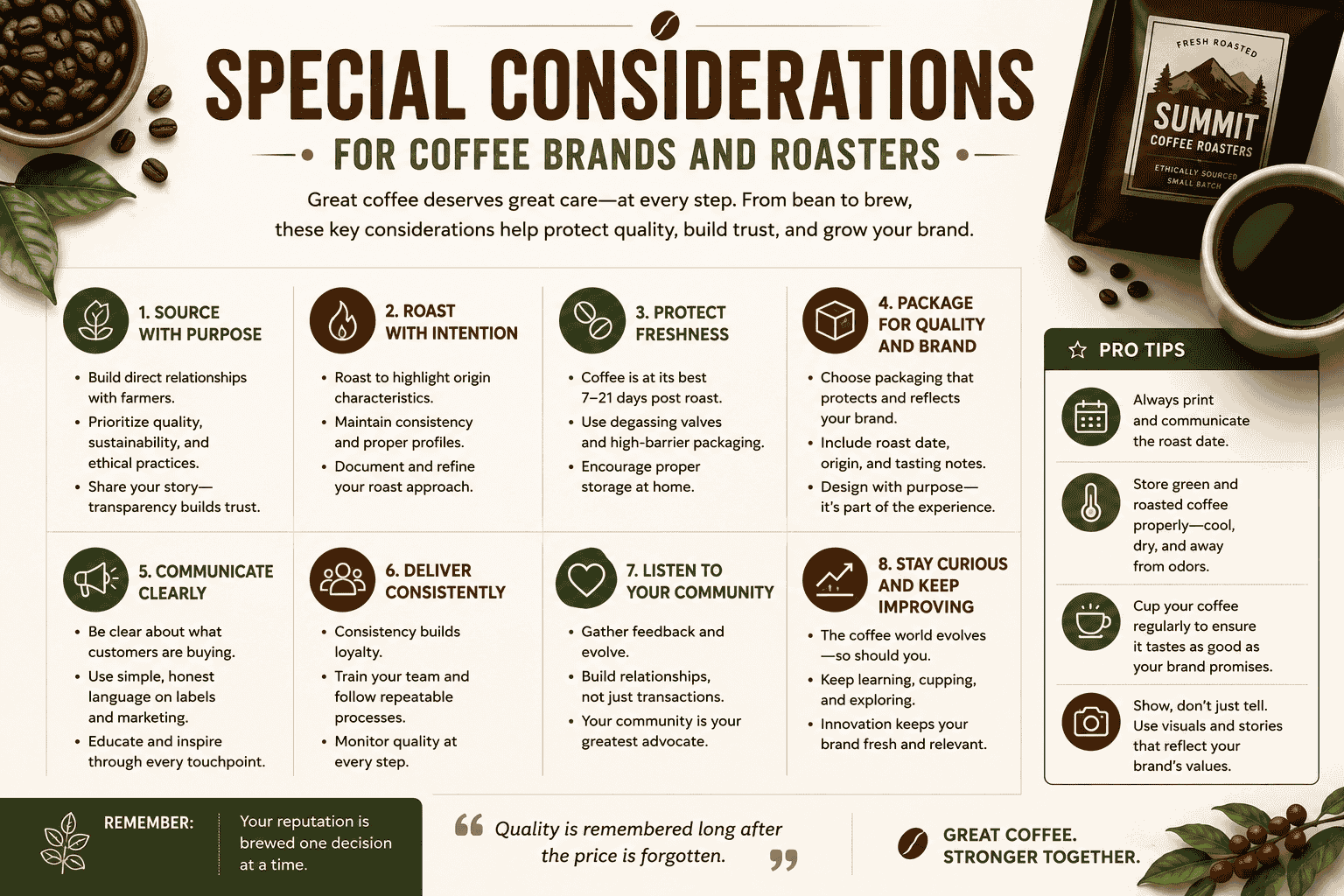
If you produce or sell coffee, the decisions you make about packaging have a direct impact on the experience your customer has — potentially weeks after they bought from you. A customer who opens a bag of your coffee and finds it stale is not going to wonder if they stored it wrong. They are going to wonder if your coffee is good.
A few things worth building into your packaging strategy:
Nitrogen flushing at the point of seal is the single highest-impact addition you can make to extend shelf life without changing the physical package format. The cost per unit is low at the commercial scale.
One-way degassing valves are non-negotiable for whole bean specialty coffee. Without a valve, freshly roasted beans build up enough CO₂ to burst an unvented sealed bag within days.
Resealable closures (zipper or press-seal) significantly improve the consumer experience after opening and reduce the rate at which the remaining coffee stales in the customer’s home. This reduces complaints and supports repeat purchases.
Opaque vs. transparent packaging: clear packaging lets customers see the beans, which is visually appealing, but every hour under shop lighting degrades the product. If you use clear packaging, ensure the retail environment is not using UV-heavy lighting directed at the product.
Final Conclusion
Extending coffee shelf life is not complicated — it mostly comes down to keeping oxygen, moisture, light, and heat away from your beans for as long as possible. Buy fresh, grind just before brewing, store in a proper airtight and opaque container, and keep that container in a cool, stable, dark spot.
For coffee brands, the packaging choice is the shelf life decision. Valve bags, nitrogen flushing, and resealable closures are not premium extras — they are the baseline for delivering a quality product to your customer, regardless of how long it sits between roasting and brewing.