Walk into any high-end store and pick up a product off the shelf — a watch, a candle, a bottle of perfume. Chances are, before you even open it, the box has already told you something about the brand: this is quality, this is worth the price, this is worth keeping.
That’s the quiet power of rigid boxes. Unlike folding cartons or corrugated shippers, rigid boxes are built from thick, dense paperboard that holds its shape permanently. They don’t fold flat, they don’t feel flimsy, and they don’t get tossed in the recycling bin the moment the tape comes off. That combination of strength and presentation is exactly why so many industries — not just luxury fashion — have made rigid boxes their go-to packaging choice.
Below, we break down eight industries that depend on rigid boxes, what each one needs from its packaging, and the specific features that make rigid boxes the right fit.
1. Fashion and Apparel
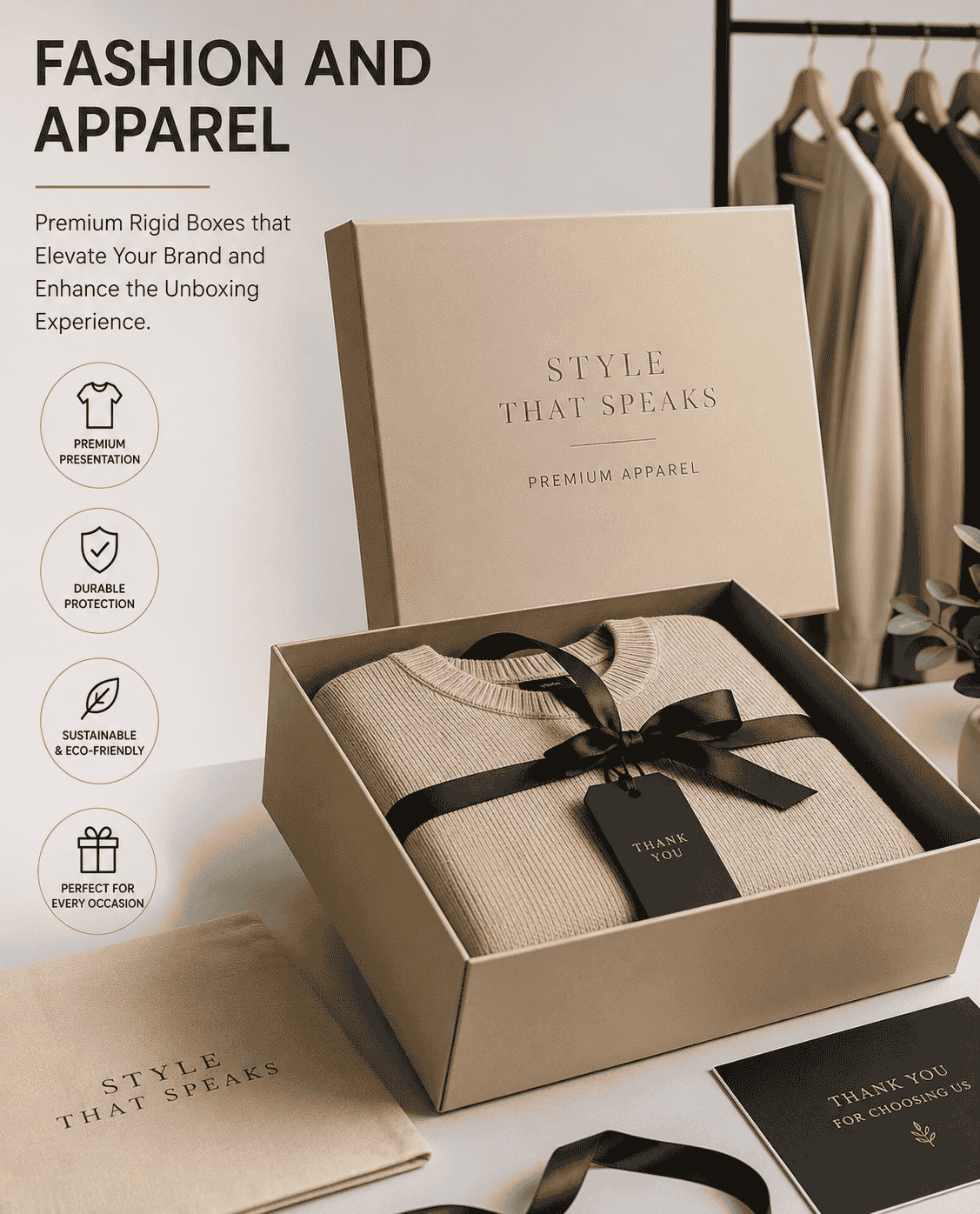
Clothing brands were early adopters of rigid packaging, and it’s easy to see why. Garments like evening wear, suits, and outerwear need protection from creasing, dust, and moisture during shipping — but they also need to arrive looking like a gift, not a delivery.
Rigid apparel boxes typically use a two-piece lid-and-base design, which lets customers lift the lid off entirely rather than tearing into a carton. Brands often line the interior with tissue paper, add ribbon closures, or include a printed thank-you card — small details that turn a purchase into an experience customers photograph and share.
2. Cosmetics and Skincare
Beauty is a visual category, and packaging is part of the product experience before a single swipe of product touches skin. Skincare kits, makeup palettes, and fragrance sets are often fragile, sensitive to light, and sold at a premium price point — all reasons rigid boxes make sense here.
Magnetic closures, foil stamping, embossed logos, and window cutouts are common in this space because they let a brand signal quality at a glance, both online and on a retail shelf.
3. Jewelry and Watches
Few product categories rely on packaging as heavily as jewelry. A rigid box with a fitted foam or velvet insert does double duty: it prevents a ring or necklace from shifting in transit, and it creates the reveal moment that jewelry buyers — especially gift buyers — expect.
Watches follow the same logic but at a larger scale, often using compartmentalized rigid boxes that also serve as long-term storage rather than something the customer discards.
4. Food, Confectionery, and Beverages
Chocolate boxes, bakery packaging, and premium spirits or wine gift sets are a major category for rigid packaging. Beyond the visual appeal, rigid stock offers real structural protection — it resists crushing better than thin folding cartons, which matters when a box is stacked, shipped, or handled multiple times before it reaches a customer.
Many food brands also choose rigid boxes with custom die-cut inserts to keep items like truffles or bottles from touching or shifting, which protects both the product and the presentation.
5. Electronics and Tech Accessories
Smartphones, earbuds, smartwatches, and other tech accessories increasingly ship in rigid boxes rather than standard corrugated packaging. The category has specific needs: static-safe or foam interiors, precise cutouts for cables and chargers, and a box sturdy enough to protect delicate components from impact.
There’s also a branding angle — tech unboxing videos are a genre of their own online, and companies from major electronics brands down to smaller accessory makers know a well-built box gets featured on camera.
6. Beauty and Personal Care Gift Sets
Related to but distinct from cosmetics, this category covers bundled gift sets — think holiday skincare sets, spa kits, or grooming bundles. These products are almost always purchased as gifts, so the unboxing moment matters more than usual. Rigid boxes with compartments or trays let multiple products sit together neatly, which keeps the set from looking like loose items thrown in a box.
7. Cannabis and CBD Products
This is a newer but fast-growing category for rigid packaging. Cannabis and CBD brands need packaging that’s tamper-evident, child-resistant where required by law, and able to convey a premium, trustworthy image in a market where regulation and public perception both matter. Rigid boxes with custom inserts and secure closures check all three boxes at once.
8. Corporate Gifting and Promotional Products
Companies sending client gifts, employee welcome kits, or event swag increasingly turn to custom rigid boxes instead of generic mailers. A branded rigid box — with a company logo embossed or foil-stamped on the lid — signals more effort and investment than a plain shipping box, which matters when the goal is making a strong impression rather than just getting a product from A to B.
Why These Industries Keep Choosing Rigid Boxes
Across all eight categories, the same few advantages come up again and again:
- Durability — Thick paperboard resists crushing, bending, and moisture better than standard folding cartons.
- Perceived value — Studies on unboxing behavior consistently show that packaging quality shapes how customers judge the product inside, before they’ve even used it.
- Customization — Rigid boxes can be built in almost any shape, with inserts, dividers, and finishes tailored to the exact product.
- Reusability — Sturdy construction means many customers keep and reuse rigid boxes for storage, extending the brand’s presence long after the sale.
- Sustainability options — Most rigid boxes are made from recyclable or FSC-certified paperboard, which matters increasingly to environmentally conscious buyers.
Choosing the Right Rigid Box for Your Product
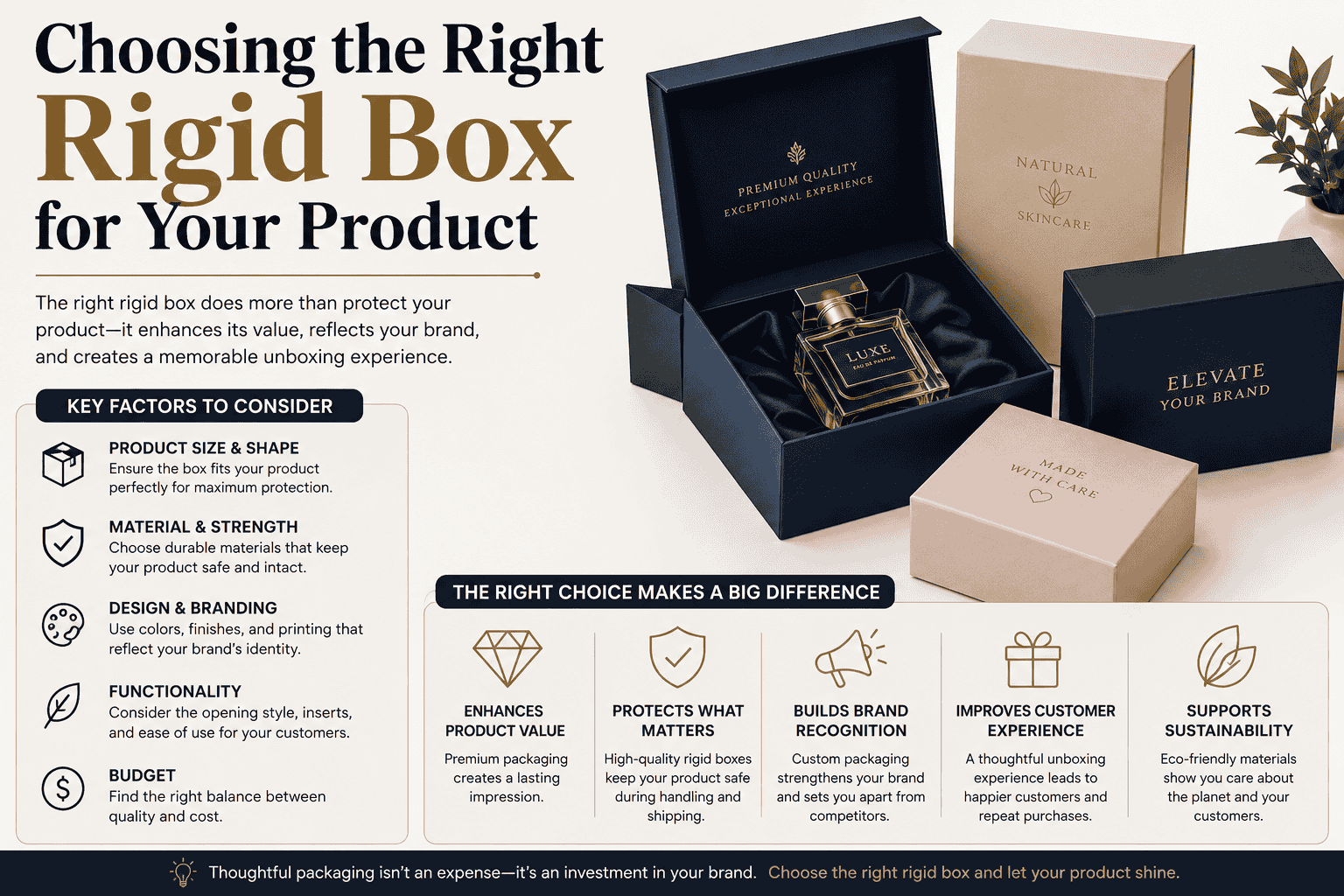
If you’re deciding whether rigid packaging makes sense for your brand, a few questions are worth asking first:
- Is the product fragile, high-value, or gifted often? If yes, rigid boxes usually justify their higher cost through reduced damage and stronger brand perception.
- Does your product need a specific insert or divider? Jewelry, electronics, and multi-item sets typically need custom-fit interiors, not just a box.
- What’s your order volume? Rigid boxes cost more per unit than corrugated or folding cartons, so they tend to make the most sense for mid-to-premium price points rather than high-volume, low-margin products.
- Do you need child-resistant or tamper-evident features? This applies especially to food, cannabis, and pharmaceutical-adjacent products.
Final Thoughts
Rigid boxes have moved well beyond their original home in luxury fashion. Today they show up everywhere from a chocolatier’s holiday collection to a tech startup’s flagship product launch, because the underlying job hasn’t changed: protect what’s inside, and make the person opening it feel like they got something worth the price.
If you’re weighing packaging options for your own product line, it’s worth working with a packaging partner who can walk you through material choices, finishes, and cost per unit based on your specific volume — rather than defaulting to a one-size-fits-all box.