Introduction
Choosing the right packaging is about more than appearance. The shape of a package directly affects its strength, durability, storage, and shipping performance. Two of the most common packaging styles are cylindrical containers and square or rectangular boxes. While both offer reliable product protection, many businesses wonder which option is actually stronger. The answer depends on how the package is used, the material it is made from, and the type of product being shipped. Understanding these differences can help you choose packaging that protects your products while improving customer satisfaction.
Is a Cylinder Sturdier Than a Box?
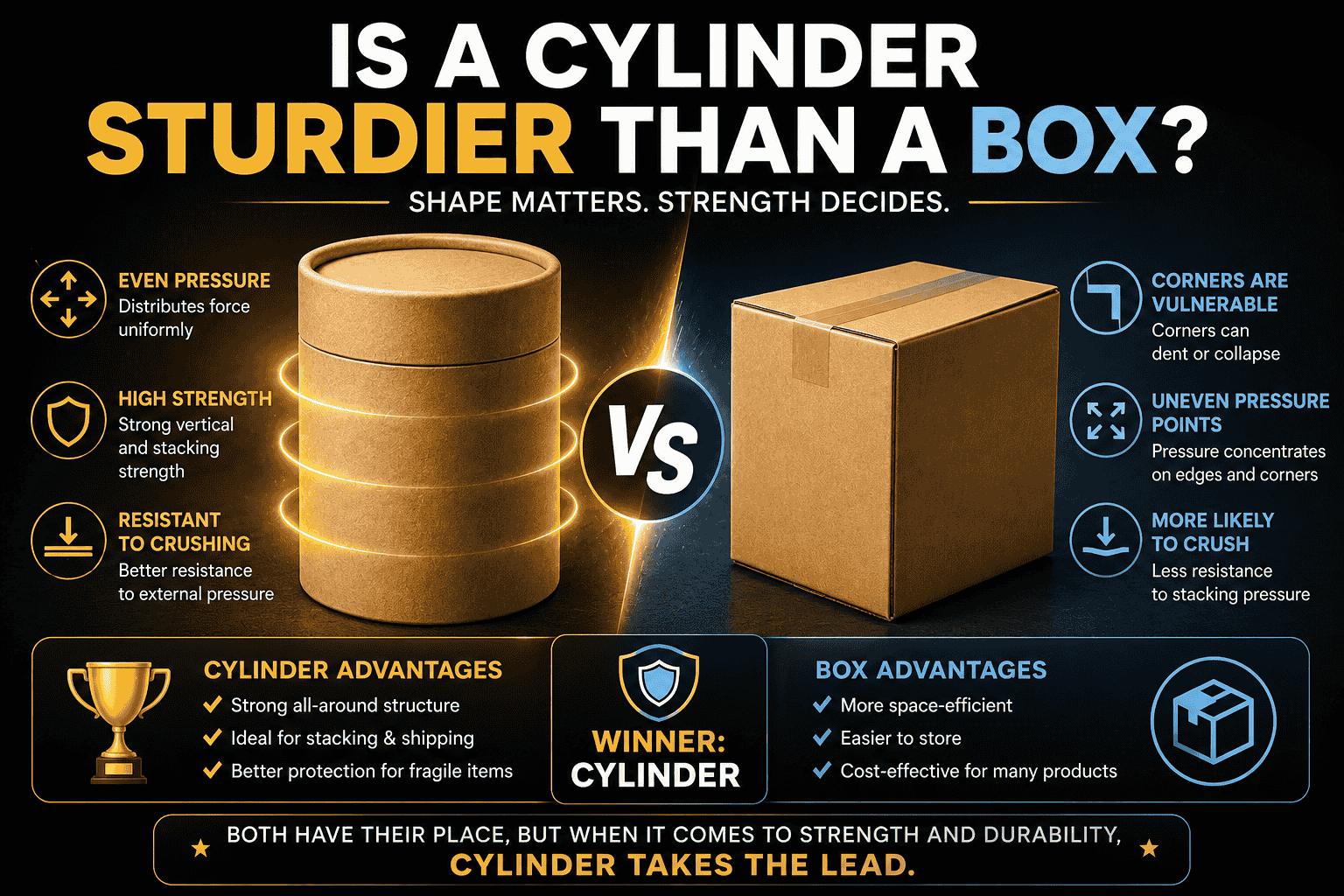
In many situations, yes—a cylinder is sturdier than a traditional box because its round shape distributes pressure evenly across the entire surface. Unlike boxes, which have corners that absorb most of the impact, cylinders have no weak points where stress can easily build up. This makes cylindrical packaging more resistant to crushing, dents, and compression during shipping and storage. However, sturdy corrugated boxes with proper internal inserts can also provide outstanding protection, especially for larger or heavier products.
Why Are Cylinders Stronger?
A cylinder naturally spreads weight and pressure around its curved surface instead of concentrating force on corners or edges. This design reduces the chances of deformation when stacked or compressed. It is the same engineering principle used in pipes, storage tanks, and beverage cans, which are designed to withstand high pressure while using relatively little material. Because of this structural advantage, cylindrical packaging is often chosen for premium products that require extra protection.
When Are Boxes the Better Choice?
Although cylinders are structurally strong, boxes remain the most practical packaging solution for many businesses. Square and rectangular boxes are easier to stack, store, and transport because they use space more efficiently. They are also less expensive to manufacture and can be customized in countless sizes and designs. For products that require organized compartments or flat surfaces for branding, boxes often provide greater flexibility than cylindrical packaging.
Cylinder vs. Box: Key Differences
| Feature | Cylinder | Box |
| Strength | Excellent resistance to pressure | Strong with quality corrugated board |
| Stacking | Less efficient | Excellent |
| Storage | Takes more space | Space-saving |
| Shipping Cost | Sometimes higher | Usually lower |
| Branding Area | Curved surface | Large flat panels |
| Best For | Bottles, candles, tubes, gifts | Retail, eCommerce, food, cosmetics |
Best Products for Cylindrical Packaging
Cylindrical packaging works particularly well for products that benefit from both protection and premium presentation. Luxury candles, wine bottles, cosmetics, posters, tea, coffee, chocolates, gift items, and premium apparel accessories are commonly packaged in rigid paper tubes because they combine durability with an attractive unboxing experience.
Best Products for Box Packaging
Boxes remain the preferred choice for industries that need efficient storage and shipping. Electronics, food products, cosmetics, pharmaceuticals, clothing, subscription boxes, and eCommerce shipments are typically packaged in corrugated or folding cartons because they maximize storage space while keeping shipping costs low.
Which Packaging Is Better for Shipping?
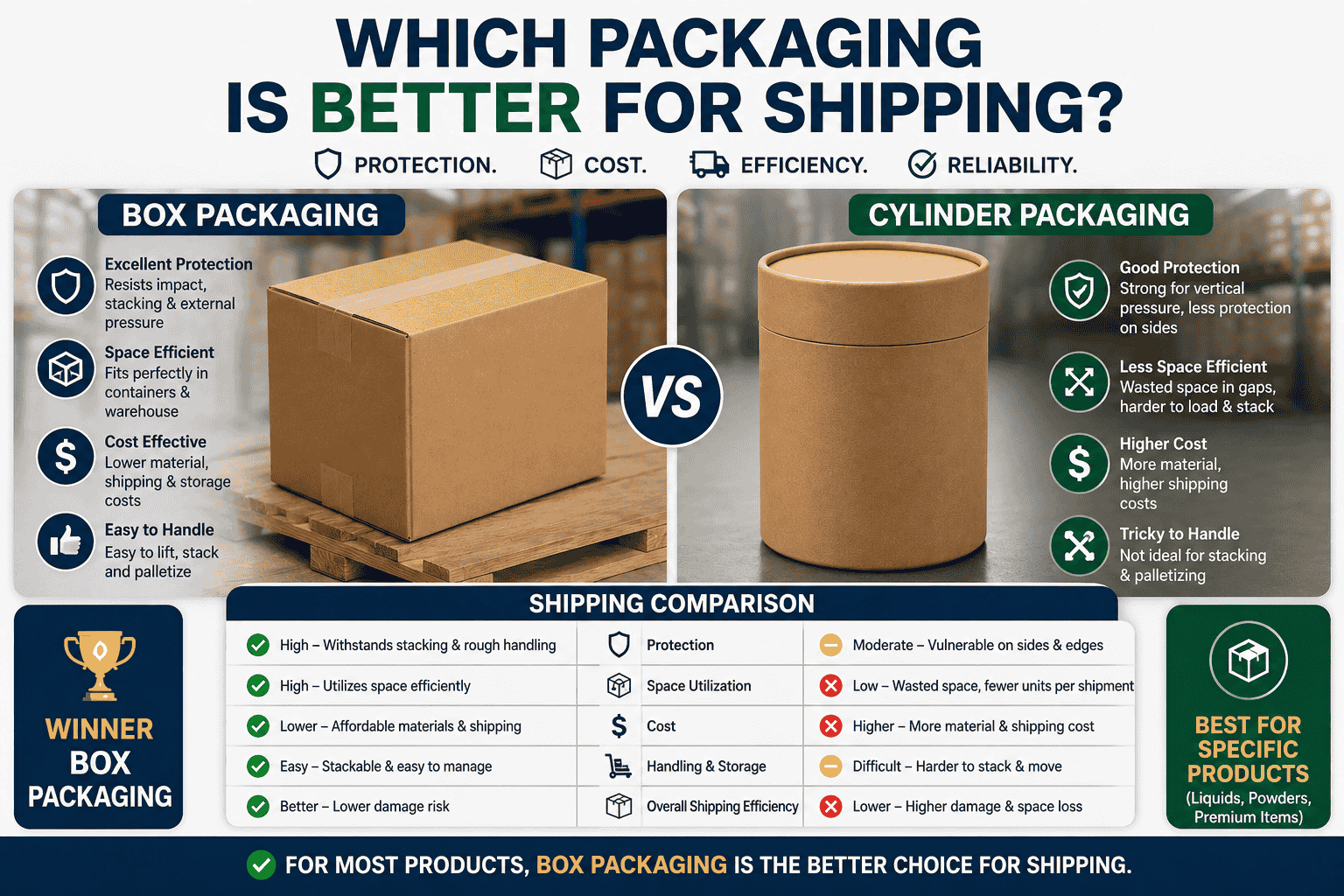
If your priority is resistance to crushing and impacts, cylindrical packaging generally performs better. However, if reducing shipping costs and maximizing warehouse efficiency are more important, boxes are usually the better choice. Many businesses combine both by placing a cylindrical container inside a corrugated shipping box for maximum protection.
Which Option Is More Sustainable?
Sustainability depends more on the material than the shape. Both cylinders and boxes can be manufactured from recyclable kraft paper, corrugated cardboard, or recycled paperboard. Choosing recyclable materials, minimizing excess packaging, and designing for reuse are the most effective ways to reduce environmental impact regardless of the package shape.
Final Thoughts
Both cylinders and boxes offer unique advantages. Cylinders are naturally stronger against compression because their curved design distributes pressure evenly, making them ideal for fragile and premium products. Boxes, on the other hand, provide better storage efficiency, lower shipping costs, and greater design flexibility. The right choice depends on your product, budget, branding goals, and shipping requirements. By understanding the strengths of each packaging style, businesses can select a solution that protects products while delivering an excellent customer experience.