
Introduction
Bubble packaging is one of the most widely used protective packaging materials for shipping fragile products. It cushions items against shocks, scratches, and impacts during transit, making it a popular choice for both businesses and consumers. However, once the package is opened, many people wonder whether bubble packaging can be recycled or if it belongs in the trash. The good news is that most bubble packaging is recyclable, but it must be disposed of correctly. Understanding how it is made and where it should be recycled can help reduce plastic waste and support more sustainable packaging practices.
Is Bubble Packaging Recyclable?
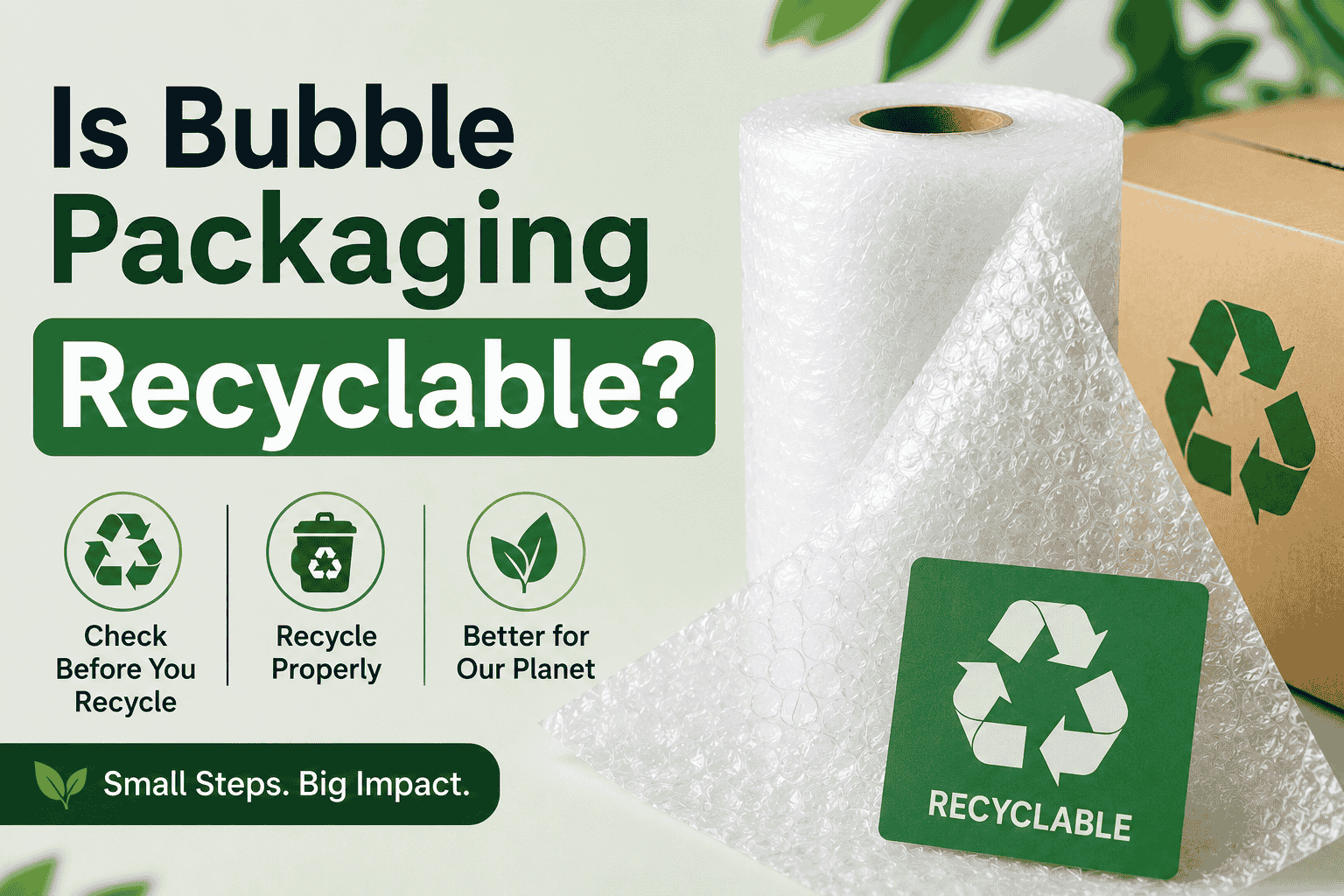
Yes, most bubble packaging is recyclable because it is typically made from Low-Density Polyethylene (LDPE), a flexible plastic commonly accepted at soft-plastic recycling facilities. However, it should not usually be placed in curbside recycling bins because the material can interfere with recycling equipment. Instead, clean bubble packaging should be taken to designated plastic film or soft-plastic collection points. Always remove tape, labels, or other non-plastic materials before recycling.
What Is Bubble Packaging Made Of?
Traditional bubble packaging is made from LDPE plastic, which is lightweight, durable, and flexible. Small air-filled bubbles are sealed between layers of plastic to absorb impacts and protect delicate products during shipping. This material is also moisture-resistant, making it suitable for packaging electronics, glassware, cosmetics, and other fragile items. Some manufacturers now produce bubble packaging using recycled plastic or biodegradable materials to reduce environmental impact.
Can You Put Bubble Packaging in Your Recycling Bin?
In most areas, the answer is no. Bubble packaging is considered a soft plastic, and many curbside recycling programs cannot process it because it may become tangled in sorting machines. Instead of placing it in your household recycling bin, check if your local recycling center accepts plastic film or soft plastics. Following your area’s recycling guidelines helps ensure the material is recycled properly.
How to Recycle Bubble Packaging
Recycling bubble packaging is simple if you prepare it correctly. Remove any tape, paper labels, stickers, or cardboard attached to the packaging. Make sure it is clean and dry, then take it to a soft-plastic recycling collection point or a recycling center that accepts LDPE plastic. If no recycling option is available in your area, consider reusing the packaging before disposing of it.
Can Bubble Packaging Be Reused?
Absolutely. Bubble packaging can often be reused several times before recycling. It is ideal for packing fragile items, protecting electronics, storing seasonal decorations, or cushioning products during a move. Reusing bubble packaging extends its lifespan and reduces the need for new packaging materials.
Eco-Friendly Alternatives to Bubble Packaging
Businesses looking to reduce plastic waste can switch to sustainable alternatives such as honeycomb paper wrap, recycled kraft paper, molded pulp inserts, paper cushioning, or biodegradable air pillows. These materials provide excellent protection while producing less environmental impact and are often easier to recycle.
Bubble Packaging vs. Paper Packaging
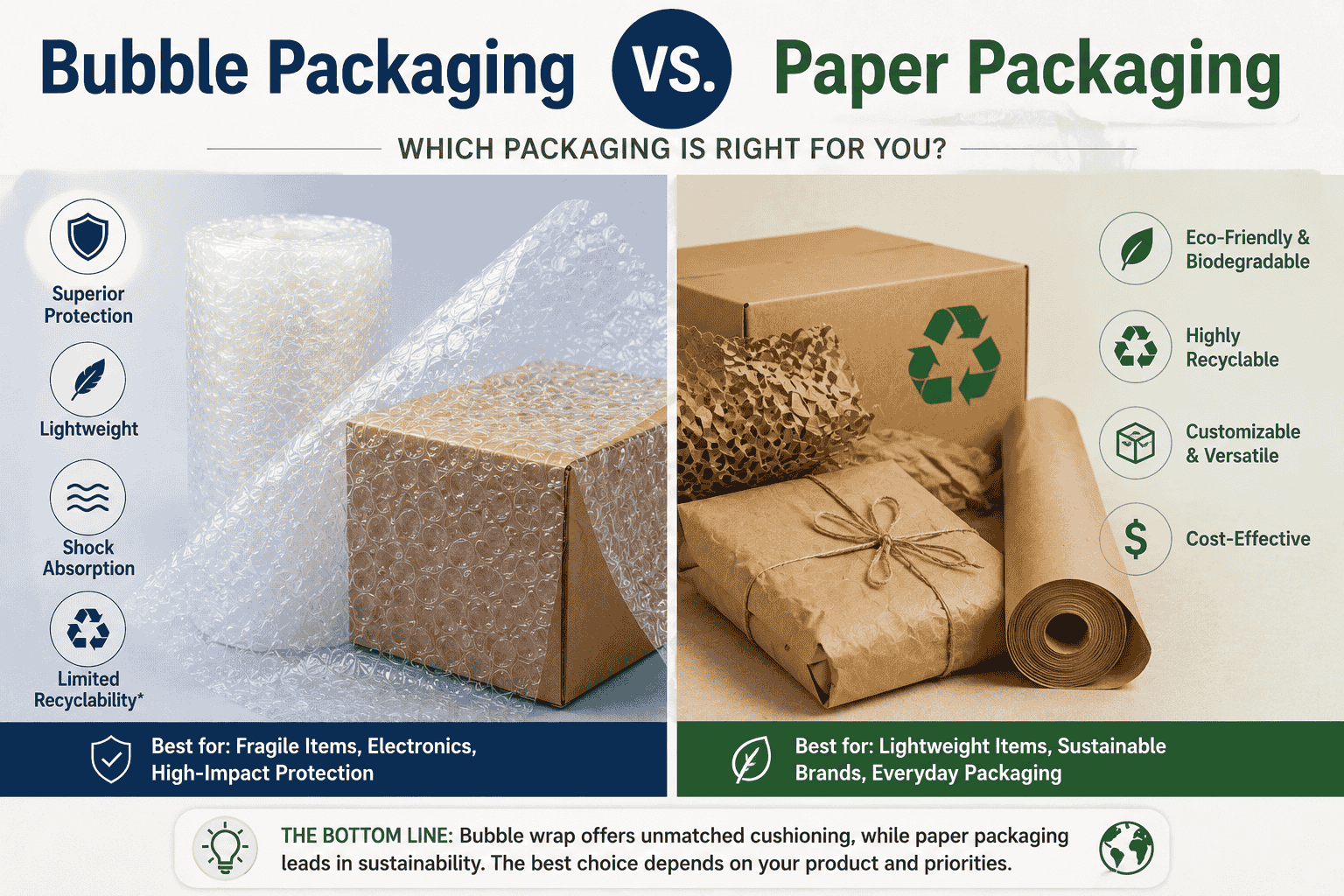
Both materials protect products during shipping, but they serve different purposes. Bubble packaging offers superior cushioning and water resistance, making it ideal for highly fragile products. Paper packaging is easier to recycle and is generally considered more environmentally friendly. Choosing the right option depends on the level of protection your products require and your sustainability goals.
Final Thoughts
Bubble packaging is recyclable in many locations, but it should be recycled through soft-plastic collection programs rather than standard curbside recycling bins. By recycling it correctly, reusing it whenever possible, or choosing eco-friendly alternatives, both consumers and businesses can reduce packaging waste and contribute to a more sustainable future. Understanding the proper disposal methods ensures that bubble packaging continues to provide protection without creating unnecessary environmental harm.