Introduction
You’ve worked hard to create a perfect wax blend, researched the right wax fraction and fragrance oils, and poured the candles meticulously. You’ve spent hours perfecting your wax blend, researching the right wax fraction and fragrance oils, and pouring candles with care. The truth is, though, that most candle makers find out the hard way: If your labels for candles is incorrect, everything else can look bad.
Sadly, the label is poorly made and lifts off the jar. An unmarked candle is removed from a store’s shelves. Failure to display a warning label could result in legal liability. A generic design will be overlooked by customers with 20+ choices of candles.
Your candle labeling task is a daunting one with four separate objectives in mind – legal compliance, resistance to heat and humidity, brand representation, and getting a stranger to pick up your candle rather than that one by the window.
What Are Candle Labels Made Of? A Material Guide
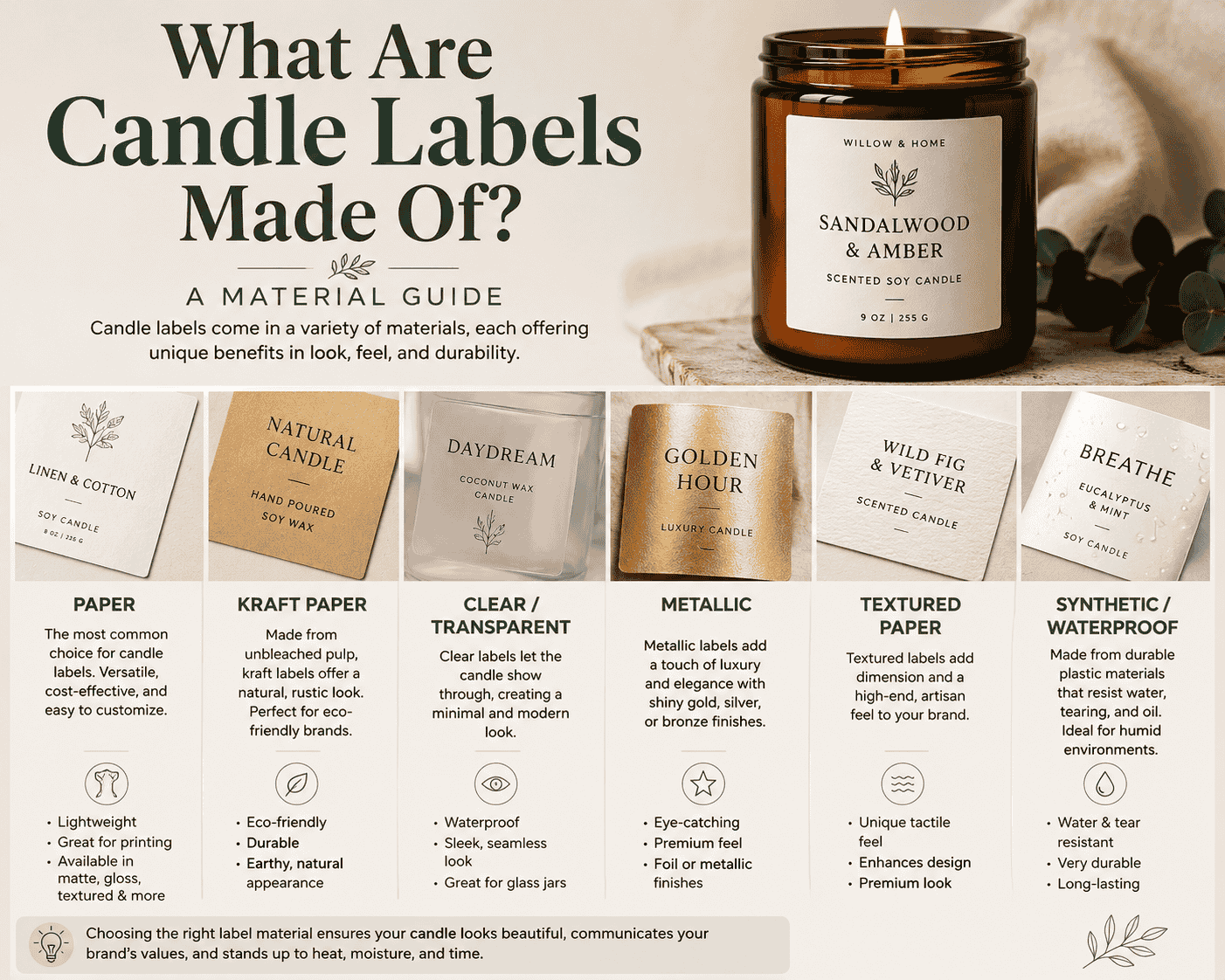
The material you choose for your candle label is the most critical production decision you will make. Candles generate heat, attract oils from fragrance blends, and sit in humid bathrooms or kitchens. A label that cannot handle those conditions will peel, fade, or look unprofessional fast.
Here are the main materials used for candle labels and when to use each one.
-
BOPP
BOPP is the most popular labeling material for candles, and it’s no wonder. It is waterproof, oil-resistant, heat-tolerant and will withstand temperatures up to 176 F, including normal candle burning conditions for jars and tins.
BOPP label film is a tough, plastic-like material that will not tear, scratch or be compromised by moisture, but will maintain print quality. They were spread on curved surfaces such as glass bottles and metal cans, which were perfect for the majority of candle holders.
-
Kraft Paper
Unlike synthetic, Kraft paper labels add a natural, handmade, and organic look to a candle. The natural brown color creates a sense of authenticity and sustainability, which is highly appealing to consumers today who are concerned about the environment.
In addition, Kraft paper is biodegradable, a concern for a increasing portion of buyers. 82% of consumers are likely to buy products that are packaged in an environmentally friendly way. A kraft label enhances the natural and earthy aroma of brands such as soy wax or other natural fragrances like cedar, sandalwood, or vanilla.
-
Estate Paper
Estate paper is a textured, matte label material that sits between kraft paper and synthetic film in terms of look and feel. It has a slightly rough, tactile surface that feels elegant and deliberate — the kind of label that makes a candle feel like it belongs in an upscale boutique or hotel.
Unlike kraft paper, estate paper is typically white or cream, making it versatile for a wider range of design aesthetics. The texture adds a sensory dimension that customers notice and remember.
-
Vinyl Labels — Maximum Durability
Vinyl labels are some of the most robust choices that you might have. They are 100% waterproof, oil-proof, UV-resistant, and heat-resistant, ensuring you can rely on them in the most challenging situations. Vinyl is resistant to the loss of colour and finish, especially when it is a long shelf life candle or used in outdoor markets and festivals.
They can be clear, matte or glossy and are excellent for use in spas, yoga studios and bathrooms, where humidity is always high.
-
Eco-Friendly and Recycled Paper Labels
Brands that have a core focus on sustainability will find that sustainable paper labels, created from recycled or sustainably sourced paper, are best suited to the brand. They can be used in combination with soy-based or water-based ink, as a complete green packaging solution.
They’re also not as long-lasting as synthetic alternatives but suit the values of a significant portion of consumers and when marketed with your brand story can be a compelling differentiator.
Types of Candle Labels by Container
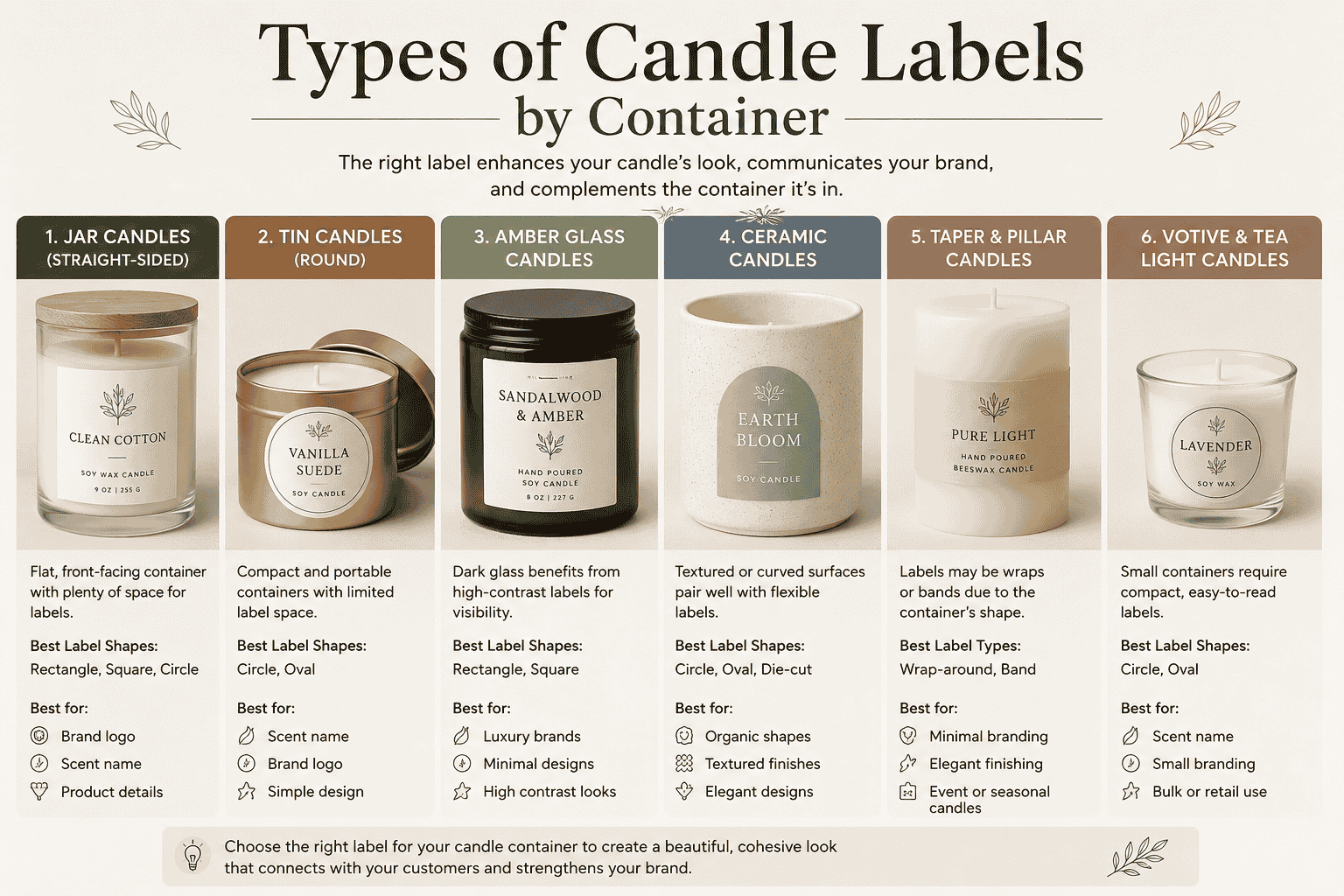
Not all candles use the same label format. Here is how to match your label type to your container:
Glass Jar Candle Labels
Wrap-around labels are most common here. BOPP or clear BOPP work best because glass heats up during burning and requires a heat-tolerant adhesive. A wrap label gives you maximum surface area for branding, safety warnings, and product information.
Metal Tin Candle Labels
Tins also heat up significantly. BOPP is again the recommended material. Some brands also use lid labels on tins to maximize branding without crowding the side of the container. A double-label approach — a branded lid label plus a compliance label on the base — works very well for tins.
Pillar and Column Candle Labels
Pillar candles often use a paper belly band — a strip that wraps around the middle of the candle — rather than a full wrap label. This is effective for displaying branding and compliance information while letting the candle itself remain visible.
Votive and Tea Light Labels
These small containers have limited surface area. Small circular labels on the bottom or simple sticker labels on the side are typical. Focus on the essential FPLA information and a compact warning icon.
Final Thoughts
Candle purchasers aren’t simply buying a fragrance. They buy an experience — the sight of the jar on the shelf, the texture of the label in their hands, the tale your brand tells before the wick is alight.
If your labels are correct, you’ve selected the right material that will work in the real world, you’ve designed a label that complies with all legal requirements, and your label is going to get a shopper’s attention before they finish the side-by-side comparison or the aisle scanning.
Whether you are creating a new line of candles or refreshing your existing line, the label gets as much attention as the scent inside. If done well, it’s not simply packaging: it’s why someone bought.