Perfume is one of the only products people buy almost entirely on feeling. Nobody can smell a fragrance through a screen or a store shelf sealed in plastic wrap, so the box has to do a strange job: it has to sell a scent nobody has smelled yet.
That’s why the packaging matters as much as the juice inside the bottle. A flimsy box makes an expensive perfume feel cheap. A well-built rigid box makes even a mid-priced fragrance feel like something worth gifting. If you’re building or refreshing a fragrance line, here’s what actually goes into packaging that looks luxurious and moves product off the shelf.
Why Packaging Carries So Much of the Sale
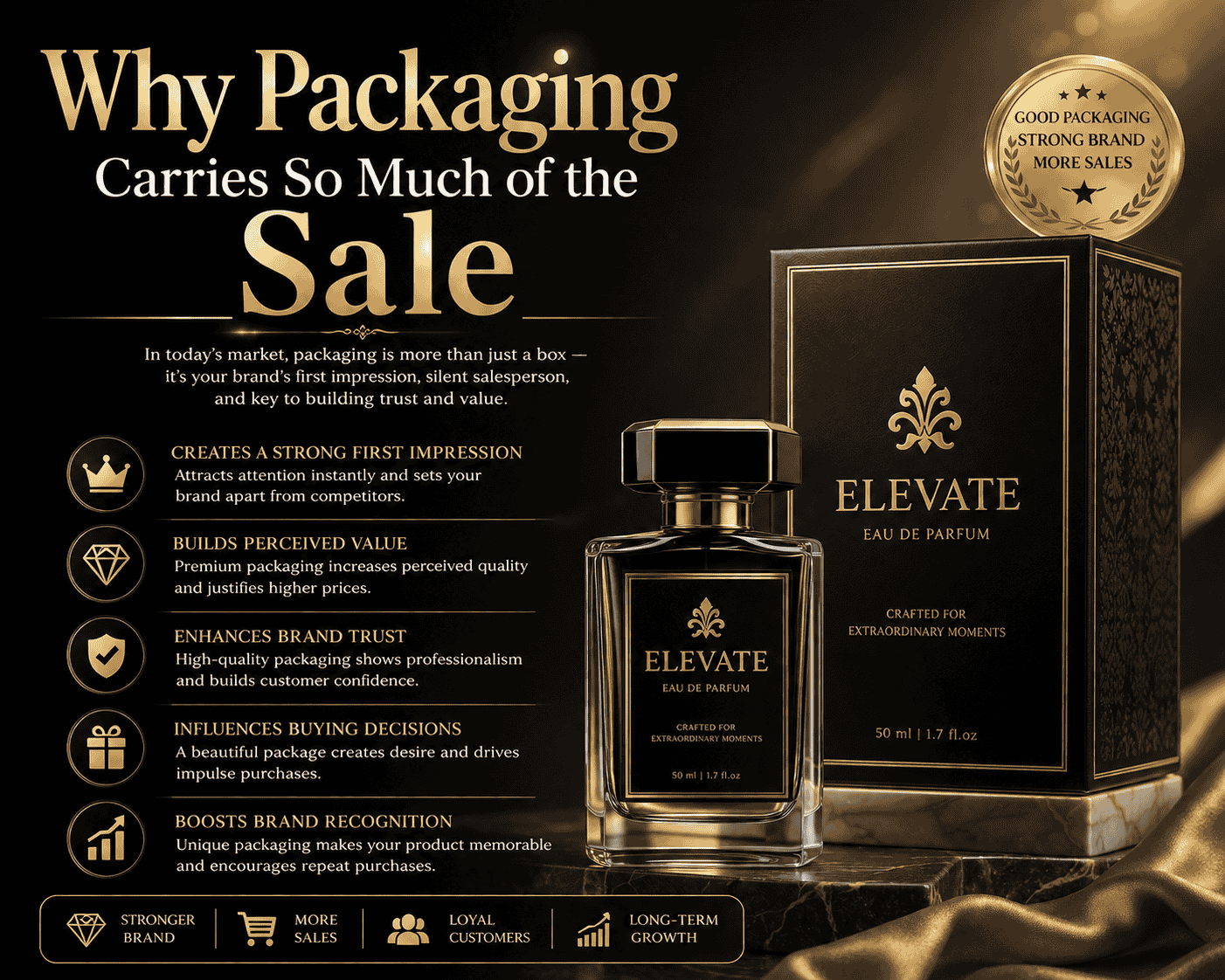
Before getting into materials and finishes, it helps to understand why this category behaves differently from most consumer packaged goods.
Fragrance buyers can’t sample the product through the packaging the way a food shopper can read a nutrition label or a skincare buyer can check an ingredient list. The box is often the only tactile signal a customer gets before purchase — its weight, the way the lid opens, the sound it makes when it closes. Those small physical details end up standing in for the entire brand promise.
This is also why perfume packaging tends to age poorly if it’s treated as an afterthought. A thin folding carton might save a few cents per unit, but it also tells the customer, subconsciously, that the product inside isn’t that special either.
Choosing the Right Box Structure
Not every fragrance needs the same box. The structure you choose should match the price point and the buying occasion.
Rigid magnetic boxes are the standard for prestige and niche fragrances. Because they’re built from thick, non-folding paperboard wrapped in printed or textured paper, they have real heft in the hand — and that weight is doing marketing work before the customer even lifts the lid. A magnetic closure adds a small ritual to opening the box, which sounds minor but noticeably improves how premium the unboxing feels.
Shoulder-neck rigid boxes work well when the bottle itself has an interesting silhouette you want to frame rather than hide. The narrower top draws the eye straight to the bottle.
Telescoping lid boxes (a base and a separate lid that lifts straight off) are a classic choice for entry-luxury and gift lines — slightly less expensive to produce than magnetic closures while still feeling deliberate and sturdy.
Drawer-style boxes, where the tray slides out from an outer sleeve, are increasingly popular for discovery sets and travel sizes because they turn a simple product into something that feels more like a keepsake box.
If you’re unsure which structure fits your line, it usually comes down to two questions: what’s the retail price point, and is this a single hero bottle or a multi-piece set?
Materials That Signal Quality Before the Box Is Even Opened
Rigid boxes are built around a paperboard or chipboard core — the thicker the board, the more substantial the box feels. That core then gets wrapped in one of several finish options, and this is where most of the visual and tactile personality comes from:
- Textured or linen-wrapped paper for a tactile, editorial feel
- Soft-touch (matte laminate) coating, which has a slightly velvety hand-feel customers tend to associate instinctively with high-end cosmetics
- High-gloss lamination for a sleeker, more modern look
- Specialty stocks like pearlescent or metallic papers for bolder, statement packaging
For sustainability-conscious brands, FSC-certified board and recycled kraft can be dressed up with foil or embossing so the eco angle doesn’t come at the cost of looking premium — it’s a balance more customers are actively looking for, not a compromise.
Finishes: The Details People Actually Notice
This is where a good box turns into a memorable one.
Foil stamping (gold, silver, rose gold, or holographic) on a logo or key line of text catches light and photographs well, which matters more than ever given how much perfume marketing now happens through unboxing content.
Embossing and debossing raise or press a design into the board itself, so a logo or pattern can be felt as well as seen. This works especially well combined with a matte finish, since the contrast between flat matte and raised texture is what the eye and hand pick up on first.
Spot UV adds a glossy detail over specific parts of a matte design — often a logo or motif — for contrast without redoing the whole surface finish.
Window cutouts, whether die-cut or acetate-lined, let the bottle peek through before the box is even opened, which can shorten the distance between “picking it up” and “wanting it.”
A useful rule of thumb: pick one or two finishes to lead with rather than stacking four or five. Restraint tends to read as more expensive than excess.
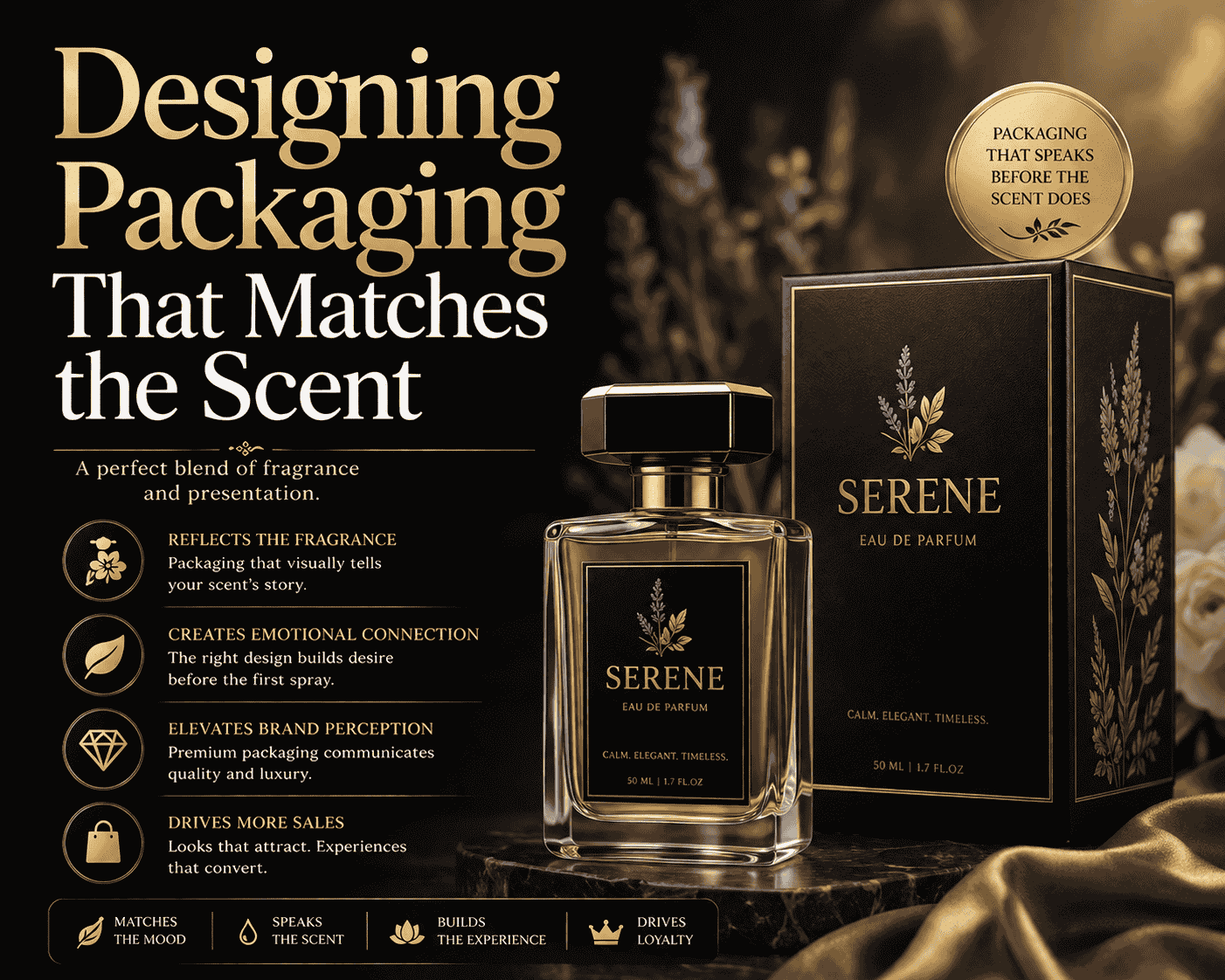
Designing Packaging That Matches the Scent
The strongest perfume packaging doesn’t just look luxurious in the abstract — it tells you something about what’s inside before you’ve read a single word.
- Floral fragrances often lean into soft illustration, pastel or blush tones, and lighter board weights that feel airy rather than heavy.
- Woody and musky scents tend to use deeper, earthier colors, natural textures like kraft or linen, and bronze or copper foil rather than bright gold.
- Gourmand or oriental fragrances often go bolder — richer colors, sometimes a satin ribbon or tactile trim — to match a more indulgent scent profile.
This kind of alignment between structure, color, and fragrance family isn’t just decoration. It’s a shortcut that helps customers guess, correctly, whether a scent matches their taste before they’ve smelled it — which reduces hesitation at the shelf or checkout.
Functional Details That Protect the Product (and the Experience)
Luxury and durability aren’t opposites — they need to work together, especially since perfume bottles are almost always glass.
- Custom foam, felt, or molded pulp inserts hold the bottle firmly in place so it doesn’t rattle or shift during shipping, which matters as much for e-commerce as it does for the in-store unboxing moment.
- Reinforced corners and double-wall construction on rigid boxes reduce the risk of crushing during transit without adding visible bulk.
- Resealable closures (magnetic flaps, ribbon pulls, or snug telescoping lids) mean the box survives being opened more than once — useful for gift sets or samplers customers reuse for storage.
Skipping these details to save on unit cost is one of the more common ways brands undercut their own packaging investment: the box looks premium in photos but disappoints the moment it’s handled.
A Simple Framework for Getting Started
If you’re approaching a redesign or a first packaging run, it helps to work through these in order rather than jumping straight to finishes:
- Set the price point and positioning first. This determines whether you need a magnetic rigid box or a simpler telescoping structure.
- Choose a structure that fits the bottle. Odd-shaped or sculptural bottles often need custom dielines rather than a stock box size.
- Pick a board weight and base material that matches durability needs, especially if the product will be shipped direct to consumers.
- Layer in one or two finishes that reflect the fragrance family, rather than defaulting to “gold foil on everything.”
- Test the unboxing physically, not just on screen — weight, sound, and resistance when opening all affect perceived quality in ways renders can’t show.
Getting It Made
Most of this comes down to working with a packaging partner who can prototype before committing to a full production run. A physical sample — not just a mockup — tells you things a 3D render can’t: how the board feels in hand, whether the magnet clicks satisfyingly, whether the foil catches light the way you pictured it.
At [Your Brand Name], we work with fragrance brands on rigid and magnetic closure boxes from concept through production — dieline development, material selection, finish sampling, and low-MOQ runs for brands testing a new line before scaling up. If you’re planning a new fragrance launch or refreshing existing packaging, [get in touch / request a free mockup] and we’ll help you figure out the right structure for your bottle and budget.