
Walk into any commercial kitchen, deli counter, or BBQ joint and you’ll find rolls of paper doing a quiet but important job. Parchment paper and butcher paper look similar on the outside — both come in large rolls, both are light-colored, and both get used around food. But swap one for the other at the wrong moment and your brisket dries out, your cookies stick to the pan, or your meat loses that perfect bark you spent twelve hours building.
This guide breaks down everything you need to know: what each paper is made of, how each one behaves under heat and moisture, and exactly when to reach for which roll. Whether you run a bakery, a BBQ operation, a deli,
What Is Butcher Paper?
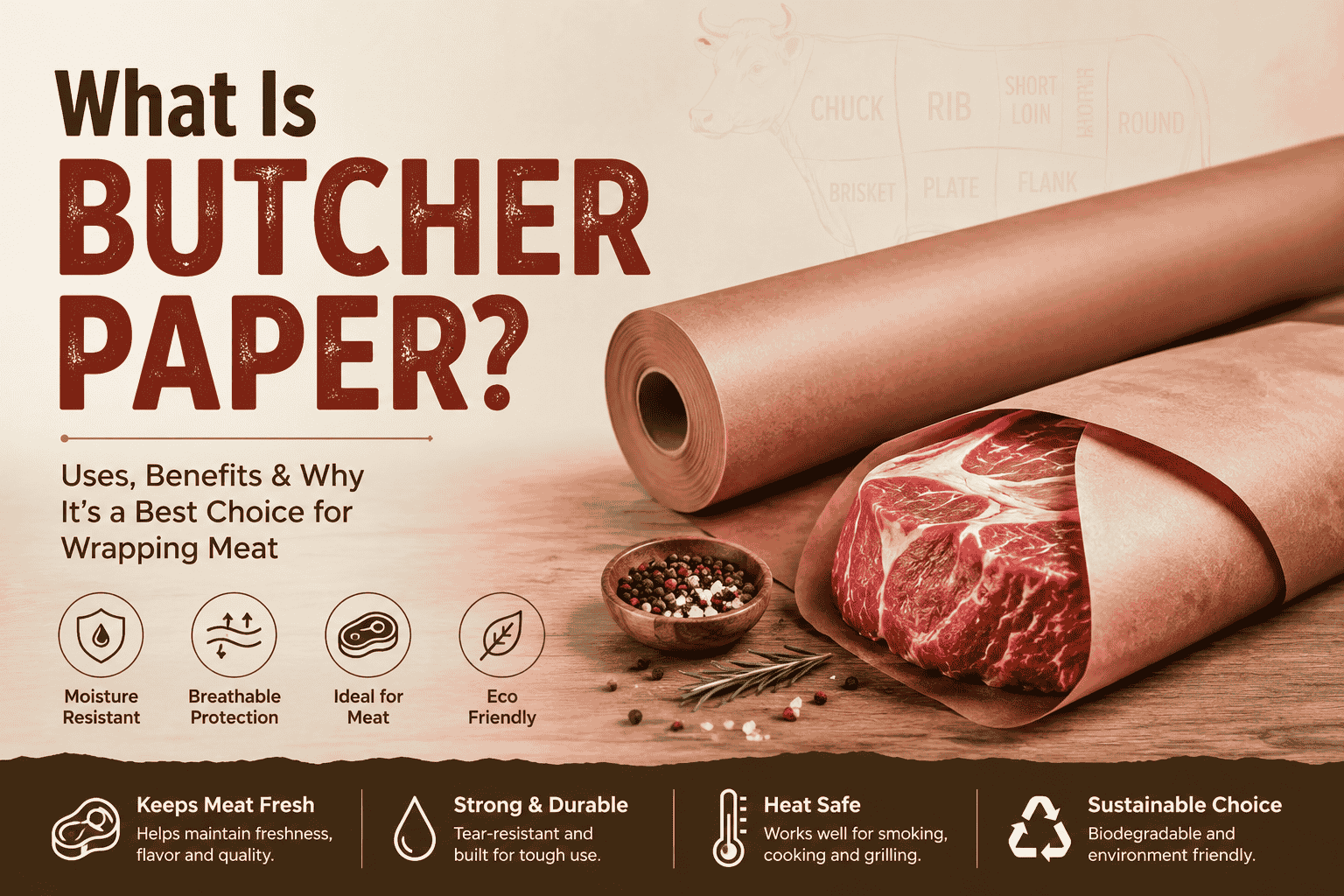
Butcher paper is built on a different foundation entirely. It starts with kraft pulp — the same type of thick, fibrous pulp used to make heavy paper bags — and goes through a process that includes caustic soda and sulfide treatments, plus the application of sizing agents. Those sizing agents are what make butcher paper moisture-resistant from the outside while still allowing air to move through.
The result is a paper that’s tough, breathable, and practical. It was originally designed for one purpose: wrapping raw meat at a butcher counter so the meat stays fresh, retains its natural color, and doesn’t create a mess. But over time — particularly in the world of competitive BBQ — butcher paper found a second calling as a cooking tool in its own right.
Types of Butcher Paper
• White butcher paper — unbleached, breathable, ideal for wrapping sandwiches and deli items
• Pink/peach butcher paper — treated with a sizing agent to be more moisture-resistant; the BBQ world’s favorite for smoking brisket and pork
• Brown kraft butcher paper — the most rustic version, great for table coverings and food presentation
Moisture and Breathability: A Critical Difference
This is the property that most dramatically affects the taste and texture of your final dish, yet it’s the one that gets the least attention.
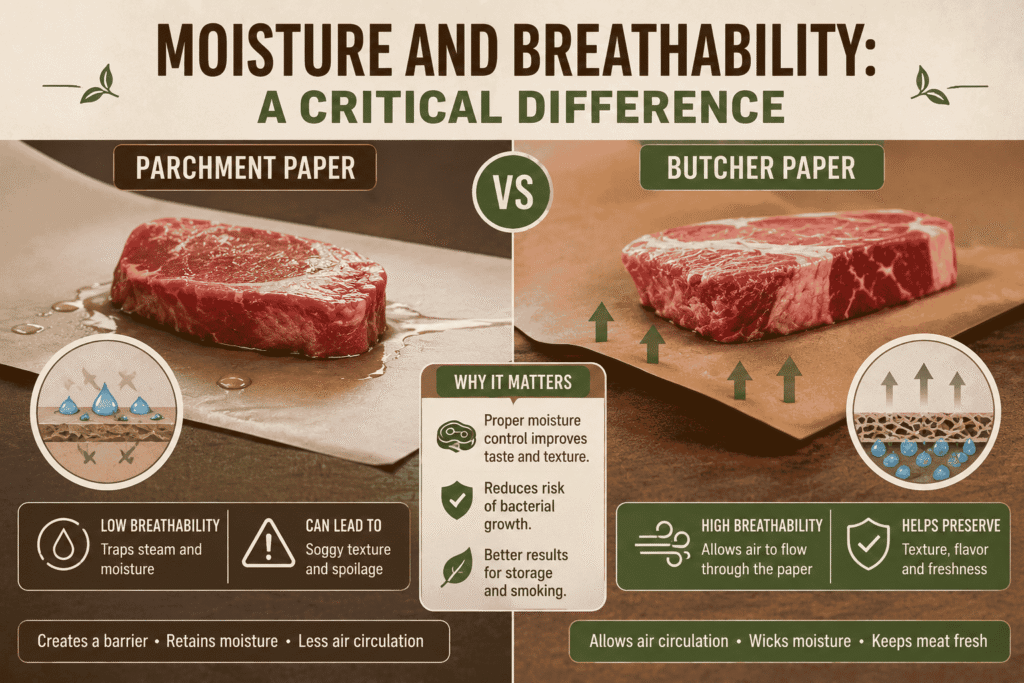
Parchment paper creates a seal. Its silicone coating and tight structure hold moisture in, which is exactly what you want when baking cookies, roasting vegetables, or cooking fish en papillote (the French technique of steaming food sealed inside a parchment packet). That trapped moisture becomes steam, which gently cooks the food and keeps it tender.
Butcher paper breathes. Its porous structure allows air and smoke to circulate around the meat while still retaining enough moisture to prevent the meat from drying out. In the BBQ world, this balance is what separates a good brisket from a great one. Wrapping brisket in pink butcher paper — a technique popularized by Central Texas pitmasters — lets the smoke continue to influence the meat while protecting the bark (the crusty, caramelized outer layer) from becoming too soft. Aluminum foil, by contrast, traps all moisture and can soften the bark.
Use Butcher Paper When You’re:
• Wrapping raw meat for storage or display at a butcher counter or deli
• Smoking a brisket, pork shoulder, or ribs (use pink/peach paper for this)
• Wrapping BBQ meats to rest after cooking — it holds heat while letting excess steam escape
• Lining a table for a casual BBQ or cookout — spread it out and serve directly on it
• Wrapping deli sandwiches or subs
• Storing meat in the refrigerator or freezer (better than plastic for short-term storage)
• Arts and crafts projects — butcher paper is a popular choice for large-format paper activities
Can Parchment Paper Replace Butcher Paper?
For wrapping meat in a smoker, not really. Parchment paper’s non-breathable surface will trap all the steam and moisture, which softens the bark significantly. You’ll end up with meat that tastes steamed rather than smoked. In a pinch for a short cook, it might work, but dedicated pitmasters won’t go near it.
For storing raw meat short-term in the fridge, parchment can work as a temporary substitute. It’s food-safe and will keep the meat from drying out. But it’s not as durable as butcher paper, so it may not hold up as well.
Can Butcher Paper Replace Parchment Paper?
In the oven, generally no. Butcher paper doesn’t have a non-stick surface, so your food will stick to it. It also isn’t designed for the high, sustained heat of a conventional oven and can dry out and crack. If you’ve run out of parchment paper and need to bake, greasing your pan directly is a better solution than using butcher paper.
Parchment Paper vs Butcher Paper for Food Businesses
If you’re sourcing paper products for a commercial kitchen, deli, bakery, or food packaging operation, the choice usually isn’t either/or. Most operations use both, and choosing the right product for each job reduces waste, improves food quality, and keeps your packaging looking professional.
For Bakeries
Parchment paper is non-negotiable for anything going in the oven. Look for commercial-grade rolls or pre-cut sheets sized for your specific pans. Unbleached parchment is increasingly popular for brands that want to signal an eco-conscious identity, while bleached white parchment gives a clean, classic look for pastry presentation.
For Delis and Sandwich Shops
White butcher paper and sandwich wrap paper are your workhorses here. Both wrap cleanly, absorb minor moisture without getting soggy, and present food in a way customers expect from a high-quality deli counter. If you want a branded look, custom-printed butcher paper or deli wrap is an excellent option — it turns every sandwich or sub into a branded touchpoint.
For BBQ Restaurants and Food Trucks
Pink or peach butcher paper is the standard for wrapping smoked meats. If you sell brisket, pulled pork, or ribs, invest in quality pink butcher paper — it’s part of the craft and your customers who know BBQ will notice. You can also use sheets of butcher paper to line serving trays or baskets for an authentic, rustic presentation that photographs well for social media.
For Butcher Shops and Meat Markets
Uncoated white or brown butcher paper for everyday wrapping, and freezer paper (which has a polyethylene coating on one side) for items going into the freezer for extended periods. Freezer paper is a related but distinct product — the plastic coating prevents freezer burn in a way that regular butcher paper cannot.
A Note on Wax Paper — and Why It’s Different from Both
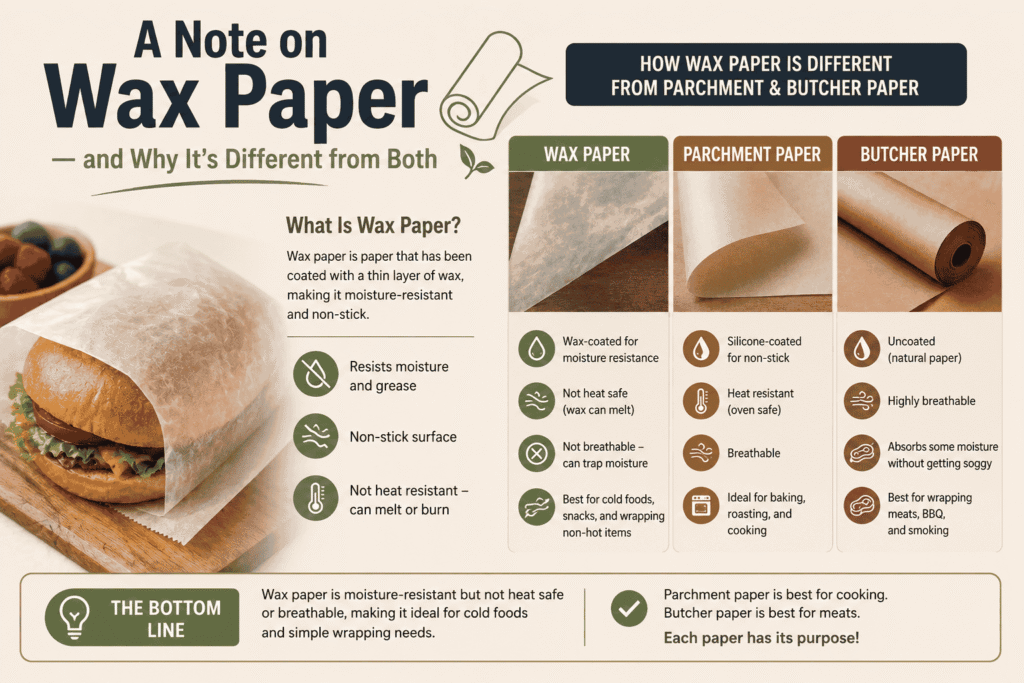
When talking about Parchment Paper vs Butcher Paper, wax paper almost always comes up because people confuse the three. Wax paper is coated with a thin layer of paraffin wax, which makes it moisture-resistant but not heat-resistant. The wax will melt in a hot oven and can even ignite under certain conditions.
Wax paper is useful for cold applications: wrapping cheese, separating layers of baked goods for storage, covering surfaces during food prep. But it should never go in the oven, never be used in a smoker, and should not be used as a parchment substitute for any cooking application. If you’re in doubt, the safest rule is: parchment paper for heat, wax paper for cold.
Final Thoughts
Parchment Paper vs Butcher Paper are both indispensable, but they’re built for different jobs. Parchment paper earns its place in any bakery or kitchen that cooks at high heat and needs a non-stick, moisture-retaining surface. Butcher paper belongs in every deli, BBQ operation, and butcher shop where breathable, durable wrapping makes a real difference to the quality of the food.
Understanding what each paper does — and why it does it — means you’ll never reach for the wrong roll again. And if you’re sourcing paper for a food business, knowing the difference helps you buy smarter, reduce waste, and present your food the way it deserves to be presented.