
My neighbor bakes cakes for a living, small home setup, mostly birthday orders and the occasional wedding cake. Couple months back she had a cake collapse sideways during delivery, whole thing just slid and smudged against the box wall. Turned out the box was too big for the cake, gave it room to shift around during the drive. She switched box sizes after that and hasn’t had the problem since. Sounds simple but apparently a lot of bakers learn this the hard way.
If you’re picking cake boxes for your bakery or home business, there’s more to think about than just “does the cake fit inside.” Here’s what actually matters.
Why the Box Matters More Than People Assume
A cake’s basically the most fragile thing you’ll ever ship or hand over to a customer. Wrong box and you’ve got smudged frosting, a tilted cake, or worse, one that’s just destroyed by the time it gets where it’s going.
Unlike other products where packaging’s mostly about looks, cake boxes have a real functional job too, keeping something soft and unstable from moving around or getting crushed.
It’s Not Just About Protection Either
Presentation matters a good bit too honestly, especially if you’re delivering cakes for events or selling online where customers see the box before they see the cake itself. A flimsy or oddly-sized box makes even a gorgeous cake look kinda cheap the second someone picks it up.
Getting the Size Right
This is where most people mess up, my neighbor included apparently. Too big and the cake slides around inside, smudging the sides or even tipping over on a bumpy drive. Too small and you’re literally squishing the cake trying to close the lid.
A Rough Rule of Thumb
Leave maybe half an inch to an inch of space around the cake, not more. Enough room that the box closes without pressing on the frosting, but not so much space the cake’s free to slide side to side.
Height Matters Just as Much
People forget this a lot honestly, focusing only on width and length. If your cake’s got tall decorations, piped swirls, tiered layers, whatever, the box needs enough height clearance or you’ll end up smashing the top the second the lid goes on.
Picking the Right Material..
Cake boxes aren’t all made the same, and the material actually matters more than you’d think for something holding food.

Corrugated Cardboard
Sturdier, holds shape well, good for bigger or heavier cakes, tiered wedding cakes especially. Costs a bit more than basic cardstock though.
Regular Paperboard
Fine for smaller, lighter cakes, cupcakes, that kind of thing. Cheaper option but won’t hold up as well under weight or during longer transport.
Something With a Grease-Resistant Coating
This one’s easy to overlook. Cakes with a lot of buttercream or oil-based frosting can seep through plain cardboard over time, leaving grease stains on the box. A coated or laminated interior handles this way better.
Does the Box Need a Window
Kind of depends what you’re going for honestly. Window boxes, the ones with a clear plastic cutout, let customers see the cake before opening it, which is nice for online orders or gift deliveries where the surprise is part of the fun anyway.
When a Window Doesn’t Really Help
If your cake’s got delicate decorations that could get damaged from light or just from customers wanting to peek constantly, a solid box without a window protects it better honestly. Fully iced cakes especially benefit from staying covered till the moment they’re actually served.
Handles or No Handles
Small detail, but it matters more than people think for delivery-heavy bakeries.
Why Handles Are Actually Useful
Carrying a cake box flat with both hands works fine for short distances, but delivery drivers or customers picking up cakes themselves often need a free hand for other stuff, car doors, other bags, whatever. A box with built-in handles makes that whole situation way less stressful.
When You Can Skip This
For small cakes or cupcake boxes that aren’t being carried far, handles aren’t really necessary and just add a bit of extra cost for something you won’t use much.
Thinking About Branding on the Box..
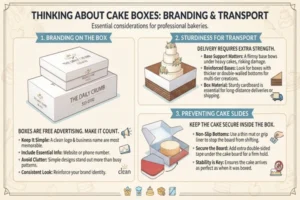
If you’re running an actual bakery business, not just baking for friends and family, the box is basically free advertising every time someone carries it into a party or event.
Keep It Simple Though
A clean logo, maybe your business name and contact info, does the job better than a busy design. People remember simple branding more than something overly cluttered, especially on something as visually loud as a cake box already tends to be.
Sturdiness for Transport
If you’re delivering cakes yourself or shipping them at all, the box needs to survive more than just sitting on a counter.
Base Support Matters a Lot
A flimsy bottom can bow or bend under a heavy cake, especially multi-tier ones. Look for boxes with reinforced bases or thicker board specifically for anything heavier than a basic single-layer cake.
Non-Slip Bottoms Help Too
Some bakeries add a thin non-slip mat or just extra tape on the cake board inside the box, stopping the actual cake from sliding around even if the box itself shifts a little during transport.
A Few Practical Tips Before You Order
Order a size up from what feels exactly right if you’re between two sizes, better a tiny bit of extra room than a squished cake. Test with an actual cake before ordering in bulk too, don’t just trust the dimensions on paper, actually put a real cake in there and see how it sits.
Final Thoughts
Cake boxes seem like a small detail until something goes wrong, a smudged cake, a squished top, frosting stains all over the box. Getting the size, material, and little details like handles or windows right saves a lot of headaches later, and honestly makes the whole experience nicer for whoever’s picking up that cake at the end of it.