
I still remember the first time a client asked me why their moisturizer wasn’t selling as well as a competitor’s, even though the formula was arguably better. Took me a minute to realize it wasn’t the product at all — it was sitting in a jar while the competitor’s was in a tube. Sounds small until you actually watch someone shop a skincare aisle. Toothpaste, sunscreen, hand cream, lip balm — tubes are everywhere for a reason, and it’s not because nobody’s tried to replace them. If you’re on the fence about whether tubed packaging is right for what you’re selling, here’s what I’ve picked up dealing with this stuff over the years.
So What Is Tubed Packaging, Really
At its core, it’s a squeezable cylindrical container, usually plastic, laminate, or occasionally metal, with a cap or nozzle at one end. You squeeze the bottom, product comes out the top. Not a complicated idea, but it’s survived more than a hundred years of packaging trends because it just does the job well.
Not All Tubes Are Built the Same
Plastic tubes are the ones you see most often — cheap to make, flexible, easy to squeeze. Laminate tubes stack several thin layers together, often with a foil layer tucked in there, which does a much better job keeping air and moisture away from whatever’s inside compared to a plain plastic tube. Then there’s aluminum, which you don’t see as much anymore outside art supplies and some pharmaceutical products, but it’s still around because nothing preserves contents quite like metal does.
Why Tubes Haven’t Gone Anywhere
Plenty of packaging trends have come and gone. Tubes just kept working.
Portion Control Happens Without Anyone Trying
Ever notice how people scoop way more product than they need out of a jar? Tubes fix that basically by accident. Each squeeze naturally limits how much comes out, and that quietly extends how long a product lasts on someone’s shelf. Doesn’t sound like much, but for anything priced at a premium, that stretch in usage translates into customers feeling like they got more for their money, even if they never consciously think about it that way.
Nobody’s Sticking Fingers in a Tube
Dip your fingers into a jar of cream and you’re introducing bacteria every single time, whether you notice or not. Tubes skip that problem entirely since the product stays sealed until it’s already coming out onto someone’s hand. That matters a lot more in skincare specifically — contamination complaints spread fast once customers start noticing something’s off.
They Actually Survive Shipping
Glass jars break. Tubes don’t. For brands doing travel sizes or shipping internationally, that alone cuts down on damaged shipments and the refund headaches that come with them.
Where Tubes Actually Give You an Edge
A tube won’t rescue a bad product, let’s be clear about that. But when two products are otherwise similar, packaging is often what tips someone toward grabbing one over the other.
Shelf Space Actually Matters
Tubes stand up on their own, show branding along the whole length of the container, and take up way less shelf space than jars or bulky bottles do. For a retailer working with tight shelf space, that efficiency alone can make a real difference in whether they want to stock your product at all.
People Just Assume Tubes Mean Fresher
There’s a psychology thing happening here too. Because tubes limit how much air gets to the product each time you use it, people associate them with freshness — even if the formula inside is identical to a jarred version sitting right next to it. That perception alone shifts buying decisions, especially in skincare where “freshness” gets marketed to death.
They’re Just Cheaper to Move Around
Compared to glass jars or pump bottles, tubes are lighter and more compact, which means lower manufacturing and shipping costs across the board. For brands trying to keep costs down without the packaging looking cheap, tubes tend to land in a pretty sweet spot.
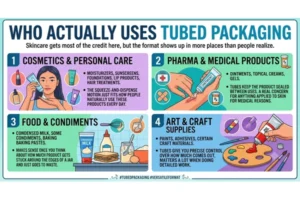
Who Actually Uses Tubed Packaging
Skincare gets most of the credit here, but the format shows up in more places than people realize.
Cosmetics and Personal Care
The obvious one — moisturizers, sunscreens, foundations, lip products, hair treatments. The squeeze-and-dispense motion just fits how people naturally use these products every day.
Pharma and Medical Products
Ointments, topical creams, gels — tubes show up constantly here because they keep the product sealed between uses, which is a real concern for anything applied to skin for medical reasons.
Food and Condiments
Condensed milk, some condiments, even a few baking pastes have moved toward tubes over the years. Makes sense once you think about how much product gets stuck around the edges of a jar and just goes to waste.
Art and Craft Supplies
Paints, adhesives, certain craft materials — tubes here go back decades, mostly because they give you precise control over how much comes out, which matters a lot when you’re doing detailed work.
Getting the Tube Right for Your Product
Grab the wrong material or design and you’ll run into problems that show up months later.
The Material Has to Match Your Formula
Some formulas react badly with certain plastics, which is exactly why laminate tubes exist — they create a barrier so the packaging material and the product don’t interact. If your formula has active ingredients that are sensitive to light or air, this stops being a minor detail and becomes something you really need to get right.
The Nozzle and Cap Decide the Whole Experience
A badly designed nozzle clogs, makes a mess, or dispenses inconsistently, and customers notice that fast. Flip-tops tend to work better for thicker products, while screw caps generally suit thinner, more liquid formulas.
Don’t Treat Branding as an Afterthought
A tube gives you one long, continuous surface to work with, but designing branding for a curved surface takes more thought than slapping a flat label on a jar. Working with a packaging partner who actually understands that curve makes a visible difference in how finished the end product looks.
The Sustainability Question
Tubes have had a rocky reputation on the sustainability side, mostly because laminate tubes mix multiple materials that are genuinely hard to recycle. That’s been changing though — more manufacturers now produce mono-material tubes made from a single recyclable plastic, which makes recycling them a lot more realistic for the average consumer. If sustainability is part of how you’re marketing your brand, it’s worth specifically asking your supplier about mono-material options instead of just assuming a standard laminate tube fits that story.
Final Thoughts
Tubed packaging isn’t going to win any design awards on its own, and it’s not the flashiest choice out there. But it quietly solves a handful of real problems — hygiene, portion control, shipping durability, shelf space — that most other formats can’t handle all at once. For brands fighting for attention in crowded categories like skincare or personal care, getting the tube design right can end up being one of the smarter calls made during the whole product development process. Most brands don’t give it nearly enough thought, honestly.