
I was standing in the coffee aisle last week and actually started counting, just out of curiosity. Bags, tins, little pods, one brand even had theirs sitting in a glass jar with a cork lid on top.
Same shelf, same category really. Yet every single one was working off a completely different packaging logic.
Kind of interesting once you actually notice it. Coffee doesn’t get packaged one standard way because coffee itself isn’t sold one standard way either.
Whole bean, ground, instant, single-serve pods, each of those wants something slightly different. The packaging just follows whatever that need happens to be.
Why Coffee Even Needs Special Packaging
Coffee isn’t like rice or pasta sitting quietly in a bag for months. It’s actively unstable the second it comes out of the roaster.
Oxygen Is the First Problem
Roasted coffee starts losing flavor almost the moment it hits open air. Whatever holds it has to deal with that before anything else even gets considered.
Gas Release Is the Second Problem
This one surprises people every time. Coffee keeps releasing carbon dioxide for days after roasting. Packaging has to account for that somehow, or bags start puffing up and seals start popping.
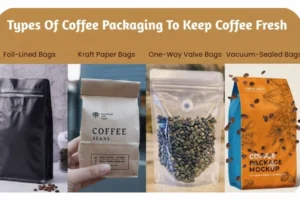
Foil-Lined Bags
Probably the most common format you’ll find on shelves right now.
The One-Way Valve
Most of these bags come with a small valve built in. It lets gas escape without letting outside air sneak back in, solving two problems with one tiny part.
Flexible for Beans or Ground
These bags handle whole beans just as easily as pre-ground coffee. That flexibility is why they’ve become the default across most price points.
Vacuum-Sealed Bags
A step up from a regular foil bag, mostly used for ground coffee that needs to survive longer on a shelf.
Air Removed Entirely
Instead of just blocking air, vacuum sealing pulls it out completely before sealing. The coffee ends up compressed almost flat until it’s opened.
Popular With Commercial Brands
This format shows up a lot with mass-market coffee, since it stretches shelf life and keeps shipping costs lower thanks to the compact shape.
Tin Cans
Less common than a few decades ago, but still around, especially with brands going for a classic look.
Strong Barrier Protection
Metal blocks light and air better than almost anything else here. Coffee genuinely stays fresher longer in a well-sealed tin.
Heavier and Pricier
The tradeoff is weight and cost. Tins cost more to produce and ship, which is why lighter materials mostly took over for everyday coffee.
Coffee Pods and Capsules
Single-serve coffee needs its own category, since the packaging basically is the serving size.
Sealed Individually
Each pod is its own tiny sealed unit. Freshness comes down to how well that one pod was sealed at the factory, not shelf time.
Plastic vs Aluminum
Plastic pods are cheaper but harder to recycle. Aluminum costs more, holds flavor slightly better, and recycles more easily, which is why some premium brands stick with it.
Compostable and Paper-Based Pouches
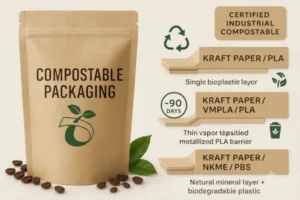
Newer to the market, mostly pushed by brands trying to cut down on plastic waste.
Trying to Match Foil
These use plant-based liners instead of foil, aiming for similar protection. Not always quite there yet, but improving steadily.
The Sustainability Tradeoff
A compostable bag that lets coffee go stale faster hasn’t really solved anything, just shifted the problem. Brands usually recommend using it sooner rather than storing long-term.
Glass Jars
Less about function, more about how a brand wants to present itself on a shelf.
Reusable Appeal Jars stick around long after the coffee’s gone. People refill them or just leave them out looking nice.
Not Great for Long-Term Freshness Glass lets light through unless tinted, and it doesn’t block oxygen as well as foil. Better suited to coffee used up fairly quickly.
Matching Packaging to the Coffee
Not every coffee needs the same protection, which is why so many formats exist side by side.
Whole Bean Needs Less Urgency Less surface area is exposed to air, so a simple valve bag usually does the job fine.
Ground Coffee Needs Tighter Sealing More surface area means faster staling. Vacuum sealing or a solid valve bag matters more here.
What This Means When You’re Buying Coffee
Knowing the packaging type tells you something useful before you’ve even opened the bag.
Check for a Valve No visible valve on a sealed bag usually means the coffee was already a little stale by the time it hit the shelf.
Roast Date Still Matters Most Even great packaging can’t fix coffee that’s been sitting around for months. Always worth checking the roast date instead of trusting packaging alone.
Final Thoughts
That whole aisle, bags, tins, pods, jars, isn’t random. Every format is solving the same basic problem, oxygen and gas, just in a slightly different way.
Next time you’re grabbing a bag, glance past the roast level for a second. The packaging itself is quietly telling you how that coffee’s probably going to taste by the time it reaches your cup.