
What Is Rigid Packaging?
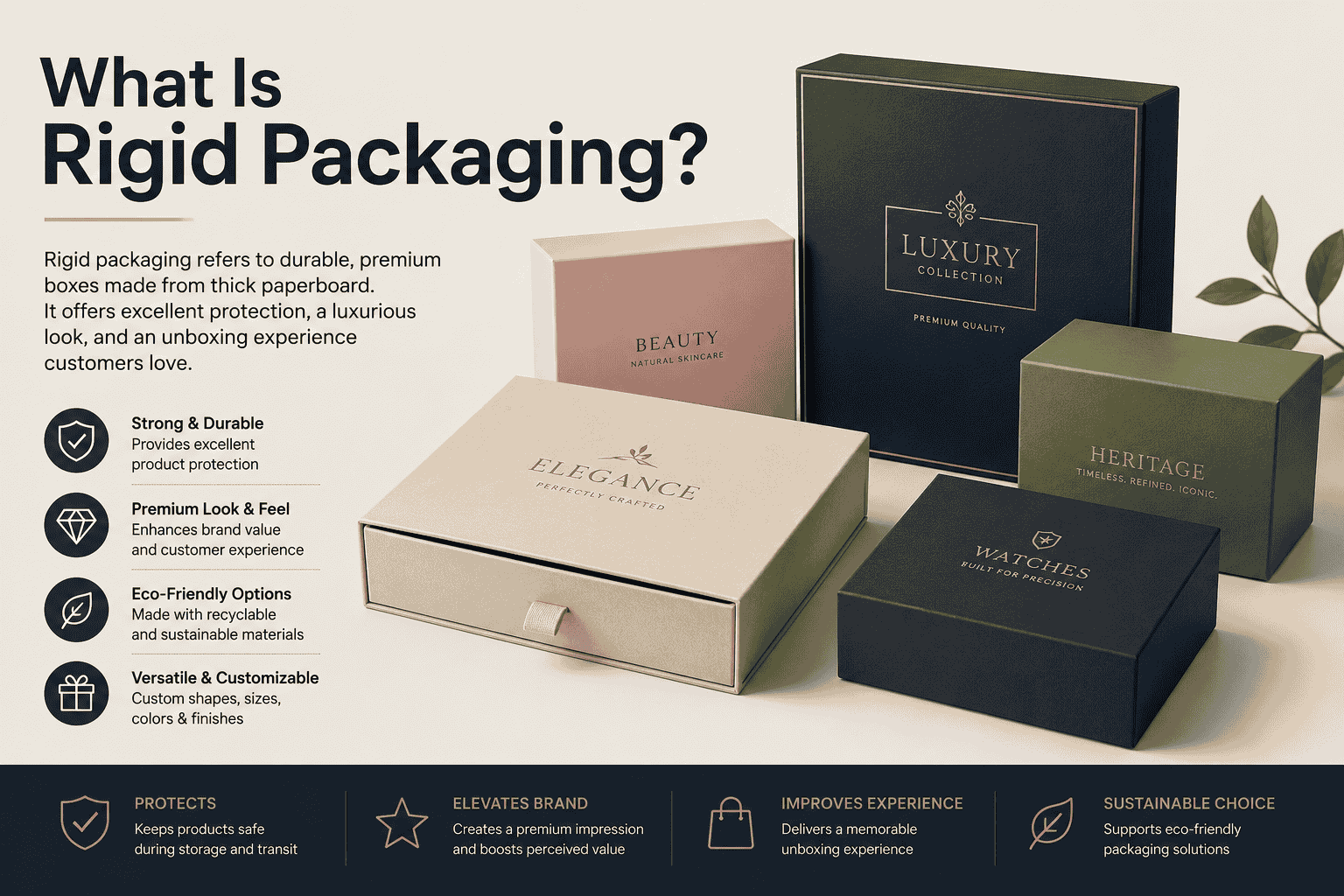
Walk into any store and look around. The glass perfume bottle on the shelf. The tin of premium tea. The sleek magnetic box a luxury watch arrives in. That heavy, solid feel under your fingers — that is rigid packaging at work.
Rigid packaging refers to any packaging that holds its shape when empty. It does not flex, compress, or bend under normal handling. This structural integrity is what makes it the go-to choice for products that are fragile, high-value, or simply need to make a strong first impression.
Unlike flexible packaging such as pouches and poly bags, rigid packaging is built from inherently stiff materials — glass, metal, hard plastics, and chipboard-based paper stock. Each of these materials comes with its own strengths, and choosing the right one can directly affect how customers perceive your product, how safely it arrives, and how much it costs to ship.
Types of Rigid Packaging by Material
The material is the foundation of any packaging decision. Here is a thorough look at each major category.
1. Rigid Paper and Chipboard Boxes
This is the most versatile and widely used category in retail and luxury packaging. Chipboard — a dense, recycled paper-based material — forms the inner skeleton of these boxes, while a smooth outer wrap of paperboard gives them their premium, polished appearance.
What makes chipboard boxes so popular is the balance they strike. They are sturdy enough to protect delicate items, light enough to keep shipping costs manageable, and flexible enough in terms of design to serve everything from a small jewelry ring box to a large collector’s edition board game.
Because the outer wrap can be printed, embossed, foiled, or laminated in nearly any way imaginable, these boxes are an incredibly powerful branding tool. The unboxing experience they create is a major reason why luxury and lifestyle brands continue to invest in them heavily.
-
Rigid Plastic Packaging
Rigid plastic packaging covers a wide range of containers, bottles, trays, and enclosures made from materials like HDPE (high-density polyethylene), PET (polyethylene terephthalate), and polypropylene.
Each plastic type has distinct properties. PET is lightweight, crystal clear, and excellent for beverages and personal care products where transparency matters. HDPE is tougher and more resistant to chemicals and temperature, making it the preferred choice for pharmaceuticals and industrial products. Polypropylene sits in between — durable, food-safe, and highly resistant to moisture.
-
Metal (Tin and Steel) Packaging
Metal packaging carries a sense of permanence that few other materials can match. Tin-plated steel cans and aluminum containers have been used for over a century, and for good reason — they offer an almost unbeatable combination of strength, airtightness, and shelf life extension.
A sealed metal can keeps oxygen, light, and moisture completely out. For food and beverage brands, this means products can stay fresh for months or years without refrigeration. For brands selling premium teas, biscuits, or confectionery, a tin also has a second life as a keepsake — customers reuse them, which keeps the brand visible long after the product is gone.
-
Glass Packaging
Glass is the oldest form of rigid packaging still in widespread use, and it remains unmatched in certain key areas. It is completely non-reactive, meaning it will not leach chemicals into the product it holds. It is impermeable to gases and odors. And it presents products with a clarity and weight that instantly signals premium quality.
Brands in spirits, fine wine, high-end olive oil, luxury perfumery, and specialty food consistently choose glass because the material itself communicates purity and quality before a customer even reads the label. The heft of a glass bottle in the hand is a deliberate part of the brand experience.
Types of Rigid Packaging by Style and Structure
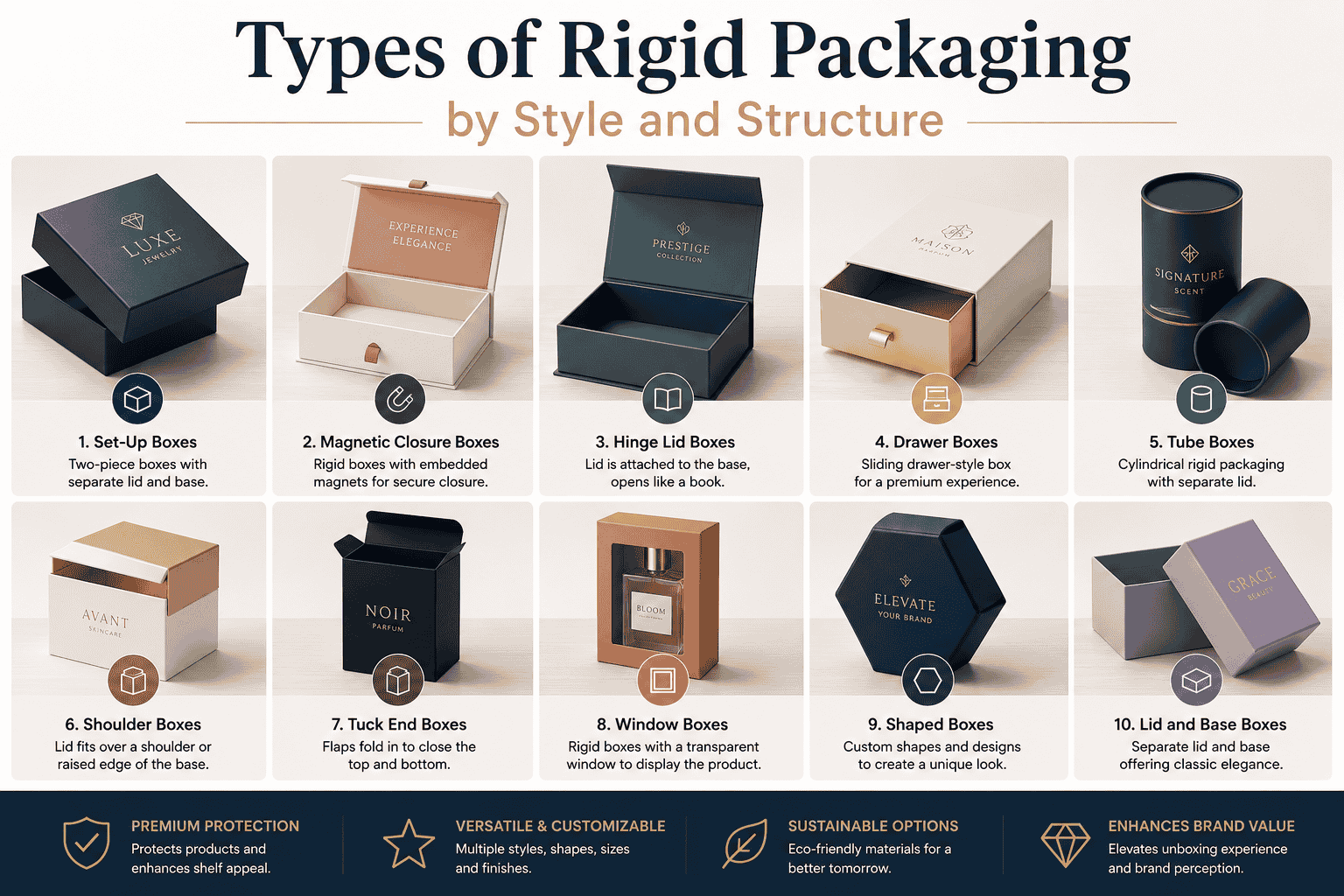
Beyond materials, rigid packaging is also defined by its physical structure — how it opens, how it closes, and how it presents the product inside.
Shoulder Neck Boxes (Lift-Off Lid Boxes)
The shoulder neck box is one of the most prestigious styles in rigid packaging. It comes in three components: a base, an inner shoulder or collar that holds the lid in place, and a lid that lifts cleanly off. The result is a satisfying, controlled unboxing experience.
Jewelry brands love this style because the interior can be fitted with a satin pillow or custom foam insert that cradles the product perfectly. Watch brands use it for the same reason — the box becomes part of the product story.
Magnetic Closure Boxes
Magnetic closure boxes use small but strong magnets embedded in the walls of the lid and base. When you close the lid, it snaps into place with a satisfying click. When you open it, there is a smooth, deliberate pull — every interaction feels considered and high-end.
These boxes are increasingly popular with electronics brands, fragrance companies, and high-end retail brands. They can be made collapsible (foldable rigid boxes) to reduce storage and shipping costs, which makes them a practical option for brands that want premium presentation without the full shipping-cost overhead of traditional rigid boxes.
Drawer (Slipcases) Boxes
Drawer boxes slide open horizontally, like a matchbox or a cabinet drawer. The outer shell remains stationary while an inner tray slides out smoothly. This mechanism adds an element of theater to the unboxing and allows for a well-organized interior that can hold multiple items in separate compartments.
Book-Style (Clamshell) Boxes
Book-style boxes open like a hardcover book along a hinged spine. They have a distinctive look and feel — opening one genuinely resembles opening a special edition book. They are popular for brands that want to tell a story with their packaging, laying content out across two interior panels.
Rigid Tubes and Cylinder Packaging
Cylindrical rigid packaging — tubes, canisters, and rolled-edge containers — serve a dual purpose. They protect their contents extremely well (the circular cross-section distributes impact evenly) and they stand out on shelves simply by being a different shape than everything around them.
Two-Piece (Lid and Base) Boxes
The most straightforward rigid box configuration — a base and a separate lid. The lid can be a full-depth telescoping style that covers most of the base, or a shallow cap that simply covers the top. This simplicity makes two-piece boxes one of the most affordable rigid box options while still delivering a premium feel.
Rigid Trays and Inserts
Rigid trays are not standalone packaging — they work inside outer packaging to organize, protect, and present products. A tray with precisely molded cavities ensures that each item sits exactly where it should, preventing movement during shipping and creating a clean, deliberate presentation when the customer opens the box.
Who Uses Rigid Packaging? Industries and Applications
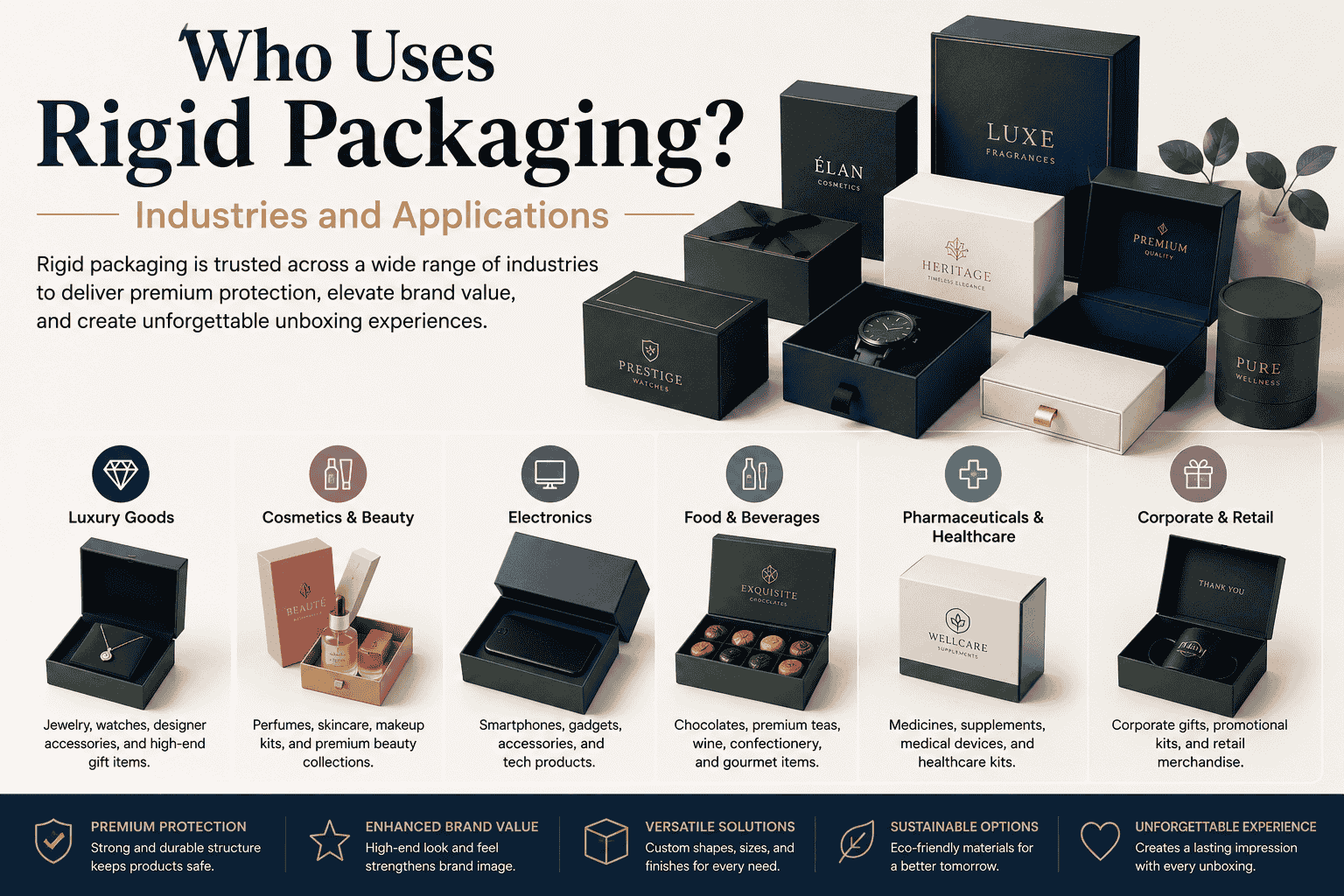
Rigid packaging appears across nearly every consumer and industrial category. Here is where it plays the most critical roles:
Luxury and Fashion: High-end brands use rigid packaging as an extension of the product itself. The box is not just a container — it is part of what the customer is paying for. Rigid boxes with premium finishes are standard for watches, jewelry, designer accessories, and fragrance.
Food and Beverage: Glass bottles, metal tins, and rigid plastic containers are workhorse packaging solutions in this space. They preserve freshness, communicate quality, and meet strict food safety regulations. Premium food brands in particular use rigid packaging to distinguish themselves from commodity competitors.
Cosmetics and Skincare: From lipstick casings and foundation compacts to full skincare gift sets, this industry relies on rigid packaging to project luxury and protect sensitive formulations from contamination and light degradation.
Electronics and Technology: Smartphones, headphones, and peripherals arrive in rigid boxes that do real structural work — absorbing shocks during shipping while presenting products cleanly at the moment of unboxing.
Pharmaceuticals: Medicine bottles, blister packs, and ampoules rely on rigid packaging that meets strict safety, tamper-evidence, and sterility requirements.
Spirits and Premium Beverages: Glass is still the standard in this category for its purity and premium signal. Many brands add rigid box outer packaging for gift retail.
Rigid Packaging Finishes: How to Elevate the Visual Impact
The material and structure of a rigid box are just the starting point. Finishing treatments are what take packaging from functional to genuinely memorable:
Gloss Lamination — A high-shine coating that makes colors pop and adds a tactile smoothness.
Matte Lamination — Understated, sophisticated, and increasingly preferred by premium brands that want to signal confidence without gloss.
Soft-Touch Lamination — A velvety, almost rubbery finish that is highly tactile. Customers reach for it instinctively.
Foil Stamping — Metallic foil applied under heat and pressure, available in gold, silver, rose gold, and holographic finishes. Ideal for logos and accent details.
Embossing and Debossing — Raising or pressing design elements into the surface of the packaging creates tactile depth and signals craftsmanship.
Spot UV — A high-gloss coating applied selectively to specific design elements. Creates striking contrast when used on a matte background.
Rigid vs. Flexible Packaging: How to Choose
The choice between rigid and flexible packaging is not always obvious. Here are the core trade-offs:
| Factor | Rigid Packaging | Flexible Packaging |
| Protection | Excellent — holds shape under pressure | Good for light products, less so for fragile items |
| Perceived quality | High — signals premium | More functional, less luxurious |
| Weight and shipping cost | Heavier, higher freight cost | Lighter, lower cost |
| Customization | Highly customizable in shape and finish | Limited structural options |
| Sustainability | Often recyclable (glass, metal, chipboard) | Mixed — many flexible materials are not recyclable |
| Minimum order quantity | Usually higher | Often lower |
How to Choose the Right Rigid Packaging for Your Business
Start with these five questions before committing to a packaging type:
- What level of protection does my product genuinely need? A delicate ceramic figurine and a printed t-shirt have very different structural requirements.
- What impression do I want the customer to have at the moment of opening? The unboxing experience is a real part of your customer experience. Design it intentionally.
- What is my shipping situation? Heavier rigid packaging increases freight costs. If you ship in high volumes, this math matters.
- What is my sustainability position? Glass, metal, and chipboard have strong recycling credentials. Communicate this if it aligns with your brand values.
- What is my volume? Custom rigid boxes typically have minimum order quantities. Smaller brands may need to start with stock options or foldable rigid boxes to manage upfront costs.
Final Thoughts
Rigid packaging is one of the most powerful tools a product brand has. Get it right, and the packaging becomes part of the reason customers buy — and buy again. Get it wrong, and even a great product can feel cheap or arrive damaged.
The good news is that the range of options has never been wider. Whether you are a small business launching your first product or an established brand looking to upgrade your packaging experience, there is a rigid packaging solution built for your needs.
Take the time to match material, structure, and finish to your product’s actual requirements — and to the impression you want to leave with every single customer who opens the box.