
I still remember standing in the cereal aisle as a kid, stuck between two boxes, and picking the one with the tiger on it because he looked like he was having the best morning of anyone alive. Nobody planned for me to think that. Well, somebody planned it — a whole team of people, actually, and it worked.
That’s really the story of cereal mascots. They feel like harmless nostalgia now, something you glance at in an old photo and smile. But they were never just decoration on a box. They shaped how a lot of us thought about breakfast growing up, built a weird kind of brand loyalty that somehow followed people into their thirties, and turned sugary flakes into something people actually feel sentimental about. So let’s get into how that happened.
Why brands even bothered with a mascot
Once cereal boxes started fighting for shelf space, companies figured out fast that a flavor description wasn’t going to grab a kid’s attention. A face would.
A five-year-old isn’t standing in a store weighing nutrition facts against price. They’re reacting to whatever catches their eye first, and a friendly, exaggerated cartoon does that instantly, no effort involved. It gave brands a direct line into a kid’s attention, skipping right past all the boring stuff the parents actually cared about.
And once a character showed up on TV, on the box, in comic strips, eventually on lunchboxes — kids recognized it before they could even read the brand name next to it. That kind of recognition is worth more to a company than most other marketing tricks combined, because it plants loyalty before a person even understands what loyalty is.
A plain box of corn flakes doesn’t have a personality. A cartoon tiger who’s genuinely thrilled about breakfast does. Giving a product a face made it easier to talk about, easier to remember, and easier to love in that uncomplicated way only childhood things get loved.
How they leaked into everything else
This is the part that’s actually interesting. These characters didn’t stay stuck on cereal boxes — they spread into basically everything around a kid’s daily life.
Saturday morning cartoons, comic book ads, coloring books, backpacks. They followed kids everywhere outside the kitchen table, which is a big reason so many adults can still describe them in detail decades later without even trying to remember.
Ask someone in their thirties or forties about their favorite one, and watch how fast it turns into a full trip down memory lane. These characters stopped being just logos a long time ago in people’s heads — they’re tied to actual memories now. A specific Saturday, a specific bowl, a version of childhood that doesn’t exist anymore except in that quick flash of recognition.
Once cereal companies proved a friendly face could sell breakfast, other food brands took notes. That approach spread well past the cereal aisle, and honestly a lot of that traces straight back to how well these early breakfast characters worked.
What made the memorable ones stick around
Not every mascot became a household name. A few things separated the ones that lasted from the ones nobody remembers anymore.
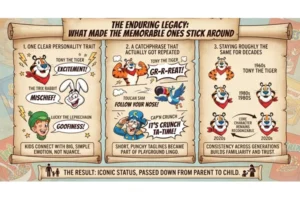
One clear personality trait, nothing complicated. The mascots people actually remember each had a single dominant thing going on — pure excitement, mischief, confidence, goofiness. Not much nuance to any of it, and that was kind of the point. Kids connect with big, simple emotion way more than subtlety.
A catchphrase that actually got repeated. A good tagline did half the work by itself — short, punchy, something a kid would say to a friend on the playground without remembering where they even picked it up.
Staying roughly the same for decades. The ones that lasted didn’t get completely reinvented every few years. Small design tweaks happened here and there, sure, but the core character stayed recognizable across generations, which is why a parent who grew up with one could pass that same familiarity down to their own kid without either of them really thinking about it.
What it actually did to breakfast as a routine
It’s easy to underestimate how much these characters shaped the way breakfast played out in a lot of houses, morning after morning.
For a lot of kids, breakfast wasn’t just a meal — it was a small ritual involving a favorite bowl, a favorite spoon, and whatever character happened to be grinning up from the table. That little bit of routine mattered more than people give it credit for, looking back on it now.
There’s a practical side too. A kid excited about a cereal because of its mascot was a kid who’d actually sit down and eat without turning it into a fight, which isn’t nothing for a parent trying to get everyone out the door on time.
And a surprising number of adults still buy the exact brand they grew up with. A good chunk of that loyalty traces right back to whichever character they connected with as a kid. Nostalgia is one of the strongest things a brand can lean on, and cereal companies figured that out earlier than most industries did.
Do these mascots even matter anymore
Marketing’s shifted a lot since the golden age of cereal characters, but they haven’t disappeared. If anything, brands seem to lean into their old mascots even harder now — internet jokes, throwback campaigns, nostalgia merch that lands just as well with adults as it does with kids.
A mascot that’s been around for decades gets to speak to kids discovering it for the first time and adults who grew up with it, at the same time, without missing a beat. That kind of dual appeal is something newer, flashier marketing genuinely struggles to pull off.
Limited-edition packaging, throwback box designs, social posts leaning hard into “remember this” energy — all of it keeps these characters around culturally, decades after they first showed up. Brands clearly get that nostalgia sells just as well as novelty. Sometimes better.
Final thoughts
These characters turned out to be a lot more than cartoon faces slapped on a box. They shaped how kids experienced breakfast, built loyalty that stretched well into adulthood, and became actual pieces of cultural memory somewhere along the way. What started as a simple trick to catch a kid’s eye in a crowded aisle ended up leaving a mark on pop culture that stuck around way longer than anyone probably expected.
Next time you’re in that same cereal aisle, take a second look at those familiar faces. There’s more history behind them than most people ever stop to notice.