
In retail, you basically get a split second to grab someone’s attention. You’ve seen it happen – walking down an aisle, one box catches the light and shines while everything around it looks flat and kind of dull by comparison. That little “wow” moment usually comes down to one thing: UV coating.
It’s more than just a shiny finish though – it’s practically a statement about the brand itself. But before you slap that glassy look on your packaging, it helps to actually understand how it works. Let’s get into what UV coating actually does, why brands love it, and where it can trip you up if you’re not careful.
What Is UV Coating, Exactly?
Picture a finish that dries almost instantly – faster than you’d think possible. UV coating is a clear liquid applied over printed material, then cured instantly under intense ultraviolet light. Regular varnish takes hours to dry through evaporation, but UV coating hardens in seconds instead. That speed isn’t just convenient – it also locks in a level of clarity and color saturation that makes everything on the box look sharper and more vivid.

Why Luxury Brands Keep Coming Back to It
When a brand wants to feel expensive, the finish isn’t something to skimp on. Here’s why the top-tier names lean on UV coating so much.
It Makes Colors Pop
A full UV coat makes colors look deeper and more saturated, almost like the box is glowing a bit. Product photography ends up crisper too, giving items a kind of “alive” quality on camera. If the packaging needs to look as premium as whatever’s inside it, this finish does a lot of that work on its own.
Spot UV Is the Real Pro Move
Coating the entire box isn’t actually the smart play – Spot UV is. That’s when the gloss only goes on the logo, a tagline, or a specific design element, while the rest of the box stays matte. The contrast makes that glossy spot jump off the surface in a way full coverage never quite manages. It’s tactile too – people genuinely can’t help touching it.
It Works Like an Invisible Shield
Packaging goes through a lot before it reaches anyone – warehouse floors, delivery vans, handling along the way. UV coating acts like a tough, protective layer over all of it. It resists fingerprints, smudges, and the small scratches that can make a brand look cheap before a customer’s even opened the box.
The Drawbacks Nobody Talks About Enough
Every finish has its quirks, and UV coating’s no exception. Worth knowing these before committing.
Folding Can Crack It
This is the biggest issue by far. UV coating creates a hard, almost glass-like shell on top of the paper. Apply it right over a fold line and that shell cracks, leaving ugly white lines across otherwise nice packaging.
The fix: get your printer to score the paper properly and keep the coating away from fold lines. A bit of planning upfront saves a lot of headaches later.
Gluing Gets Tricky
UV coating’s non-porous, meaning nothing really soaks into it – including glue. Coat the whole box and you might end up with flaps that won’t stay shut because the adhesive never actually bonded to anything.
The fix: have your printer leave uncoated “glue zones” so the adhesive can grip the actual paper fibers underneath.
Sustainability Is Worth Thinking About
We’re in an era where people actually care about this stuff. A heavy, full-coverage coating can make packaging harder to recycle, which isn’t great if your brand’s built around being eco-conscious.
The fix: go with Spot UV instead of a full flood coat. Same visual punch, way less material, and it shows customers you’re thinking about both look and impact.
UV Coating vs. Lamination: Which One Actually Fits
Torn between the two? Here’s the short version.
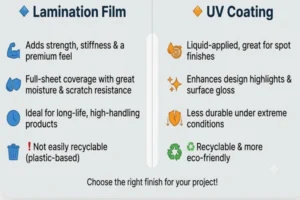
Go with lamination if you need serious protection against moisture, tearing, or rough handling – it’s essentially a thin plastic film that makes the box nearly indestructible.
Go with UV coating if visual impact and speed matter more. It gives you that glossy, high-definition “wet look” and tends to be more cost-effective for bigger production runs too.
Using It Like Someone Who Actually Knows What They’re Doing
Don’t just slap a finish on and hope for the best – plan around it a bit.
Always test on real material. Request an actual physical sample on the cardstock you’re using. Feel it, fold it, check it under different lighting. Never approve 5,000 units based purely on a screen mockup.
Use it to highlight, not to cover everything. Spot UV should guide the eye toward what matters. Let a matte background do most of the visual work, and let the glossy UV make the logo the actual focal point.
Think about the long game. Packaging’s the last thing a customer sees before actually experiencing the product itself. If that final handoff feels like luxury, they’re a lot more likely to come back and buy again.
Packaging’s really the bridge between the work you’ve put in and the person receiving it. Whether that means a high-gloss UV finish or something more understated and natural, the choice should feel intentional either way. The wrapping should match whatever’s actually inside it.