You know that little rush you get when a package shows up looking genuinely good — before you’ve even opened it? That’s not luck. Somebody at that company sat down and decided the box itself was worth the effort, not just the thing inside it.
So what actually makes a box “branded,” and why is every business now, from a one-person Etsy shop to a massive retailer, suddenly obsessing over this? Let’s break it down properly.
Okay, But What Is a Branded Box, Really?
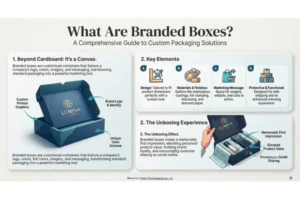
Simple version: it’s a box that carries your identity on it somewhere. Your logo, your colors, maybe a tagline, sometimes a pattern nobody else uses. But the point was never decoration for its own sake. It’s recognition. If your box landed on a stranger’s doorstep across the street, they should be able to tell whose it is without reading a single word on it.
That’s basically the whole game. A plain brown box does one thing — it holds a product. A branded one does that same job, and also quietly tells a story, earns a bit of trust, and, when it’s done right, makes whoever’s opening it feel like they got something worth the money.
Isn’t a Box Just… a Box Though?
Fair question. I used to think that too. Except it isn’t, not really, not anymore. People form an opinion about your brand within seconds of a delivery arriving — often before they’ve even cut the tape. That first physical moment carries more weight than most businesses realize.
Here’s the actual case for bothering with this stuff.
It’s Basically Free Marketing
Every time your box gets carried into someone’s building, or left in a hallway, or shows up in an unboxing video, your brand reaches people who never even searched for you. Half the reason unboxing videos are a thing at all is that packaging stopped being an afterthought and became part of the actual product.
It Builds Trust Before the Sale Is Fully Done
Someone who’s a bit unsure — did I just order from somewhere sketchy? — relaxes the second a clean, well-put-together box shows up. Sloppy packaging plants doubt. A good box removes it almost instantly.
It Protects Your Prices, Oddly Enough
People pay more for things that feel considered. The same candle in a generic box versus a nicely branded one doesn’t get valued the same way in someone’s head, even though the wax inside is identical.
It Even Cuts Down Returns
Sounds strange, but a product that arrives looking cared for gets sent back less over small issues. Presentation shapes how people judge quality, and that judgment shapes what they do next.
Not All Branded Boxes Look the Same
And they shouldn’t. What works depends entirely on what you’re shipping and who’s on the other end opening it.
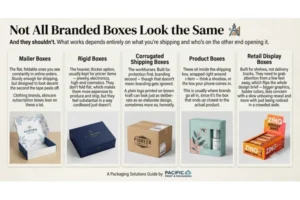
Mailer Boxes
The flat, foldable ones you see constantly in online orders. Sturdy enough for shipping, but designed to look decent the second the tape peels off. Clothing brands, skincare lines, subscription boxes lean on these a lot.
Rigid Boxes
The heavier, thicker option, usually kept for pricier items — jewelry, electronics, high-end cosmetics. They don’t fold flat, which makes them more expensive to produce and ship, but they feel substantial in a way cardboard just doesn’t.
Corrugated Shipping Boxes
The workhorses. Built for protection first, branding second — though that doesn’t mean branding gets ignored. A plain logo printed on brown kraft can look just as deliberate as an elaborate design, sometimes more so, honestly.
Product Boxes
These sit inside the shipping box, wrapped right around the item — think a shoebox, or the box your phone comes in. This is usually where brands go all in, since it’s the box that ends up closest to the actual product.
Retail Display Boxes
Built for shelves, not delivery trucks. They need to grab attention from a few feet away, which flips the whole design brief — bigger graphics, bolder colors, less concern with a slow unboxing reveal and more with just being noticed in a crowded aisle.
What Goes Into Actually Designing One
A lot of businesses think branding a box just means slapping a logo on whatever’s cheapest. It’s more involved than that, or at least it should be.
Material Choice
Says something before a single color even gets printed. Kraft paper feels raw, a bit eco-minded. Bright white feels clean and modern. Rigid board feels expensive, full stop.
Print Method
Changes everything about how it lands. Full-color digital printing gives flexibility and punchy graphics. Embossing and debossing add texture without any ink at all. Foil stamping adds shine that photographs really well for social media. None of these is “the best” one — it depends entirely on what your brand is trying to say.
Structure and Opening Mechanism
Isn’t just about keeping the product safe. How a box opens — flip-top, slide-out drawer, magnetic flap — genuinely changes how the reveal feels. A box that opens with a bit of ceremony hits differently than one that just… opens.
Consistency Across Sizes
Trips people up constantly. If you ship five different product sizes, all five boxes need to feel like they came from the same place. Plenty of smaller brands nail one box design and then wing the rest, and it shows.
A Couple of Practical Things Before You Order 10,000 of These
Test a Sample First
Not just to see how it looks on a desk, but how it survives an actual shipping journey. A gorgeous box that shows up dented isn’t gorgeous anymore.
Run the Numbers on Cost
Custom branded boxes, rigid ones especially, run more per unit than generic packaging. Worth doing the math on whether the bump in perceived value and the drop in returns actually covers that extra cost — for most brands selling above a certain price point, it usually does.
Don’t Bury the Practical Stuff
Ingredients, size, weight, usage instructions — all of that still needs to be easy to find, no matter how nice the design is. A beautiful box that hides basic information just annoys the person holding it.
So, Bottom Line
Branded boxes were never really about the box itself. They’re about that split second right before someone experiences your product for the first time — that’s the actual moment you’re designing for. Get that moment right, and the box stops being packaging. It becomes part of what people remember about buying from you at all.