
A supplier once told me something that stuck with me — “everyone wants their box to look expensive, but nobody wants to pay to store an expensive-looking box.” That’s basically the whole reason foldable rigid boxes exist.
If you’ve been shopping around for packaging and keep seeing this term pop up, you’re probably wondering how it’s different from a normal rigid box. Fair question. A lot of people, even some folks running their own online stores, use the two terms interchangeably. They’re not the same thing, and the difference actually matters for your bottom line.
So What Is a Foldable Rigid Box, Really
Picture a regular rigid box — the kind phone cases or fancy candles come in. Solid, doesn’t bend, feels expensive in your hand. Now imagine that same box, except it comes flat, and you fold it into shape yourself in about ten seconds. That’s it. That’s the whole idea.
Normal rigid boxes ship pre-built. Once they’re made, they’re made — you can’t flatten them, so a truck full of rigid boxes is mostly a truck full of empty space. Foldable rigid boxes get around that. The board is scored at exact points so it folds along a hinge, then locks into its full shape when you need it.
The Build
Most of these use dense paperboard, somewhere around 1.5mm to 3mm thick, wrapped in whatever decorative paper or finish the brand wants. There’s a hinge running down one side, usually the long edge, and the lid and base lock together — sometimes with magnets, sometimes just a tight friction fit. No tape, no glue, no extra tools.
Why So Many Brands Are Switching Over
I’ll be honest, when these first started showing up a few years back, I figured it was just another packaging trend that’d fade out. It hasn’t. Here’s why.
Space Is Money
Warehousing pre-assembled rigid boxes is genuinely expensive. They’re bulky, they eat shelf space, and shipping a container of empty boxes to your warehouse is basically paying to move air around. Flat-packed foldable boxes take up a fraction of that space until someone actually needs to use one.
They Don’t Feel Cheap
This is the part people underestimate. Customers notice the difference between a flimsy folding carton and something with actual heft to it. Foldable rigid boxes keep that solid, premium feel — the kind of thing beauty brands and jewelry brands live for — but without dragging along the storage problems that regular rigid boxes bring.
Nobody Needs Training To Assemble Them
Since the fold points are built right into the board, your warehouse team doesn’t need any special skill to set one up. Fold, lock, done. When you’re packing a couple hundred orders a day, that speed adds up fast.
A Bit Easier on the Environment Too
Fewer trucks are needed to move the same number of boxes when they’re flat instead of pre-built, so the shipping footprint drops. Plenty of brands also point to this when they talk about sustainability, since the material itself is still recyclable and there’s no plastic involved.
Where You’ll Actually See These Boxes Used
They’re not everywhere, but a handful of industries have basically adopted them as the default.
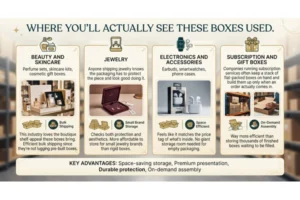
Beauty and Skincare
Perfume sets, skincare kits, cosmetic gift boxes — this industry loves the boutique shelf-appeal these boxes bring, and it works well with bulk shipping since they’re not lugging around pre-built boxes.
Jewelry
Anyone shipping jewelry knows the packaging has to protect the piece and look good doing it. Foldable rigid boxes check both boxes, and they’re a lot more affordable to store than you’d think for a small jewelry brand.
Electronics and Accessories
Earbuds, smartwatches, phone cases — a lot of tech accessory brands go this route because the box feels like it matches the price tag of what’s inside, without needing a giant storage room for empty packaging.
Subscription and Gift Boxes
Companies running subscription services often keep a stack of flat-packed boxes on hand and build them up only when an order actually comes in. Way more efficient than storing thousands of finished boxes waiting to be filled.
Foldable Rigid Boxes vs the Regular Kind
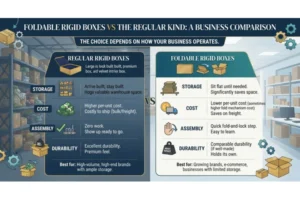
Worth laying this out plainly since the choice really depends on how your business operates.
Storage is the biggest gap. Regular rigid boxes arrive built, and they stay built, hogging warehouse space the whole time. Foldable ones sit flat until they’re needed.
Cost is a mixed bag. You’ll usually save on freight because flat boxes take up less room in a shipment, but the fold mechanism itself can bump up the price per unit a little.
Assembly is basically zero work with regular rigid boxes since they show up ready to go. Foldable versions need that quick fold-and-lock step — not a big deal once your team’s done it a few times, but it’s not nothing either.
Durability-wise, they’re pretty close. A well-made foldable rigid box with decent board thickness and a solid lock can hold its own against a traditional rigid box.
What To Think About Before You Commit
Not every brand needs to make the switch, so a few things worth chewing on first.
How Much You’re Actually Shipping
If you’re moving a lot of product regularly, the space savings really do add up on your shipping bill. If you’re a smaller shop doing maybe a few dozen orders a week, the savings won’t be as dramatic — though the premium look might still be worth it for you.
What’s Going Inside
Fragile stuff like glass, ceramics, or delicate jewelry needs the right board thickness and probably some kind of insert. Not all foldable rigid boxes are built the same, so it’s worth having an actual conversation with your supplier about what your product needs rather than just picking whatever’s cheapest.
How Much Branding You Want on the Box
These take foil stamping, embossing, and custom print finishes really well. If packaging is a big part of how your brand shows up, this is one of the places where that investment pays off.
Wrapping Up
Foldable rigid boxes land in a spot a lot of growing brands are chasing — premium feel, without the warehouse nightmare that usually comes with rigid packaging. Whether you’re in beauty, jewelry, electronics, or gifting, it’s genuinely worth a look if you care about the unboxing moment but don’t want your storage costs spiraling.
At the end of the day, it usually comes down to three things: how much you’re shipping, what you’re shipping, and how much of your brand’s story you want the box itself to tell.