
Cardstock shows up everywhere — business cards, product boxes, greeting cards, hang tags, and folding cartons. But most people ordering custom packaging have no idea what thickness to ask for, or why it matters.
This guide covers what card stock actually is, how weight and GSM work, which types exist, and — most importantly — how to pick the right one for your specific packaging project.
What Is Card Stock?
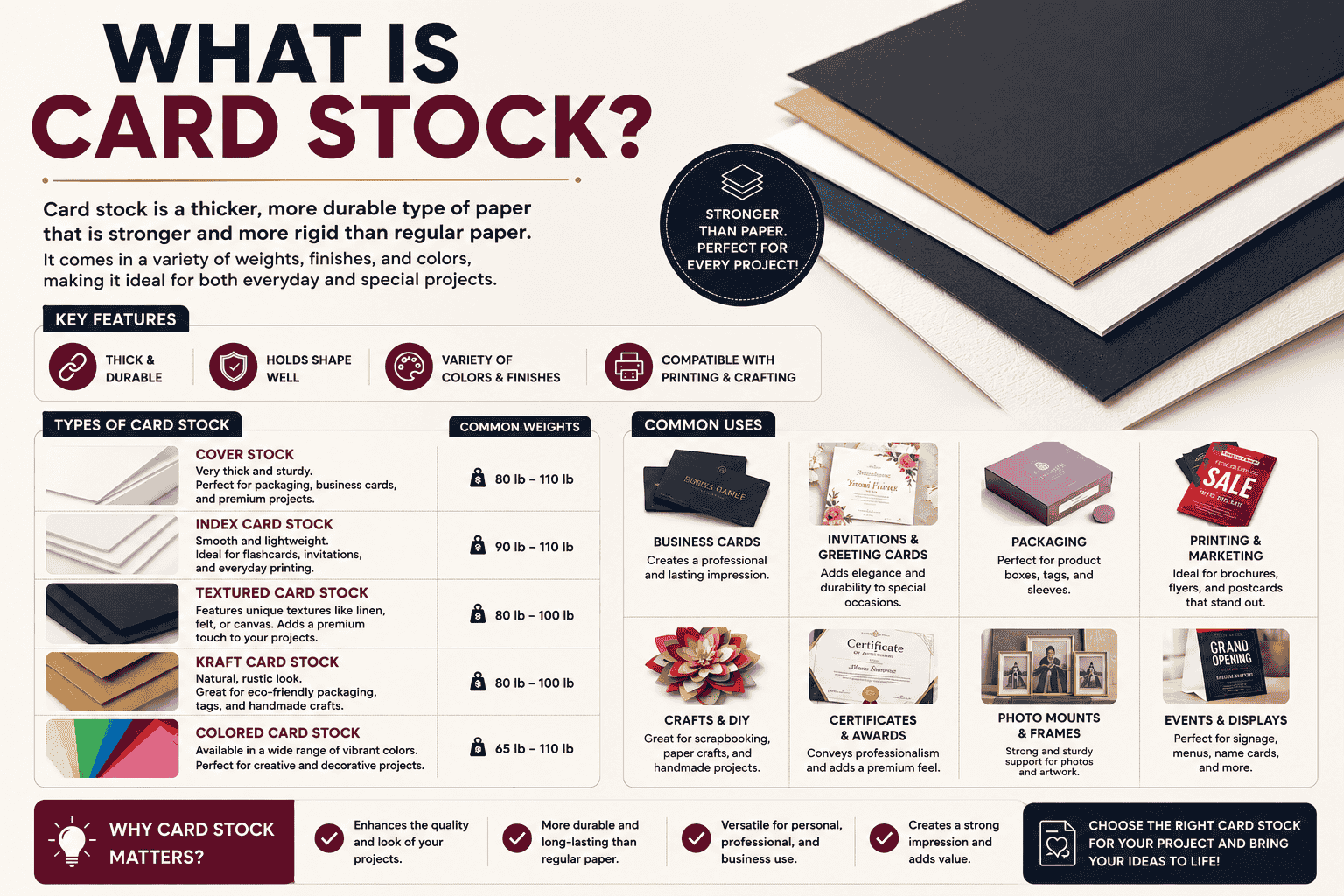
Cardstock is a type of paper in between regular printer paper and cardboard. It is thicker and harder than copy paper but thin enough to be cut, folded (with scoring), and printed on using normal commercial cutting, scoring, and printing equipment.
The main difference between cardstock and normal paper is its density. The normal weight of printer paper is around 75-90 GSM. The thickness of cardstock usually ranges from 200 GSM up to 500 GSM or more. The additional density is the source of the toughness, print retention, and firmness of cardstock.
It’s also unlike cardboard or corrugated material. Cardboard is a stronger structural material – that’s what shipping boxes are made of. Cardstock is lighter, better printable, which makes it a good material for business cards, packaging sleeves, hang tags, folding carton boxes, etc.
How Card Stock Weight Works (GSM vs. LBS)
Cardstock is available in two different weights, GSM (grams per square meter) and LBS (pounds). They are both weight-measuring tools, and they’re not the same unless they’re in context.
The cleaner system is GSM. It is a measure of the weight of one square meter of that paper in grams. The higher the GSM the heavier and thicker the paper will be. Used all over the world, it makes comparisons easy.
The reason that LBS is confusing is that an “80 lb cover” and “80 lb text” paper are of vastly different thickness. The pound measurement is the weight of 500 sheets to the base size which differs by paper category. That is why an 80 lb cover stock (216 GSM) is entirely different than an 80 lb text stock (118 GSM).
Card Stock Weight Chart
| GSM Range | Common LBS Equivalent | Best Used For |
| 120–170 GSM | ~65–90 lb text | Flyers, brochures, posters |
| 200–250 GSM | ~80–90 lb cover | Greeting cards, menus, book covers |
| 300–350 GSM | ~100–110 lb cover | Business cards, invitations, hang tags |
| 350–450 GSM | ~130+ lb cover | Premium business cards, thick packaging |
| 500 GSM+ | Double-thick / specialty | Luxury packaging, rigid-feel boxes |
Types of Card Stock
1. Coated Card Stock (Gloss or Matte)
Coated stock has a surface treatment applied after manufacturing. Gloss coating reflects light and makes colors pop — great for product packaging where visual impact matters. Matte coating absorbs light, giving a flat, upscale look that works well for luxury brands and minimalist packaging designs.
2. Uncoated Card Stock
No surface treatment. This stock has a natural, slightly textured feel and absorbs ink differently than coated paper. It’s commonly used for kraft-style packaging, natural product lines, and anything where a raw or handcrafted aesthetic is part of the brand.
3. Kraft Card Stock
Made from wood pulp processed without bleaching. The result is that familiar brown color and textured surface. Sustainable brands favor it because it’s recyclable, biodegradable, and signals eco-friendliness. Kraft card stock is widely used for soap boxes, food packaging, and retail product sleeves.
4. Textured Card Stock
Has an embossed or patterned surface — linen, laid, felt, hammered. The texture adds a tactile dimension that affects how packaging feels in a customer’s hands, which directly influences perceived value. Premium cosmetic and candle brands often use textured card stock for this reason.
5. Metallic or Foil Card Stock
Has a metallic sheen either built into the base material or applied through a foil process. Used for premium packaging, gift boxes, and special edition products where the goal is to communicate luxury before the customer even opens the box.
Card Stock vs. Cardboard vs. Paperboard: What’s the Difference?
These terms get used interchangeably but they’re not the same material.
Card stock — 200 to 500 GSM. Printable, foldable (with scoring), used for business cards, folding cartons, hang tags, packaging sleeves.
Paperboard — 300 to 600 GSM. Thicker than card stock, used for cereal boxes, cosmetic boxes, and other retail packaging. Sometimes called chipboard or boxboard.
Cardboard — Generally refers to corrugated material with a fluted middle layer. Used for shipping boxes and structural protection, not primarily for print presentation.
Rigid stock — A laminated combination of card stock and paper stock. More expensive, but the go-to for high-end product boxes in jewelry, electronics, and luxury goods because it doesn’t bend or collapse.
For most custom packaging — product boxes, folding cartons, hang tags, gift packaging — card stock and paperboard are the main materials in play.
What Card Stock Weight Should You Use for Packaging?
This is the question that actually matters when you’re ordering custom boxes or printed packaging materials.
Folding carton boxes (retail packaging): 300–400 GSM. Heavy enough to hold product weight and keep its shape on shelves, thin enough to fold cleanly with proper scoring.
Business cards: 350–450 GSM. The industry standard for a card that feels substantial when someone picks it up. Anything lighter feels cheap, regardless of how good the printing is.
Hang tags: 300–350 GSM. Needs to be stiff enough not to flop or tear at the hole punch, but not so thick it looks blocky.
Packaging sleeves and wraps: 250–350 GSM. Depends on how much the sleeve needs to hold on its own vs. support from a box underneath.
Greeting cards and invitation cards: 300–400 GSM. Thick enough to feel premium, especially when paired with a matte or gloss finish.
Luxury gift boxes: 500 GSM or rigid stock construction. When the box itself is part of the product experience — think high-end skincare, jewelry, electronics — you want material that feels solid and substantial.
Does Card Stock GSM Affect Print Quality?
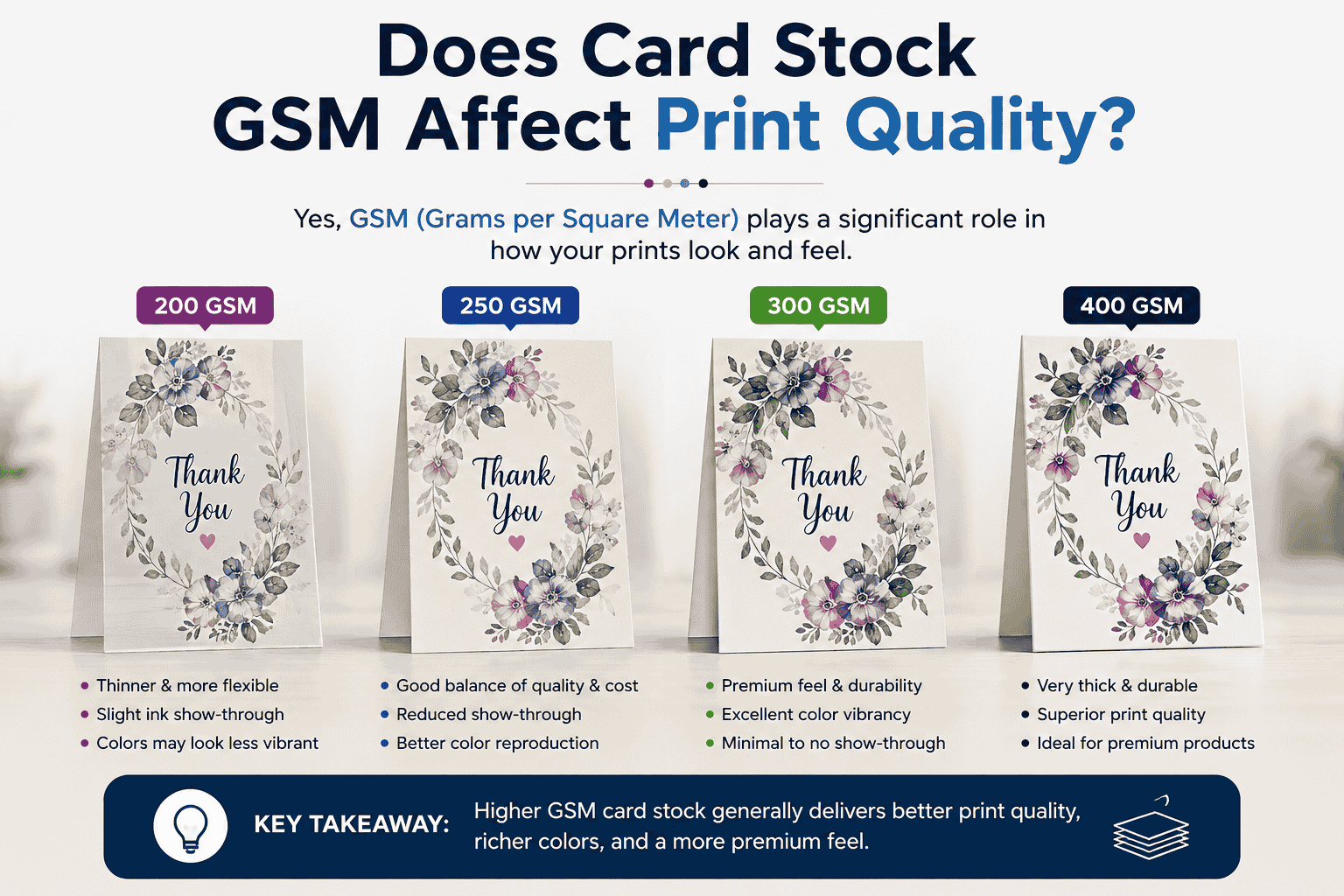
Yes. Higher GSM card stock holds printing ink better, particularly for dark colors, fine details, and photographic images. Ink bleeds more on lighter stock because the paper absorbs moisture from the ink and the fibers spread.
For packaging where color accuracy matters — cosmetics, food products, premium goods — printing on 300 GSM+ coated stock will give you sharper results than printing the same design on 200 GSM uncoated stock.
The coating type also plays a role. Coated stock (gloss or matte) has a surface treatment that seals the fibers, so ink sits on top rather than soaking in. That’s why printed colors on coated stock tend to look more vibrant than on uncoated stock.
Environmental Considerations
Card stock is generally more recyclable than mixed-material packaging, but the specific finish matters. Pure card stock — unlaminated, no foil — is fully recyclable through standard paper recycling. Laminated card stock (gloss, matte, soft touch) typically can’t go into standard paper recycling because the plastic film is bonded to the paper.
Options for brands with sustainability requirements:
- Uncoated or aqueous-coated card stock instead of plastic lamination
- FSC-certified card stock sourced from responsibly managed forests
- Recycled card stock (post-consumer content available in various weights)
- Kraft card stock, which is naturally unbleached and recyclable
Quick Reference: Card Stock for Common Packaging Products
| Product | Recommended GSM | Recommended Finish |
| Business cards | 350–450 GSM | Matte, Gloss, or Soft Touch |
| Product hang tags | 300–350 GSM | Matte or Spot UV |
| Folding carton boxes | 300–400 GSM | Gloss or Matte Lamination |
| Gift box sleeves | 300–350 GSM | Soft Touch or Foil Stamping |
| Greeting cards | 300–400 GSM | Matte or Gloss |
| Luxury packaging | 500 GSM+ / Rigid | Soft Touch + Foil Stamping |
| Kraft product boxes | 300–400 GSM | Uncoated / Natural |
| Retail food packaging | 300–350 GSM | Gloss Lamination |
Final Word
Card stock is one of those materials most people don’t think much about until they’re holding a business card that feels flimsy, or unboxing a product that comes in a box that doesn’t hold its shape. At that point, the GSM choice becomes obvious.
For packaging specifically, getting the weight and finish right is a branding decision as much as a material one. The right card stock makes packaging feel like it belongs with the product inside. The wrong choice undermines everything else — the print, the design, the product itself.
If you’re building custom packaging for your brand and want guidance on which card stock makes sense for your specific products,