
Introduction
Cardboard is one of the most widely used packaging materials in the world. From shipping boxes and retail packaging to food containers and storage boxes, it plays an essential role in protecting products during transportation and storage. Businesses choose cardboard because it is lightweight, strong, affordable, and environmentally friendly. As sustainability becomes more important, cardboard has become the preferred packaging material for brands looking to reduce their environmental impact. In this guide, we’ll explain what cardboard is, how it’s made, its different types, common uses, benefits, and how to recycle it properly.
What Is Cardboard?
Cardboard is a paper-based material designed to provide strength and durability while remaining lightweight. Although many people use the term “cardboard” for all paper packaging, it generally refers to thick paperboard and corrugated fiberboard used to manufacture boxes, cartons, displays, and protective packaging. Its layered construction helps absorb impacts, making it an ideal material for protecting products during shipping and handling.
How Is Cardboard Made?
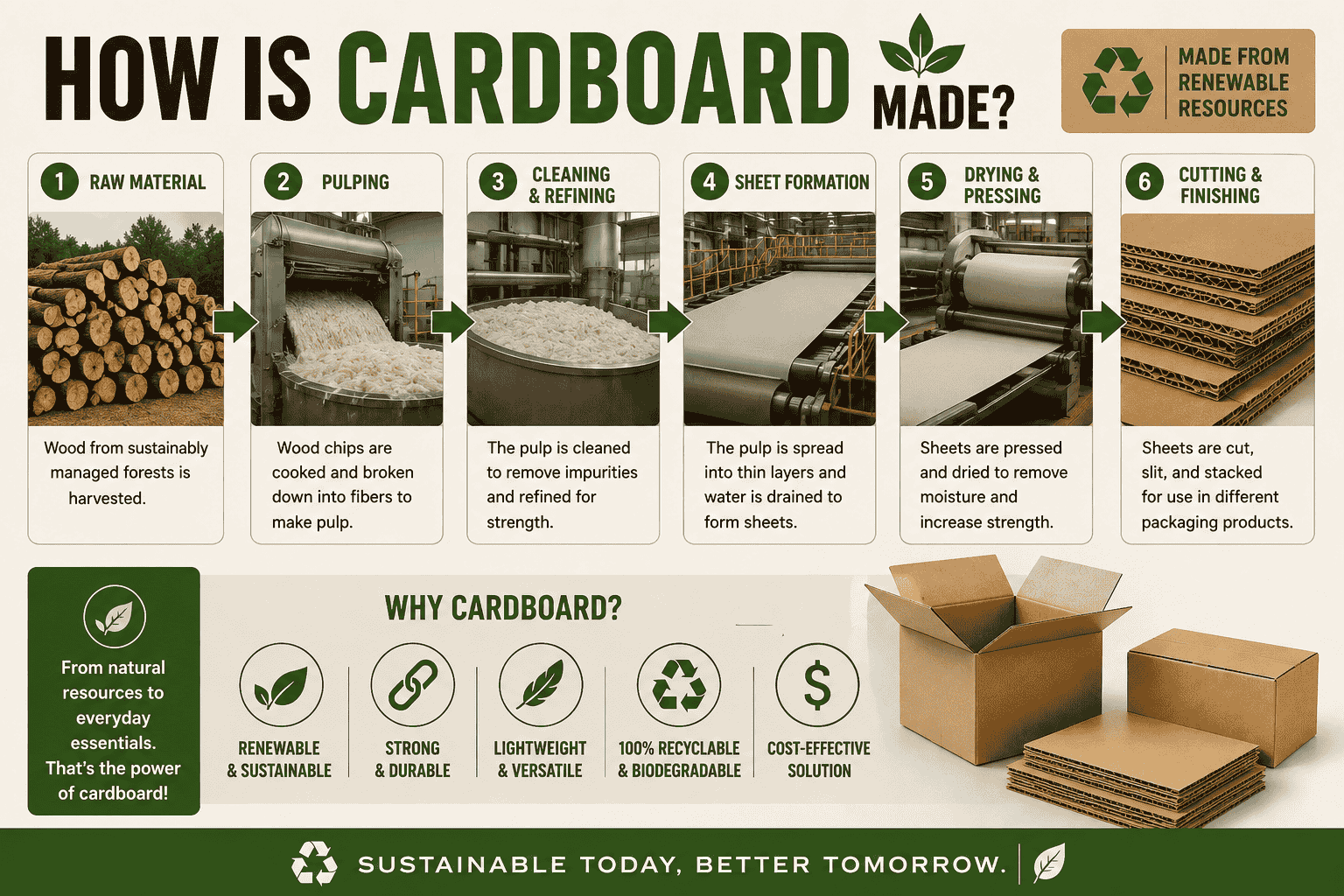
Cardboard begins as wood pulp obtained from sustainably managed forests or recycled paper. The pulp is cleaned, mixed with water, and pressed into large sheets before being dried under high heat. Depending on the product, manufacturers may create a single-layer paperboard or combine multiple layers to produce corrugated cardboard with a fluted middle layer. This manufacturing process creates packaging that is both lightweight and strong enough for a wide range of industries.
Types of Cardboard
Not all cardboard is the same. Different products require different levels of strength and protection.
Corrugated Cardboard
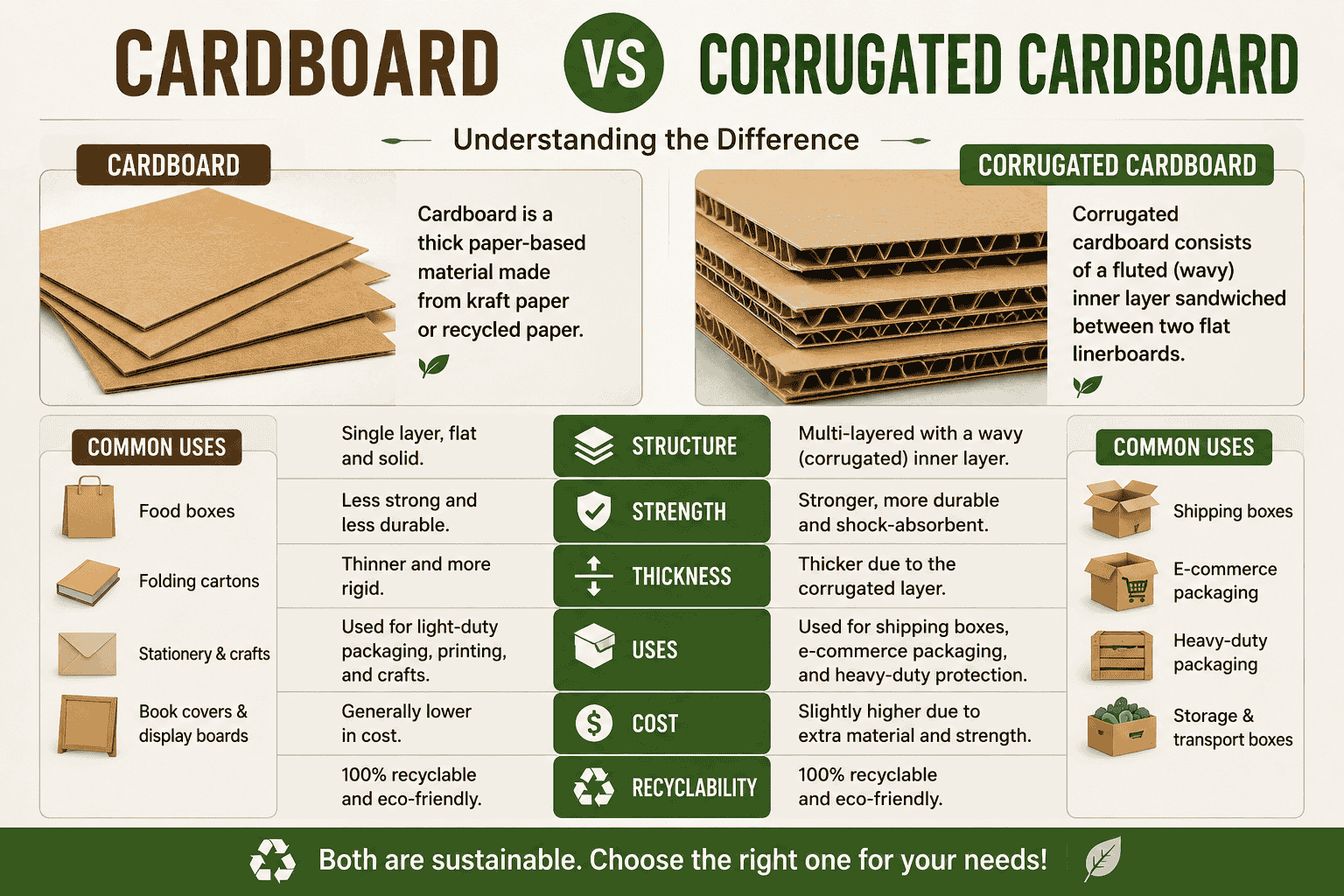
Corrugated cardboard consists of two flat linerboards with a fluted layer between them. This design provides excellent cushioning and compression strength, making it the most common material for shipping boxes and e-commerce packaging.
Paperboard
Paperboard is a single-layer material that is thinner and smoother than corrugated cardboard. It is commonly used for cereal boxes, cosmetic packaging, pharmaceutical cartons, and retail product packaging where heavy protection is not required.
Chipboard
Chipboard is manufactured from recycled paper fibers and is commonly used for rigid boxes, notebook covers, gift boxes, and product backing boards. It offers a cost-effective solution for lightweight packaging applications.
Common Uses of Cardboard
Cardboard is used across almost every industry because of its versatility. It protects products during shipping, improves product presentation on retail shelves, and supports sustainable packaging goals. Common applications include shipping boxes, custom product packaging, food packaging, e-commerce mailers, moving boxes, point-of-sale displays, gift packaging, electronics packaging, and industrial storage solutions.
Benefits of Cardboard Packaging
Cardboard offers several advantages that make it one of the most popular packaging materials. It is lightweight, reducing shipping costs while still providing excellent product protection. It is easy to customize with printing, coatings, and finishes that strengthen brand identity. Cardboard is also recyclable, biodegradable, and often manufactured using recycled materials, making it an environmentally responsible packaging choice. Additionally, it is available in various thicknesses and styles to meet different packaging requirements.
Is Cardboard Eco-Friendly?
Yes. Cardboard is considered one of the most sustainable packaging materials available. Most cardboard products contain recycled fibers and can be recycled multiple times before the fibers become too short for reuse. Unlike many plastic packaging materials, cardboard naturally decomposes under the right conditions and supports a circular economy by reducing landfill waste.
Can Cardboard Be Recycled?
Most cardboard products can be recycled through standard recycling programs. Before recycling, remove plastic tape, foam inserts, food residue, and other non-paper materials whenever possible. Flatten large boxes to save space during transportation and collection. Keeping cardboard clean and dry improves recycling efficiency and helps produce high-quality recycled paper products.
Cardboard vs Corrugated Cardboard
Although people often use these terms interchangeably, they are not identical. Paperboard is thinner and better suited for lightweight retail packaging, while corrugated cardboard includes a fluted inner layer that provides additional strength for shipping and heavy-duty applications. Understanding this difference helps businesses choose the most suitable packaging material for their products.
Industries That Use Cardboard
Cardboard packaging is widely used in e-commerce, food and beverage, cosmetics, pharmaceuticals, electronics, fashion, automotive parts, furniture, healthcare, and consumer goods. Its affordability, protective qualities, and sustainability make it suitable for businesses of all sizes.
Tips for Choosing the Right Cardboard
Selecting the right cardboard depends on product weight, shipping distance, storage conditions, branding requirements, and environmental goals. Lightweight products may only require paperboard cartons, while fragile or heavy products benefit from corrugated cardboard with higher strength grades. Businesses should also consider custom printing, moisture resistance, and recyclable materials when choosing packaging.
Conclusion
Cardboard remains one of the most reliable and sustainable packaging materials available today. Its strength, affordability, recyclability, and versatility make it an ideal solution for businesses across many industries. Whether you’re shipping products, creating retail packaging, or looking for eco-friendly alternatives to plastic, cardboard offers practical benefits while supporting sustainable packaging practices. By understanding the different types of cardboard and choosing the right option for your products, you can improve product protection, reduce environmental impact, and strengthen your brand image.