
Every product you buy arrives wrapped in something. A box, a bag, a shrink-wrapped tray. For most of the last century, nobody gave it much thought. That packaging went straight in the bin and from there, mostly into landfill or the ocean.
That’s changing fast.
Businesses and consumers alike are waking up to the true cost of throwaway packaging. And with regulations tightening across Europe, the US, and beyond, sustainable packaging has moved from a marketing talking point to a genuine business priority.
But what does “sustainable packaging” actually mean? And how do you know if a material is truly eco-friendly — or just greenwashed?
What Is Sustainable Packaging?
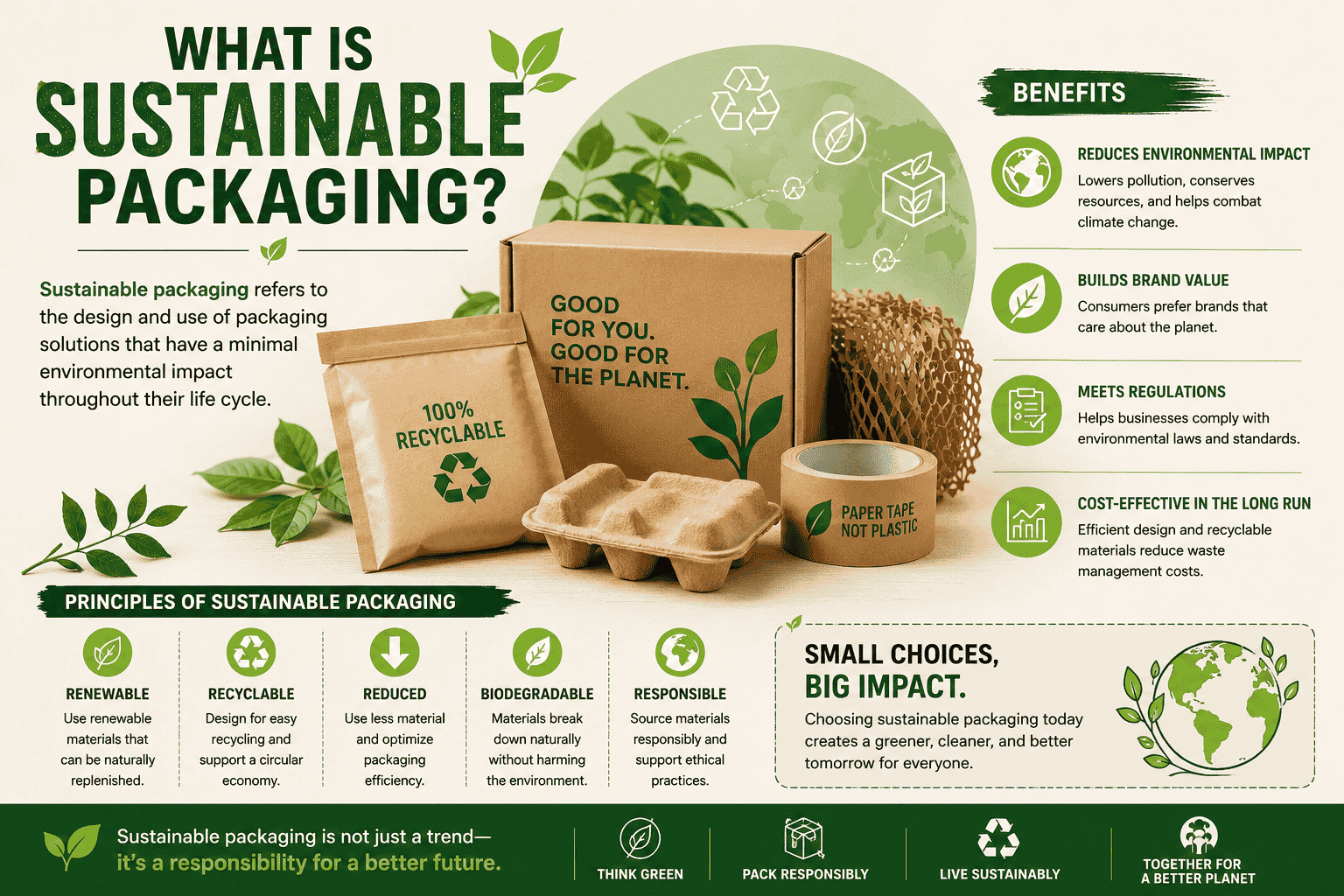
Sustainable packaging is packaging that is designed, produced, and disposed of in a way that reduces its impact on the environment. That means looking at the full picture — where the materials come from, how much energy goes into making them, how the packaging performs in use, and what happens to it after the product is gone.
It’s not one single material or solution. Sustainable packaging might be a cardboard box made from recycled fibre, a refillable glass jar, a compostable mailer, or even a packaging design that uses 30% less material than the previous version.
The Sustainable Packaging Coalition — one of the leading industry bodies on this topic — defines sustainable packaging across several criteria: it should be safe for people and communities throughout its lifecycle, made using clean production technologies, constructed from materials that are healthy in all likely end-of-life scenarios, designed to optimise materials and energy, and effectively recovered and utilised in biological or industrial closed-loop cycles.
Types of Sustainable Packaging
There is no one-size-fits-all answer. The right sustainable packaging depends on the product, the supply chain, the customer, and the end-of-life infrastructure available. Here are the main categories:
1. Recyclable Packaging
This is packaging made from materials that can be collected, processed, and turned into new products. Common recyclable packaging materials include cardboard, paper, glass, aluminium, and certain plastics (particularly PET and HDPE).
Recyclability sounds simple, but it depends on more than the material itself. Something labelled “recyclable” is only truly recyclable if the local collection and processing infrastructure exists to handle it. This is why labels like How2Recycle in the US are important — they tell consumers exactly what they can do with the packaging where they live.
2. Compostable Packaging
Compostable packaging breaks down into organic matter under the right conditions. Industrial compostable packaging needs to go into a commercial composting facility, where it degrades fully within a set timeframe. Home compostable packaging is designed to break down in a standard backyard compost heap.
Common materials include PLA (polylactic acid, made from plant starch), cellulose, and certain paper-based laminates. Compostable packaging is particularly popular in food service and for food-contact applications.
3. Recycled Content Packaging
This is packaging made using post-consumer recycled (PCR) materials — fibres or plastics that have already been used by a consumer and recovered from the waste stream. Using recycled content reduces the demand for virgin raw materials and diverts waste from landfill.
Recycled paper, cardboard, and rPET (recycled polyethylene terephthalate) are common examples. Many major brands now commit to minimum percentages of recycled content in their packaging — Nestlé, for instance, reduced its use of virgin plastic packaging by over 21% as of 2024.
4. Reusable and Refillable Packaging
Rather than disposing of packaging after one use, reusable packaging is designed to be returned, refilled, and used again — multiple times. Examples include glass milk bottles, refillable cleaning product containers, and returnable transit packaging.
Reusable packaging has a higher upfront environmental cost (thicker materials, heavier construction) but that cost is amortised over many uses. When systems are designed well and return rates are high, reusable packaging can significantly outperform single-use alternatives over its lifetime.
5. Reduced and Minimalist Packaging
Sometimes the most sustainable option is simply less packaging. This means right-sizing boxes so they fit the product properly, eliminating unnecessary layers, removing excess void fill, or switching from heavy plastic to lightweight paper.
Reducing overall packaging weight and material use cuts emissions across the supply chain — from raw material production through transport to end of life.
Benefits of Sustainable Packaging for Businesses
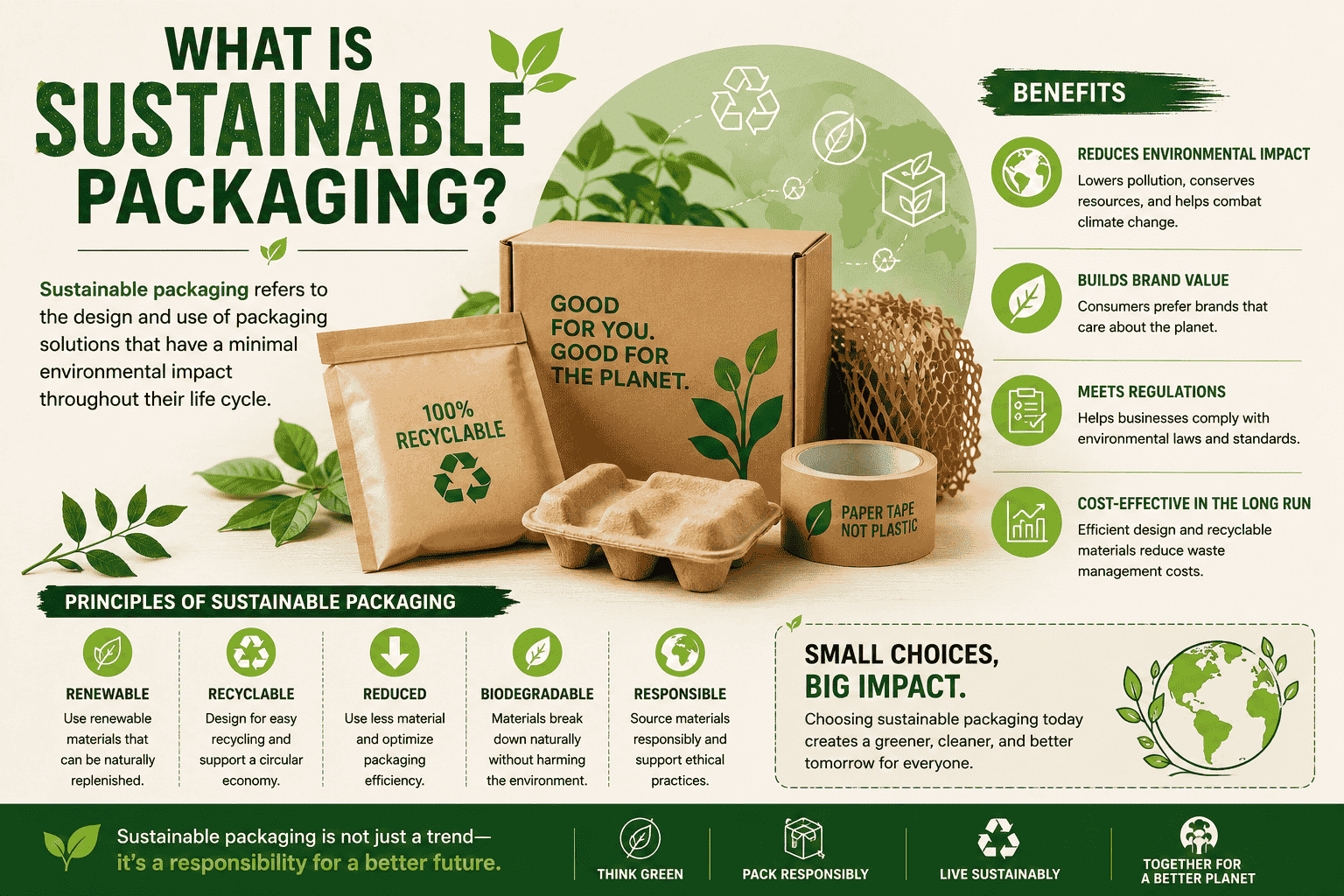
Making the switch to more sustainable packaging isn’t purely altruistic. There are solid commercial reasons to do it.
Consumer demand. Shoppers, particularly Millennials and Gen Z, actively prefer brands that take sustainability seriously. Research consistently shows that sustainable packaging influences purchase decisions and drives repeat purchase loyalty — one dataset suggests repeat purchases can be up to 33% higher for certified sustainable packaging.
Cost reduction. Using less material, reducing packaging weight, and designing for efficiency can cut both material costs and shipping costs at scale.
Regulatory compliance. EPR laws, plastic taxes, and recyclability mandates are expanding. Businesses that adapt early avoid compliance costs and potential penalties.
Brand equity. Packaging is often the first physical touchpoint a customer has with a brand. Packaging that communicates genuine care for the environment builds trust — and that trust is increasingly hard to earn and easy to lose.
Supply chain resilience. Dependence on virgin fossil-fuel-derived materials is a supply chain risk. Diversifying into recycled and bio-based alternatives reduces that exposure.
Final Thoughts
Sustainable packaging is not a single product, material, or certification. It is a way of thinking about packaging — one that takes seriously the full impact of a material from the moment it’s sourced to the moment it’s disposed of.
For businesses, getting packaging right has never been more important or more rewarding. The brands that lead here — that make genuine, verifiable improvements and communicate them honestly — will be better placed to meet regulation, meet consumer expectations, and build lasting trust.