Introduction
Every year, over 300 million tons of plastic waste ends up in landfills, oceans, and communities around the world. A large portion of that waste comes from product packaging.
If your brand is still using conventional plastic packaging, you are not only contributing to this problem — you are also losing customers. Studies show that 73% of global consumers say they would definitely or probably change their buying habits to reduce environmental impact.
Zero waste packaging is no longer a niche trend. It is a business strategy.
In this guide, we cover 15 proven zero waste packaging ideas that brands of all sizes are using right now to cut waste, reduce costs, and build stronger customer loyalty. Whether you sell cosmetics, food, clothing, or tech accessories, there is something here for you.
What Is Zero Waste Packaging?
Zero waste packaging is a system where every element of your product’s packaging can be reused, recycled, composted, or returned — leaving nothing behind in a landfill or incinerator.
It is different from simply using “eco-friendly” materials. True zero waste packaging thinks about the entire lifecycle of the packaging: how it is made, how it is used, and what happens to it after the product is gone.
The goal is a circular system — materials go back into the earth or back into production, not into the trash.
Why Your Brand Should Switch Now
Before we get into the ideas, here is why this matters for your bottom line:
- 47% of consumers are willing to pay more for sustainable packaging (CGS Survey)
- Brands with sustainable packaging see up to 20% higher repeat purchase rates
- New regulations like the EU’s Packaging and Packaging Waste Regulation (PPWR) and California’s SB 54 are pushing businesses to comply — proactive brands avoid heavy fines
- Sustainable packaging can actually reduce material costs when done right through minimalism and waste reduction
Now let’s get into the ideas.
15 Zero Waste Packaging Ideas for Your Brand
1. Compostable Mailer Bags
Compostable mailer bags are made from plant-based materials like cornstarch, sugarcane, or cassava. They decompose completely in home or industrial composting conditions — no microplastics, no toxic residue.
2. Recycled Cardboard Boxes
Recycled corrugated cardboard is one of the most accessible and affordable zero waste packaging options available. Cardboard is widely recyclable, lightweight, and strong enough for most product categories.
3. Mushroom (Mycelium) Packaging
Mycelium packaging is grown from mushroom root structures around a mold made from agricultural waste like corn husks. The result is a biodegradable, compostable material that is durable enough to replace styrofoam.
Companies like Ecovative have already made this commercially available at scale.
Best for: Fragile products that need cushioning — electronics, glassware, cosmetics
4. Seed Paper Packaging
Seed paper is made from recycled paper embedded with wildflower or herb seeds. After opening the product, customers can plant the packaging directly in soil. Within weeks, it grows into flowers or herbs.
Best for: Cosmetics, greeting cards, small retail products, gift boxes
5. Reusable Glass or Tin Containers
Designing your packaging to be reusable is the highest level of zero waste thinking. Glass jars and tin containers have a second life as storage containers, vases, or kitchen organizers.
Brands like Bee Bright design honey jars from 100% beeswax that transform into candles once the honey is finished — zero packaging waste at all.
Best for: Food brands, candles, cosmetics, supplements
6. Kraft Paper Wrapping
Plain kraft paper is one of the simplest switches a brand can make. It is recyclable, biodegradable, widely available, and looks premium when styled well.
Kraft paper can replace bubble wrap, plastic bags, tissue paper, and even boxes for some products.
Best for: Clothing brands, artisan products, gift packaging, food wrapping
7. Water-Soluble Packaging
Water-soluble packaging dissolves completely in warm water, leaving no waste behind. Companies like MonoSol have developed films used for single-serve laundry pods, dishwasher tablets, and even food products.
Best for: Cleaning products, beauty products, single-use portions
8. Minimalist Packaging Design
Less packaging is zero waste packaging. Minimalist design reduces the amount of material used, lowers shipping weight, and cuts costs — while often looking more premium to customers.
This means right-sizing your box to your product, eliminating unnecessary inserts, and printing only what is needed.
Best for: Every industry
9. Edible Packaging
Edible packaging is made from food-grade materials like seaweed, rice paper, or milk protein (casein). Once the product is consumed, the packaging can be eaten — or safely composted.
Brands like Loliware make seaweed-based cups and straws that function like plastic but biodegrade in weeks.
Best for: Food and beverage brands, restaurants, single-serve snack products
10. Refill and Return Programs
Design durable containers and offer customers a refill or return program. Customers return empty packaging in exchange for a discount on their next purchase. You clean, refill, and resend.
Loop is a leading example — they partner with major consumer brands to offer returnable packaging on everyday products.
Best for: Cosmetics, cleaning products, coffee brands, premium goods
11. Bamboo Packaging
Bamboo is one of the fastest-growing plants on earth — some species grow up to 35 inches per day. Bamboo packaging is durable, compostable, and visually distinctive.
It is used for boxes, tubes, trays, and cushioning inserts.
Best for: Luxury goods, cosmetics, food products, electronics accessories
12. Plantable Packaging
Similar to seed paper, plantable packaging is designed so the entire package — or a portion of it — can be planted in soil. This includes boxes, tags, bags, and even packing peanuts made from starch that dissolve harmlessly in water.
Best for: Lifestyle brands, cosmetics, gifts, fashion accessories
13. Linerless Labels
Traditional product labels come on a release liner — a waxy backing paper that is almost impossible to recycle. Linerless labels eliminate this entirely. They are adhesive-backed on a continuous roll with no backing waste.
Best for: Any brand that uses product labels on jars, bottles, bags, or boxes
14. Digital Documentation
Replace printed inserts, instruction manuals, and warranty cards with a QR code printed directly on the box. This eliminates paper waste entirely while giving customers faster access to the information they need.
Best for: Electronics, appliances, cosmetics, food supplements
15. FSC-Certified Paper and Cardboard
If you are going to use paper-based packaging, ensure it carries the Forest Stewardship Council (FSC) certification. This guarantees the wood fibers came from responsibly managed forests — not clear-cut or endangered habitats.
FSC certification is also increasingly required by major retailers and platforms as a sustainability compliance standard.
Best for: Every brand using paper, cardboard, or wood-based packaging
Pro tip: Display the FSC logo prominently on your packaging. Many eco-conscious consumers actively look for it before making a purchase.
How to Choose the Right Zero Waste Packaging for Your Brand
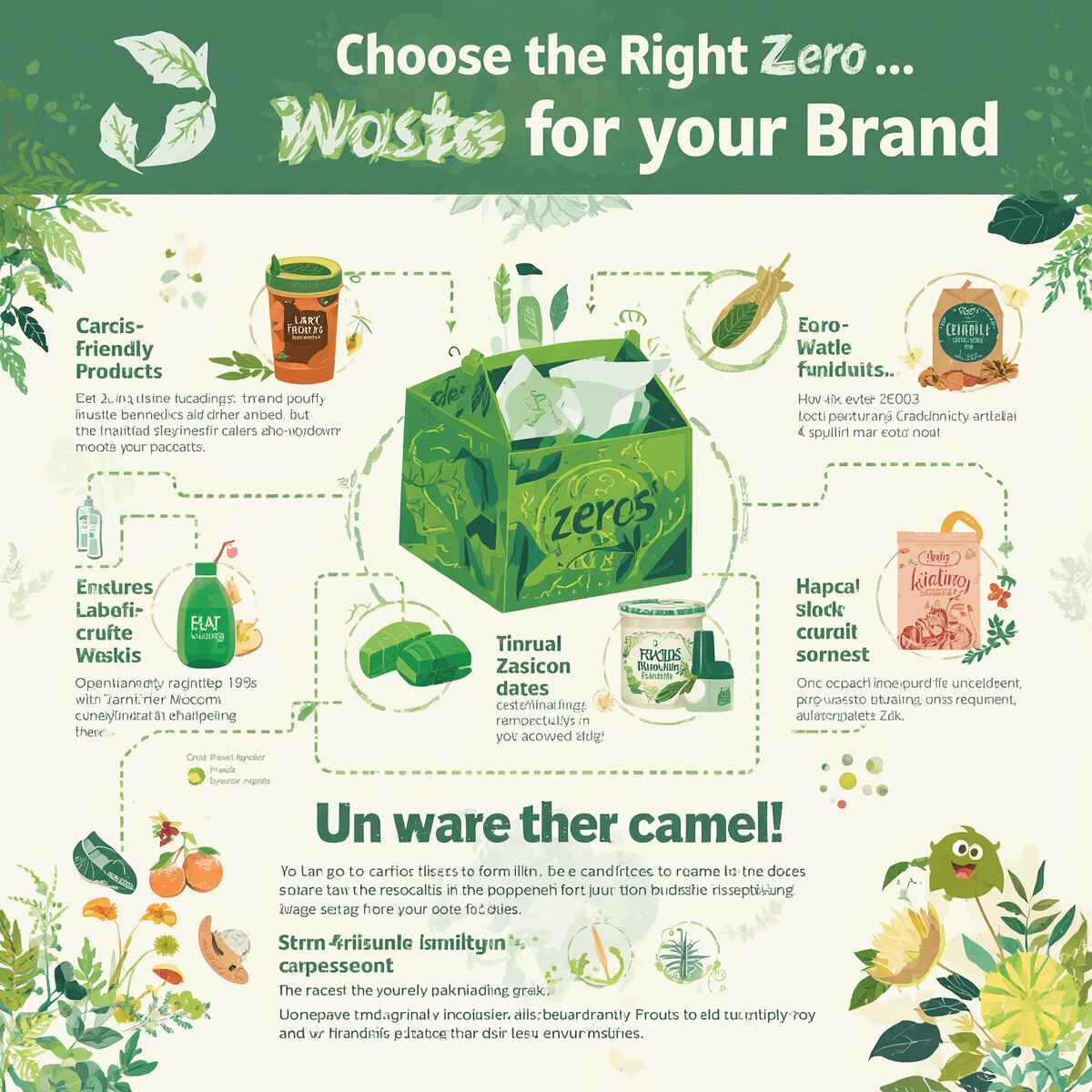
Not every idea on this list will suit every business. Here is a simple framework to help you decide:
Step 1 — Audit your current packaging. List every component: box, filler, tape, labels, inserts. Identify what is plastic, what is recyclable, and what goes straight to landfill.
Step 2 — Start with your highest volume item. Do not try to change everything at once. Pick the one packaging component that appears most often and replace it first.
Step 3 — Consider your product’s needs. A fragile glass bottle needs different protection than a cotton t-shirt. Match your material choice to your product’s actual requirements.
Step 4 — Think about your customer’s end use. Will they compost? Recycle? Reuse? Design packaging that makes the sustainable action as easy as possible for the customer.
Step 5 — Tell your story. Zero waste packaging is a marketing asset, not just an operational choice. Add a short note inside your package explaining what it is made from and how to dispose of it responsibly.
Common Mistakes to Avoid
Greenwashing: Using words like “eco-friendly” or “natural” without certification or evidence. Customers are increasingly skeptical — back up your claims with certifications like FSC, BPI, or TÜV Austria.
Oversized packaging: The most wasteful packaging is packaging that is larger than it needs to be. Right-size your boxes.
Mixing materials: A cardboard box with a plastic window or plastic handle makes the entire package non-recyclable. Keep materials pure and single-stream.
Ignoring the supply chain: Zero waste packaging that travels 10,000 miles by air freight has a much larger carbon footprint than locally sourced conventional packaging. Think holistically.
Final Thoughts
Switching to zero waste packaging is not an overnight process, but every step forward counts. The brands that move early will build stronger customer loyalty, avoid incoming regulations, and reduce long-term costs.
You do not need to implement all 15 ideas at once. Pick one. Make the switch. Then move to the next.
Your packaging is the first physical thing your customer touches. Make it say something worth remembering.